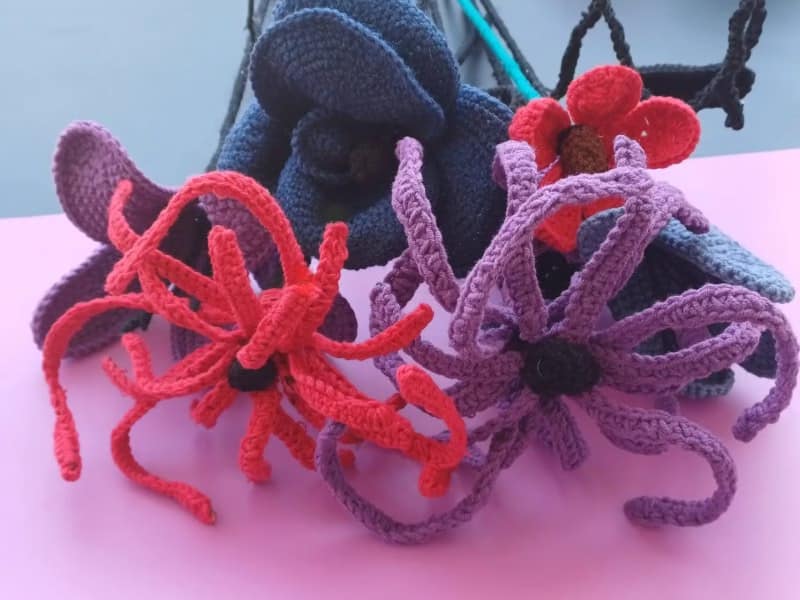

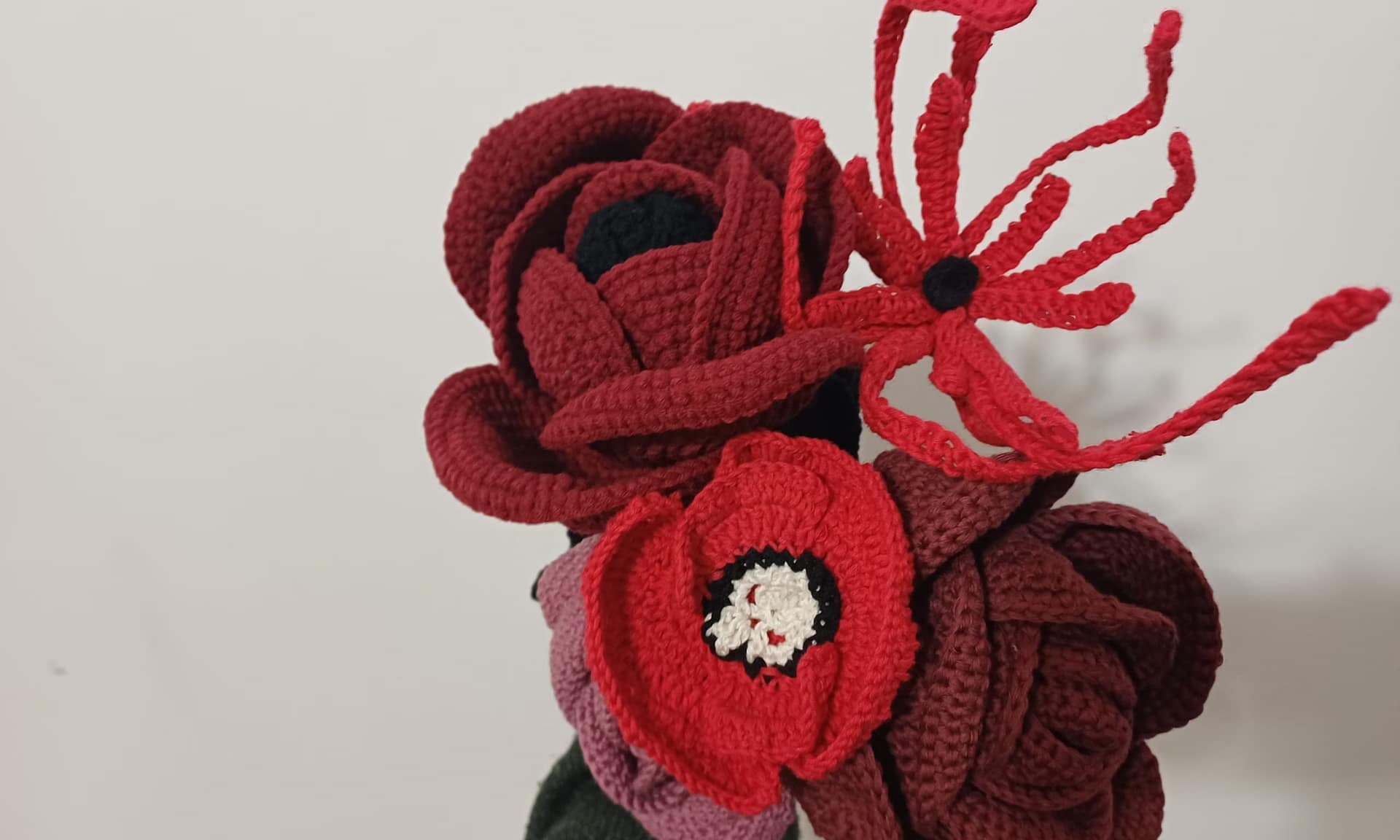
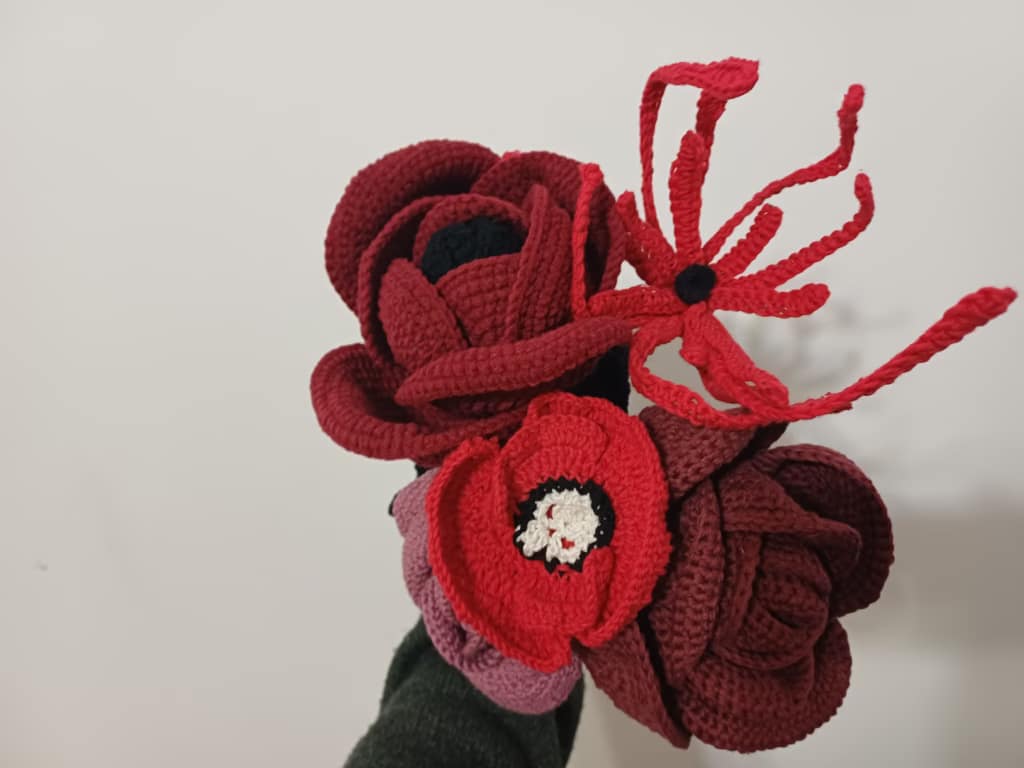
You finish a crochet flower, lay it down, and for a moment it looks perfect. Then you come back later and the petals have softened, curled inward, or completely lost their attitude.
It happens to everyone. Especially if you live somewhere humid, if you work with softer yarns, or if the flower is meant to be worn rather than just admired.
Blocking is the quiet step that turns a nice flower into a finished one. It’s what gives petals memory. It helps stitches relax into shape and stay there instead of slowly collapsing back into themselves.
If your crochet flowers ever look a little tired after all that work, blocking is usually the reason.
You’ve probably noticed it lately too. Crochet and fabric flowers are everywhere again, pinned onto coats, bags, scarves, even denim jackets. Brooches have quietly made their comeback, and suddenly flowers aren’t just decorative. They’re worn, moved, handled, and expected to hold their shape all day. That’s usually when drooping becomes impossible to ignore.
Why crochet flowers droop in the first place
When you crochet, the yarn is held in shape by tension. Your hook pulls it, twists it, and locks it temporarily into position. Over time, that tension eases. Gravity, humidity, and handling do the rest.
Petals begin to sag. Edges lose definition. Curves soften until everything looks flatter than you imagined.
Blocking works by retraining the fibers. It tells the yarn, this is your shape now. Once set, the stitches remember it.
For appliqué-style flowers, especially ones used as brooches, blocking makes a visible difference. Fuller three-dimensional flowers hold their form better on their own, but even they benefit from a little shaping.
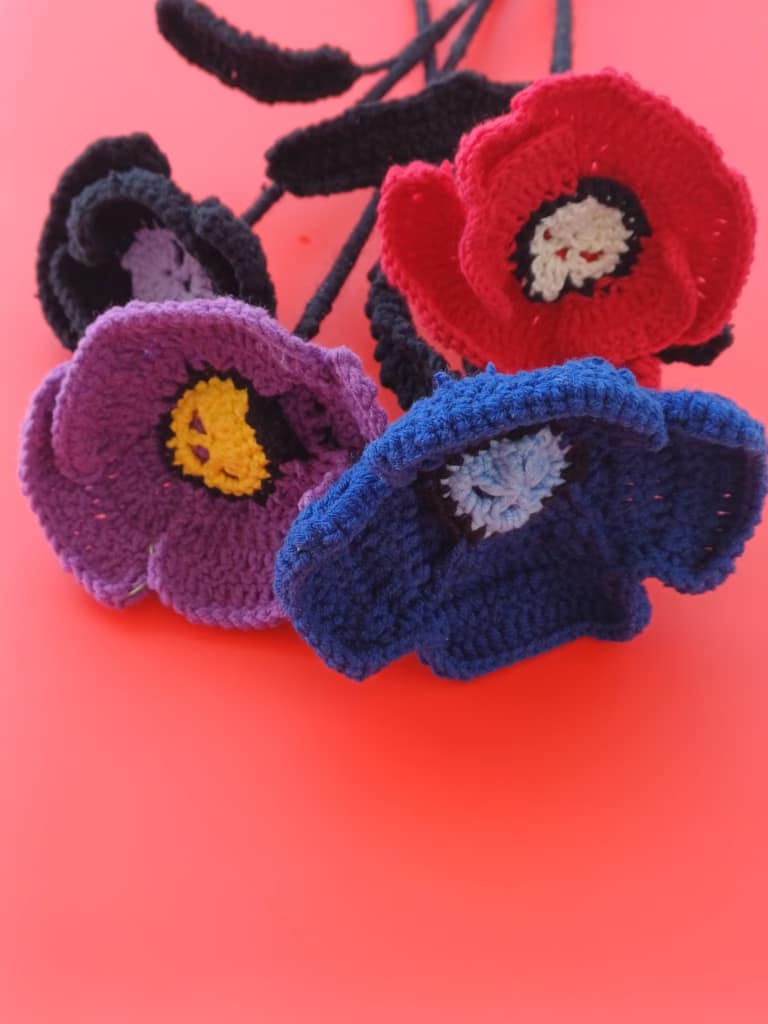
Wet blocking for sculpted petals
Wet blocking is ideal for cotton and other natural fibers. It allows you to fully reshape the flower and gives you the most control over petal movement.
Start by filling a small basin with cool water. If you want extra structure, you can add a light stiffener such as diluted starch, a simple sugar-water mix, or watered-down PVA glue. The goal is support, not stiffness.
Submerge the flower and let it soak for about ten to fifteen minutes. When you remove it, gently press out the excess water using a clean towel. Never twist or wring. Crochet petals are delicate when wet.
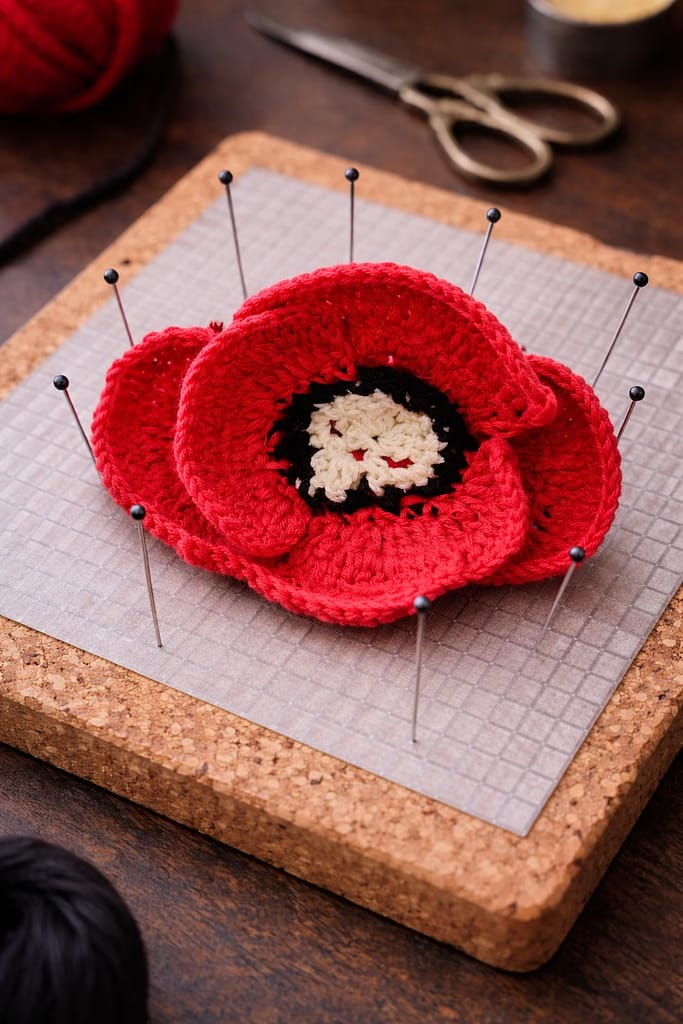
Place the flower on a blocking mat or a towel-covered surface. Using rust-resistant pins, stretch and shape each petal slowly. This is where the magic happens. You can open curves, sharpen tips, or exaggerate movement slightly so it settles beautifully once dry.
Let the flower air dry completely. This usually takes a full day. Once dry, remove the pins and you’ll see the difference immediately.
A note about acrylic yarn. Acrylic does not respond well to stiffeners and may bleed color in water. For acrylic flowers, wet blocking offers limited results, and other methods work better.
Steam blocking for quick fixes
Steam blocking is perfect when you need fast results or when soaking feels risky.
Lightly mist the flower with cool water, just enough to relax the fibers. Then hold a steamer or iron above the surface without touching the yarn. The steam softens the stitches and makes them pliable.
As soon as the petals relax, pin them into shape and allow everything to cool and dry completely. Once set, the shape holds surprisingly well.
Important warning. Never apply steam directly to acrylic yarn. It can melt or flatten permanently. If you’re unsure, always test on a small swatch first. Steam blocking works beautifully for wool blends and cotton, especially when you want gentle curves rather than dramatic stiffness.
The real secret for flowers that must never droop
Blocking gives shape, but wiring gives permanence. If your flowers are meant to be worn as brooches, shipped long distances, or displayed in humid conditions, thin floral wire is your best ally and this is why in almost all my patterns I suggest adding wire.
The most invisible method is to thread wire through the final row of stitches, then crochet back over it. This locks the wire inside the petal edge and keeps everything flexible but firm.
You can also weave wire through finished petals if the piece is already complete. Black-coated wire blends beautifully with dark yarns and disappears visually.
Once wired, petals can be gently bent into position and will hold that shape almost indefinitely. Blocking first and wiring afterward gives the strongest result.
This combination is what turns a soft crochet flower into something that behaves more like a preserved bloom.
Tools that make the process easier
You don’t need much to block flowers well. A padded surface, rust-resistant pins, and patience will take you far.
If you work often with brooches or display flowers, floral wire and small cutters are worth keeping nearby. Distilled water helps prevent color bleeding, especially with darker shades (but if you use acrylic yarn the color bleeding can still happen).
The most important tool, though, is time. Blocking works best when you let it dry fully without rushing the process. So a day or two will be necessary.
A small habit that changes everything
One of the best ways to prevent drooping before it starts is crocheting with slightly tighter tension than usual. A smaller hook gives petals more structure from the beginning and reduces how much blocking is needed later.
Think of blocking not as fixing mistakes, but as finishing work. The same way fabric is pressed before being worn, crochet flowers need that final moment of intention.
When blocking becomes part of your style
Once you start blocking regularly, your flowers begin to look more confident. Petals separate cleanly. Shapes feel deliberate. Even simple patterns take on more presence.
It’s one of those steps that feels optional until you try it. Then it becomes impossible to skip. Blocking doesn’t just improve how your flowers look. It changes how they feel in your hands and how long they hold their beauty. Unless of course you add wire.
A small note about my patterns
If you’ve worked with my flower patterns before, you’ll notice that they’re built a little differently. I design them to rely entirely on wire for structure, not stiffeners or heavy blocking.
The petals are shaped from the inside as you crochet, so the flower already knows what it’s meant to be before it’s finished.
Blocking is not needed because the real strength comes from the wire itself. It means your flowers keep their shape over time, whether they’re worn as brooches, displayed on a stem, or packed away and brought out again months later.
Final thoughts
If your crochet flowers have ever drooped, softened, or lost their shape over time, nothing is wrong with your skills. Yarn simply needs guidance.
Blocking is that gentle guidance. A quiet ritual that turns something handmade into something finished. Whether your flowers are meant to be worn, gifted, or kept close, shaping them with care makes all the difference.
And once you see the transformation, you’ll never look at an unblocked petal the same way again.
Until next bloom,
🖤
Kootsiko
Read more
Blocking Crochet Flowers: The Magic Fix for Droopy Petals
Droopy crochet petals are not a mistake. Blocking is the final step that shapes, sets, and gives you…
How to Create a Moody Corner with Crochet Flowers
Learn how to create a dark, cozy corner with crochet flowers. A quiet, poetic way to style your home…
I’ve Been Crocheting for Months… So Why Does Everything Still Look Wrong?
Been crocheting for months and still unhappy with your work? You’re not bad at crochet. You’re stuck…
Your Craft Your Rules A Love Letter To Every Kind Of Crocheter
Crochet has no rulebook. Just joy, yarn, and your hands. Here is your permission slip to create your…
Natural vs Synthetic Yarn A Friendly Guide for Crocheters
Natural or synthetic yarn? This friendly guide helps you choose what works best for your crochet wit…
Crochet vs Knitting: A Beginner’s Guide to Choosing Your Yarn Craft
Knitting vs crochet: what’s faster, easier, calmer, and more fun? A friendly, funny guide to choosin…
Crochet Tools for Beginners: The Only Guide You Actually Need
A fun, no-nonsense guide to the crochet tools beginners actually need, the ones they can live withou…
Stop Wasting Yarn (and Money): 15 Clever Hacks
Save yarn, save money, save your sanity! Discover 15 clever, funny and totally doable ways to make y…
The Psychology of Making Something That Lasts Forever
When you make something with your hands, something that stays, it feels almost rebellious.
Meet the Spellvine: The Dark Thread That Ties It All Together
The story and the free pattern of that thin, black, swirling vine you see in my photos. The Spellvin…