Choosing the best yarn for crochet flowers should feel like a treat not a test. Yet every crocheter eventually reaches the moment where they hold a cotton skein in one hand and an acrylic one in the other and wondering which to use.
If you have ever been there welcome. This is your gentle no drama guide to natural and synthetic yarn. No guilt. No shame. No judgment if your stash leans heavily toward whatever was on sale that week.
My goal here is to help you choose yarn based on your project, your comfort and your personal craft joy. Not on rules created by yarn purists who pretend they were never tempted by a perfectly neon acrylic at three in the morning.
So let us explore what each yarn family brings to your hook and how you can decide what suits you best.
Why Natural Yarn Feels Special
Natural fibers like cotton wool bamboo or linen come from plants or animals and they usually offer a softness that feels very comforting. When you hold a cotton strand there is a familiar earthy presence to it, something that whispers hey, I used to be a plant and now I am a flower again in a new way.
Natural yarn is often breathable and comfortable against the skin which makes it ideal for wearables or accessories that sit close to the body. Even crocheted flowers feel different in natural fibers. The petals fall more gently the stitches look slightly more organic and there is something satisfying about holding a bloom that feels like it has a tiny heartbeat.
Natural yarn can also support sustainability goals because many natural fibers are biodegradable or renewable. Of course, it still depends on how the fiber was produced, processed, and transported but in general, many makers feel good knowing their materials come from nature.
The trade off natural yarn can be pricier. Some fibers need careful washing. And certain natural fibers can split or stretch if your tension is strong. But when a natural yarn works for your project it feels like a tiny miracle.
Why Synthetic Yarn Deserves Appreciation Too
Let me be very clear: synthetic yarn is not the villain of the yarn world. Many crocheters rely on it for excellent reasons.
It is affordable which matters especially for big projects or beginners who are still learning how to wrangle their tension. Synthetic yarn is also consistent and colour rich which means you can find exactly the shade you want without hunting across five shops and three continents.
Synthetic yarn is easy to care for. You can wash it, tumble dry it, and toss it in your bag without worrying that it will felt shrink or cry quietly in the laundry basket. For flowers that might live on a tote bag or travel around in suitcases synthetic yarn holds up beautifully.
Yes, synthetic yarn does not breathe like natural fibers and does not always feel as soft or as warm. It is also plastic-based which means it is not biodegradable. But for many makers synthetic is practical, reliable, and perfect for projects where durability matters more than luxurious drape.
And for the record, I have never met a crocheter who has not enjoyed an acrylic colour that practically glows in the dark. It happens to the best of us.
How to Choose the Best Yarn for Crochet Flowers
Picking yarn becomes much easier when you ask yourself a few simple questions.
💜Will this project touch skin or be worn?
Natural yarn might feel nicer.
💜Do I want strong bright colors and easy care?
Synthetic yarn is very helpful.
💜Do I want a delicate drape?
Natural fibers usually shine here.
💜Do I want something tough washable or child friendly?
Synthetic yarn is a great option.
💜Do I want texture depth and sculptural petals?
Both natural and synthetic can work beautifully depending on the look you want.
There is no wrong answer. There is only the yarn that suits your intention. The smartest crocheters mix both depending on the project. It is not a team sport. You are allowed to love both without conflict.
A Little Crochet Flower Insight From Me
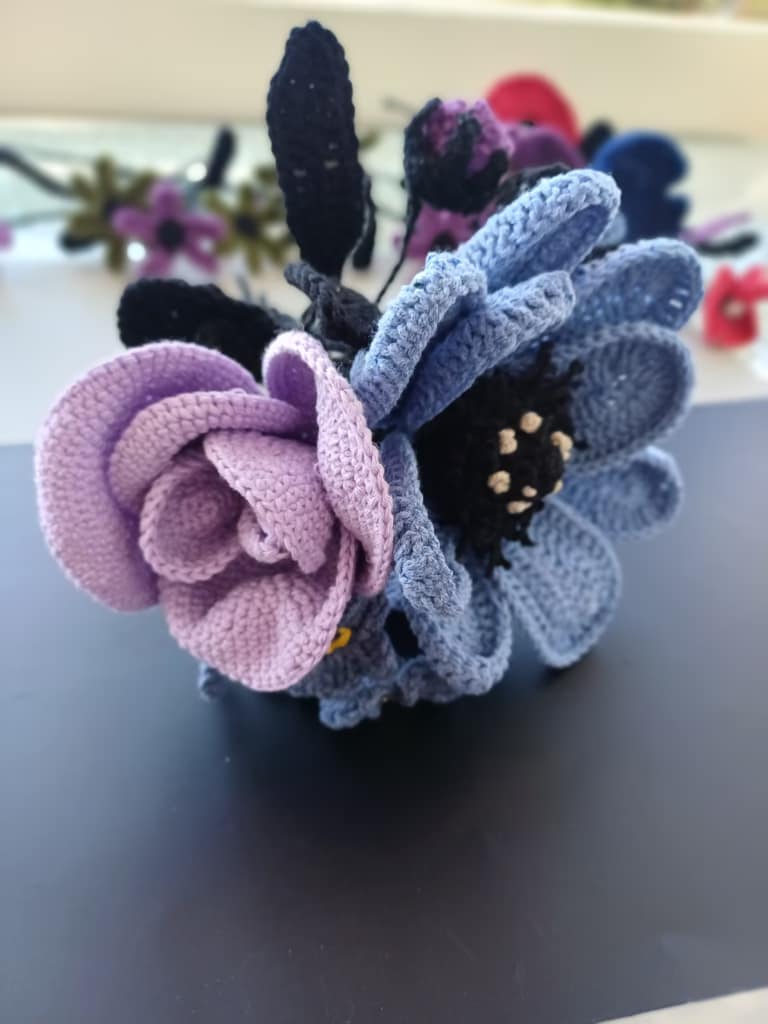
Since flowers are my entire universe, I can tell you with confidence that both natural and synthetic yarns have a place in floral design. Cotton and cotton blend yarns create soft matte petals with beautiful definition, and they often look surprisingly close to real blooms.
Bamboo adds elegant drape and a gentle shimmer that feels almost ethereal. Wool brings dramatic texture and depth and sometimes even gives a flower a slightly wild personality, which I secretly love.
Synthetic yarn, on the other hand, offers incredible color options and holds its shape in a firm structured way. That makes it perfect for bold stylized decor pieces or statement blooms that need a bit of attitude. I use both types depending on the mood of the project and the personality I want the flower to have.
For my own flower patterns though, I usually recommend cotton or cotton blends if you want crisp definition durability and a more premium aesthetic. They show off the stitchwork beautifully and give each petal that refined polished look.
At the end of the day, crochet is an art form and every flower has its own energy. Choose the fiber that lets that personality bloom.
Final Thoughts
Yarn is not about rules, it is about joy. Pick the fiber that inspires you makes you smile and supports the project you want to make. Natural yarn, synthetic yarn, blend yarn. Your craft is yours and the best yarn for crochet flowers is the one that feels right in your hands.
Want to Explore My Crochet Flowers?
If you want to play with natural or synthetic fibers in a beautiful way, take a look at my collection of crochet flower patterns. I design them so you can experiment, feel inspired and bring gorgeous blooms to life in whatever yarn you love most.
Until next bloom,
🖤
Kootsiko
Join my newsletter to receive new patterns, tutorials, and the occasional free surprise.
Read more
How to Spot AI Crochet Patterns Before You Buy
AI crochet patterns are everywhere, but an AI-looking image doesn’t necessarily mean the pattern is …
Birth Month Flowers You Can Crochet: Meanings, Symbolism & Pattern Ideas for Every Month
Looking for the perfect birthday crochet gift? Discover every birth month flower, what each one symb…
How to Choose Flowers for a Crochet Bouquet That Looks Beautiful
A beautiful crochet bouquet isn't just about making pretty flowers. It's about choosing blooms that …
How to Make Realistic Crochet Flowers: 10 Secrets That Bring Yarn to Life
Learn how to make realistic crochet flowers with better yarn choices, petal shaping, wire techniques…
Zephyra – Free Crochet Flower Pattern
Create your own Zephyra crochet flower with this free crochet flower pattern. An easy pinwheel-inspi…
Crochet Flowers With Dark Meanings: 10 Blooms That Tell a Story
Discover crochet flowers with dark meanings and the symbolism behind each bloom. Create handmade bou…
10 Ways to Style Crochet Flowers in a Modern Gothic Home
Think gothic decor means skulls and cobwebs? Think again. Here are 10 stylish ways to decorate a mod…
From Cottagecore to Gothic: My Crochet Poppy Pattern Obsession
One crochet poppy pattern led to another. Discover cute mini bouquets, moody Midnight Poppies and go…
How to Read a Crochet Pattern: A Beginner’s Guide
Learning how to read a crochet pattern can feel like decoding a secret language. In this beginner's …
The Story Behind the Mediterranean Carnation Crochet Pattern
Discover the history, symbolism, and Mediterranean roots behind this realistic Mediterranean Carnati…
Further information: Yarn by Wikipedia