Netflix Crochet: Because Counting Shouldn’t Interrupt Your Show

crochet flower bouquet, crochet flower gift, handmade crochet flowers, everlasting crochet bouquet, crochet flower home décor, modern crochet flower arrangement

There’s a special kind of joy in crocheting with your favorite series running in the background when your hands move almost on autopilot, your yarn flows, and your brain drifts between stitches and storyline. That’s Netflix Crochet.

There are sometimes when you can follow a 17-page pattern with military precision and actually enjoy it.

And then… there are the times when you just want to relax. The ones you want to sink into the couch, press play on Netflix, and crochet something beautiful without having to pause every 30 seconds to say, “Wait, was that 23 or 24 stitches?

Welcome to the sacred art of Netflix Crochet. It’s that sweet spot where your hands move almost on autopilot, your yarn flows like a dream, and your only worry is whether your show will ask, “Are you still watching?” before you finish your row.

Why we crave the no-count life

There’s nothing wrong with a challenge. Complicated patterns can be exciting. They make us feel clever, capable, like crochet wizards who can summon lace from thin air.

But sometimes… you just want to relax. You want something that looks wow, feels fun, and doesn’t make you count like you’re balancing the national budget.

Because let’s face it, crochet math is sneaky. You think you’re doing fine, then one stitch goes rogue, and suddenly your project looks like it’s melting off the hook.

That’s when you realize: maybe the true luxury isn’t a rare yarn. It’s an easy, memorable pattern that still looks like you spent hours figuring it out.

I know there’s also freehand crocheting and I love it, but a pattern will ensure the result. And I want nothing less than stunning to decorate my home or gift my friends.

The myth of the “difficult equals great” pattern

Here’s a spicy thought: not every complicated pattern is a masterpiece. Some designers (you know who you are) make their patterns hard on purpose.

Like, unnecessarily hard. Because somewhere along the way, “difficult” became a badge of honor.

But real greatness? Real design skill?

It’s when you can make something stunning that’s simple enough to remember and relaxing enough to enjoy. Because crochet, at its best, isn’t supposed to test your patience. It’s supposed to soothe it.

The Kootsiko-approved Netflix Crochet list

Now, let’s talk about the stars of your next binge-and-stitch session.

These are my go-to designs when I want to feel creative without pausing to rewind an episode just because my stitch count fell apart somewhere between snacks.

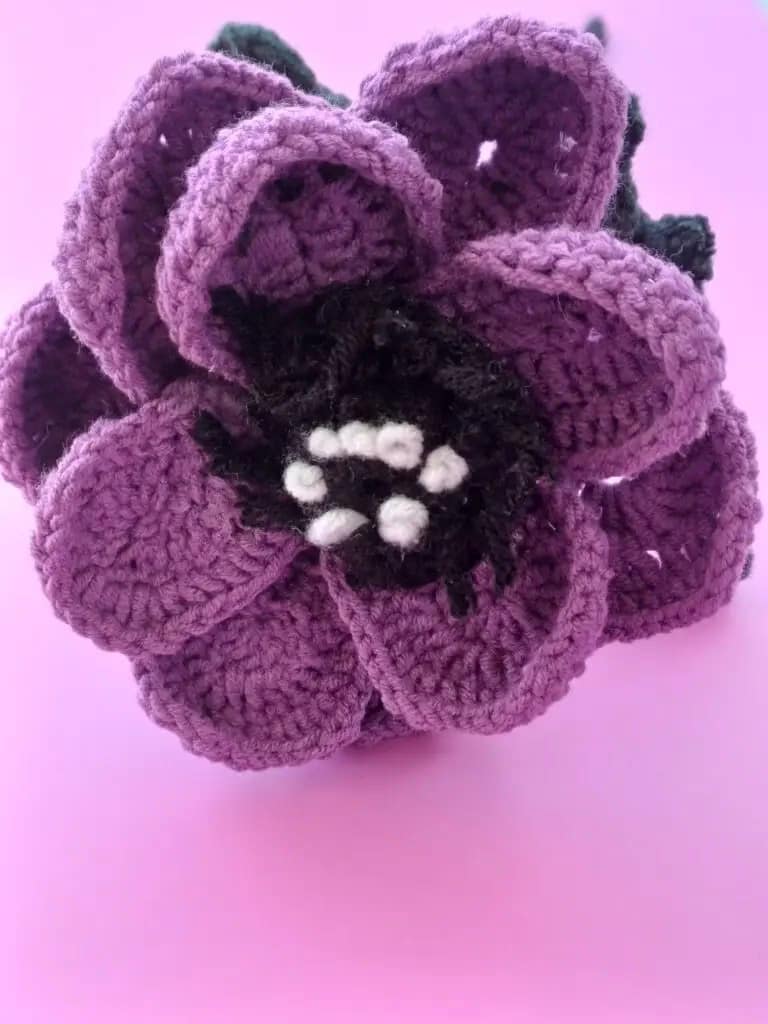
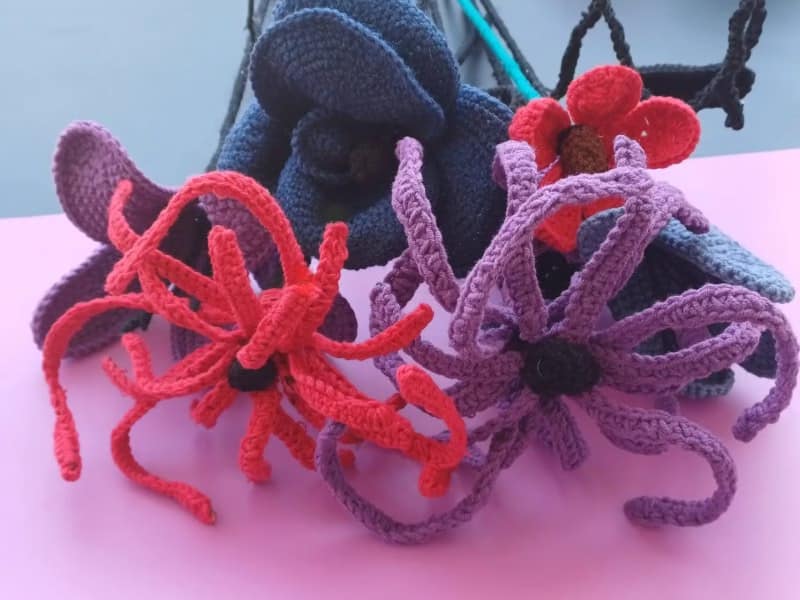
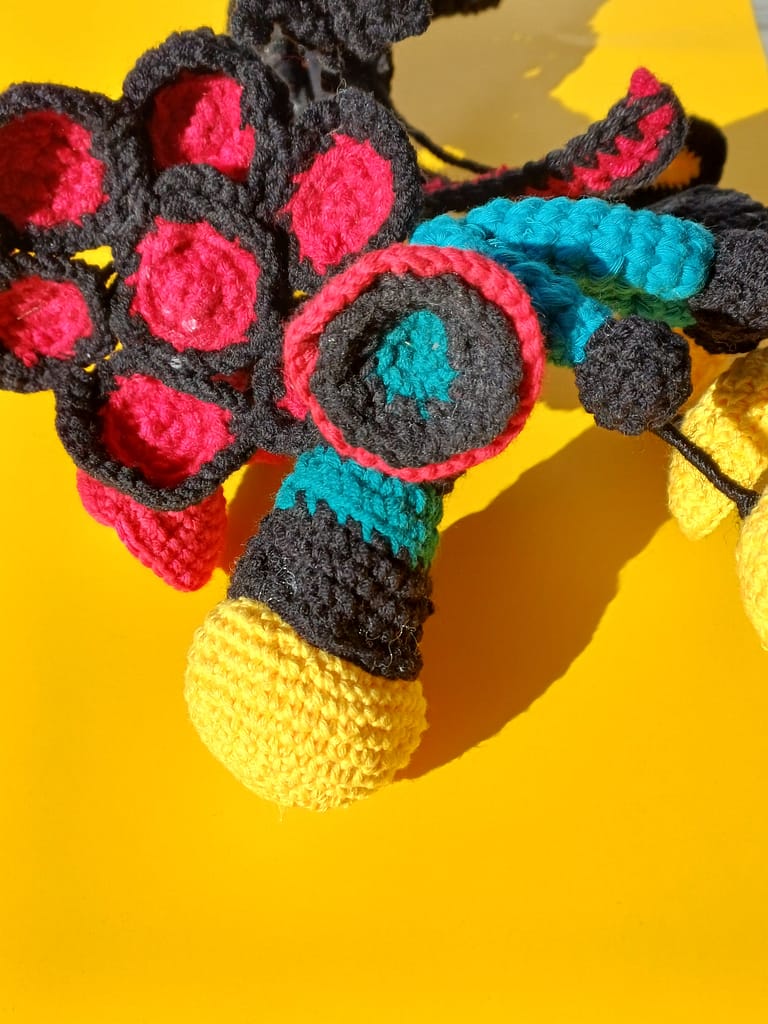
Medusa Bloom
Hypnotic, textured, and practically crochets itself. (No snakes, promise.)

crochet flower bouquet, crochet flower gift, handmade crochet flowers, everlasting crochet bouquet, crochet flower home décor, dark goth romantic decor

Gothic Rose
Dark, dramatic, and perfect for mystery marathons.

crochet big flower pattern, crochet rose pattern

Forget-Me-Not
Tiny, charming, and easy to remember (just like the name).

crochet flower bouquet, crochet flower gift, handmade crochet flowers, everlasting crochet bouquet, crochet flower home décor

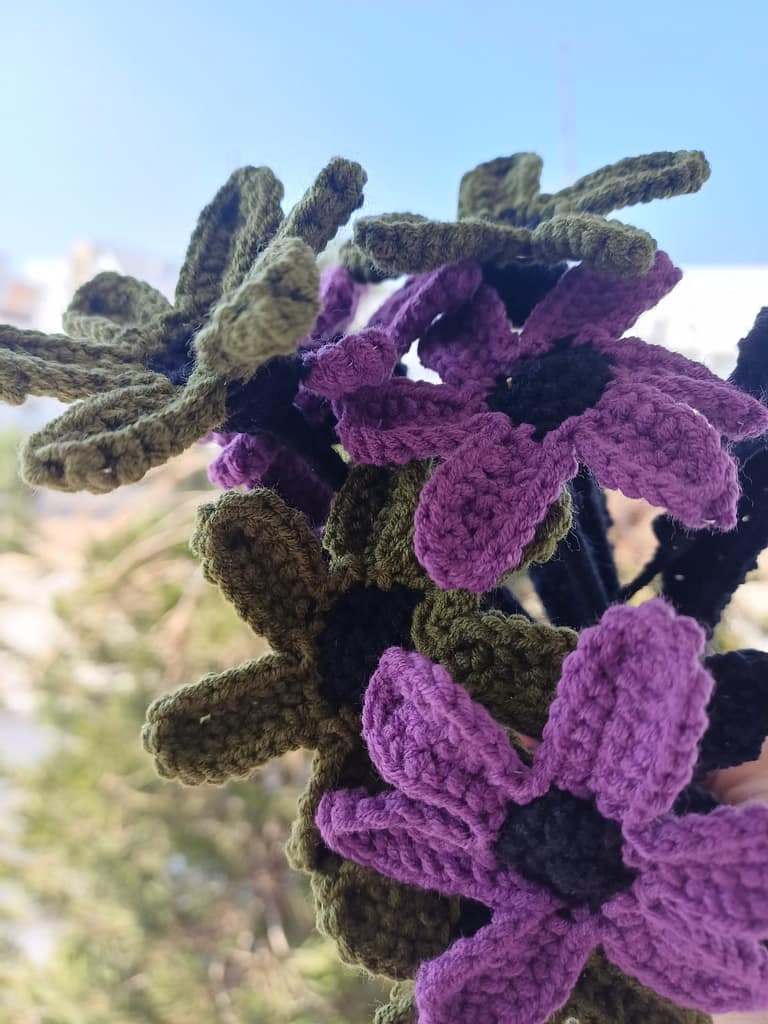
Mystic Daisy
The flower child of crochet. Effortless and full of personality.

crochet flower pattern, crochet bouquet pattern, crochet lily pattern, crochet rose pattern

Midnight Lilium
Elegant, serene, and totally binge-worthy.

crochet flower pattern, crochet bouquet pattern, crochet lily pattern, crochet rose pattern

Each of these designs is made for maximum beauty with minimum brain strain, because sometimes, your brain just wants to vibe.

So here’s the deal. Next time you sit down with your hook, your yarn, and your streaming queue, pick a project that feels like a treat, not a task.

Because crochet doesn’t have to be complicated to be beautiful.

And the best kind of project? The one you can make while rewatching Good Omens for the fifth time and still know exactly where you are, both in the pattern and in the plot.

So go ahead, grab your favorite yarn, pick a show, and get stitching.

crochet flower bouquet, crochet flower gift, handmade crochet flowers, everlasting crochet bouquet, crochet flower home décor

Your only homework tonight is to answer one important question:

Are you still watching… and still crocheting?

👉 Explore Kootsiko Patterns for gift-worthy makes
👉 Discover Unique Crochet Flowers that bloom forever

👉 Join the Kootsiko Newsletter and get Skull Poppy flower pattern as a welcome gift!
You’ll also be the first to know about new designs, tips, special offers and behind-the-yarn stories.

Until next bloom,
❤️
Kootsiko

Skull Ivy: Cute, Creepy, and Hanging Around

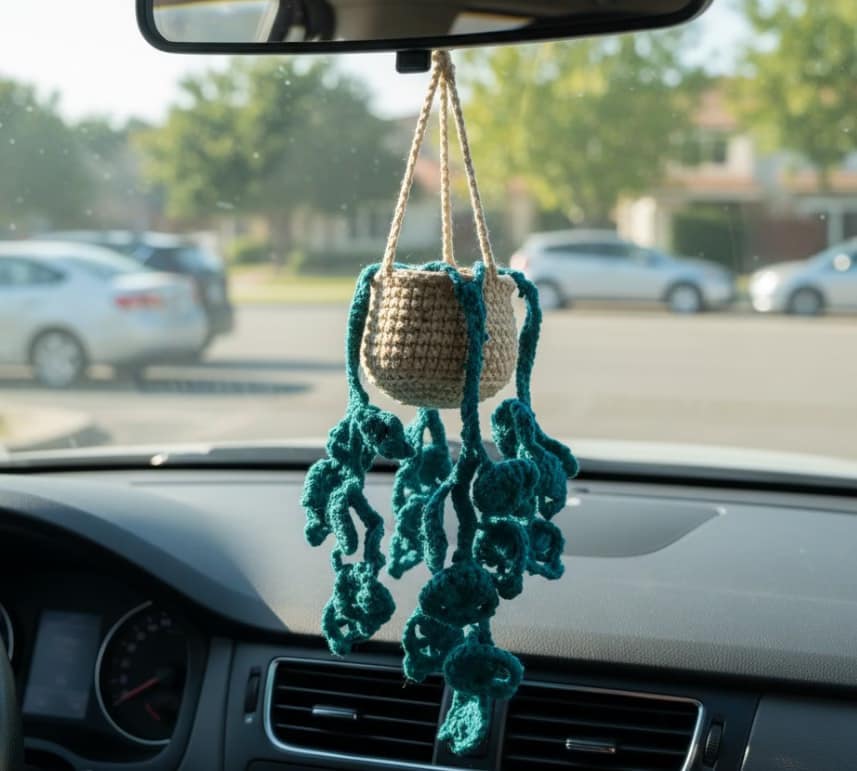
crochet hanging plant for car pattern
crocheted hanging pot with green plant

Not every plant plays fair. Skull Ivy looks like a sweet hanging vine at first, but look closer and every “leaf” is a tiny skull staring back at you.

Cute, creepy, and the ultimate double-take crochet pattern.
It began, as many questionable ideas do, with car décor. I kept seeing those cute little hanging plants dangling from mirrors, all green and innocent, and thought: what if one of those… wasn’t?

What if you took a second glance and realized, oh no, those aren’t leaves—they’re skulls. Still leafy. Still green. Just with a little more… personality.

That’s what I love about Skull Ivy. At first glance, it’s a perfectly ordinary plant. Soft, dangling vines. Sweet little leaves. Harmless.

Until you lean in and—surprise! Each leaf is actually a tiny skull grinning back at you. It’s cute and creepy in equal measure, which honestly might be my favorite combination in life.

Why green?

Normally, I love to experiment with color. Purples, reds, even white in my other designs. But Skull Ivy had to stay green. If it were black or purple, you’d expect something strange.

Green makes it sneaky. You don’t notice right away that this plant is quietly plotting your doom or at least staring you down with skull eyes.

(That said, don’t think I won’t try a black Skull Ivy eventually. Rules are meant to be broken. Especially mine.)

Beyond the pot

This isn’t just a hanging pot plant. I’m already scheming about how to sneak Skull Ivy into my gothic bouquets.

A dark cascade of vines, skulls peeking out between roses and lilies, yes, please. It’s the sort of thing that makes your guests go “aww” and then “…wait, what?” Perfect.

Why I love it

I love patterns that look innocent but come with a twist. Skull Ivy is a little trickster. It hangs out quietly, looking like just another crocheted plant, until the moment someone realizes it’s a whole vine of skulls.

And that moment? Priceless. Skull Ivy turned out to be one of those designs that makes me laugh every time I see it. It is cute. It is creepy.

It is the plant that looks like it belongs in a Tim Burton greenhouse. And honestly, that is exactly where I want to hang out.

Want to meet Skull Ivy up close?
More info here: Skull Ivy
Grab the pattern here: Buy Skull Ivy

Curious what else is growing? Read more from the Kootsiko blog.

Until next bloom 💨
❤️
Kootsiko

Your Ultimate Crochet Beginner’s Checklist

crochet flower bouquet, crochet flower gift, handmade crochet flowers, everlasting crochet bouquet, crochet flower home décor

Are you an absolute beginner at crochet? Here is all you need to know.

Some people go to crochet school or hire teachers. Some of us (hi, hello, guilty 🙋‍♀️) just wing it at home, at our own pace, learning in between coffee refills and YouTube spirals.

I’m in the second camp, and let me tell you: self-taught does not mean you’ll learn less.

The real challenge? Figuring out what to learn first and in what order.
Sure, it’s exciting to whip up your first scarf… but trust me, it’s even better when you know what half-double crochet and treble crochet are before you start.

That’s why I wish I had a beginner’s checklist when I started. Something to save me from endless 30-minute intros in “beginner” videos when all I needed was a clear, close-up shot of the actual stitch. So, I made one for you.

This is the checklist I wish I had: the right order to learn stitches, clear explanations, and links to short, actually helpful videos, so you can spend less time searching and more time crocheting. Because you don’t have to hate crochet to learn crochet.

Before we dive in, let me make something clear:

Crochet: Art, Not “Just” Craft

For me, crochet is an art, not a craft. Why is it often treated as the “less serious cousin” of painting or sculpting? Crochet is just as creative, just as expressive, and just as capable of jaw-dropping beauty. Prepare to be astonished by what your hands can create.

Yes, there will be a learning curve. Your first chains will be uneven, your tension will play hide-and-seek, and your fingers may feel like rebellious spaghetti.

But give it a little time, and the progress you’ll see month by month will feel like magic.

And the learning never stops. I’ve been crocheting for years, and I still discover new stitches, techniques, yarns, and “wait, what is this wizardry?” methods.

Crochet is endless curiosity, awe, and wonder. And that’s what makes it my happy place.

What You’ll Need to Start

Forget the fancy toolkits for now. As a beginner, you really only need three things:

Yarn
Start with a medium-weight yarn (look for a “4” or “worsted” label). Choose a lighter color so you can actually see what you’re doing — dark yarn hides mistakes, and trust me, you’ll want to see your stitches clearly.

A crochet hook
Check the yarn label for a suggested hook size. Start there. If you’re struggling with tension (your stitches are tight like overcooked rice), try going up a hook size.

Scissors
Because teeth are not an option. (Technically they are, but let’s keep this classy.)

Pro tip: You’ll also need good lighting and a comfy seat. Bad lighting = swearing. Bad seating = back pain. Don’t learn this the hard way.

Now, let’s first talk about the elephant in the room:

The Hook-Holding Drama
You may have noticed: crocheters hold their hooks differently.

Some grip it like a knife, others like a pencil. Which is right?

Answer: whichever doesn’t make you want to throw your hook across the room.
There’s no “correct” way. Just the way that feels natural to you.

Now, let’s start with your first steps.

Step 1: The Magic Ring (a.k.a. The Trickster)

This little circle of yarn is the start of all projects especially the round ones (think amigurumi, flowers, hats, etc.). Is it the easiest place to begin? Honestly, no. It looks fiddly, your fingers aren’t trained yet, and your tension is basically non-existent.

If it feels like too much, skip it for now. Make a few chains first to get your hands used to moving yarn. Come back later. You’ll be shocked at how simple the magic ring actually is once your hands are warmed up.

Short, sweet, and helpful – Watch this video by Crafting Hapiness

Step 2: The Chain (your foundation)

Chains are your best friend. They’re the backbone of almost everything you’ll make that isn’t round. Practice making chains until your tension starts to look even. At first, they’ll be a mix of “so tight the hook won’t go through” and “so loose a mouse could crawl through.” That’s normal.

Here’s the best video I found from With Love, Leisha

Stay here for a few days. This is where muscle memory forms and where your hands learn to move on autopilot, so later you can focus on counting stitches without overthinking every move.

Step 3: Master the Basic Stitches

Here’s where the fun begins. Crochet stitches build on each other, getting taller as you go. Learn these in order:

Slip Stitch (sl st) – the shortest, useful for joining.
How: Insert hook, yarn over, pull through stitch and loop. The shortest stitch, great for joining.

See the magic happen with this video by Nicole Chase who also shows you how to fasten off →

Single Crochet (sc) – neat, compact, and your entryway into “real” crochet.
How: Insert hook, yarn over, pull through, yarn over, pull through both loops.

Check out this great video by Rich Textures Crochet:

Half Double Crochet (hdc) – a little taller, nice and squishy.
How: Yarn over, insert hook, yarn over, pull through, yarn over, pull through all three loops.

Watch a quick demo by Desert Blossom Crafts and master it in no time →

Double Crochet (dc) – versatile, airy, and used everywhere.
How: Yarn over, insert hook, yarn over, pull through, yarn over, pull through two, yarn over, pull through two again.

Here’s a super short video by Bella Coco to make it crystal clear →

Treble Crochet (tr) – tall, dramatic, and a little showy.
How: Yarn over twice, insert hook, yarn over, pull through, yarn over, pull through two, yarn over, pull through two, yarn over, pull through two.

Need a visual? This tutorial by A Menangerie of Stitches has got you covered →

Practice each for a few days. Try making them on your chain, one row each. You’ll actually be practicing tension without realizing it.

✨ Fun fact: Also, you may have just accidentally made your first scarf.

Step 4: Increase and Decrease

Want to shape your projects? This is how.

Increase (inc): Put two stitches in the same place to make your project wider.
How: Make two single crochet stitches in the same stitch. Your go-to for shaping wider pieces.

Let’s make it simple. Watch this video by Annie’s Attic

Decrease (dec): There’s is “normal” and “invisible” decrease. I always use invisible decrease by simply crocheting two stitches together to make it narrower.
How: Work two stitches together into one (e.g. sc2tog). Perfect for narrowing or shaping.

For a clear, easy guide on both visible and invisible decreases, check this video by elendipity

With these, you can go from flat swatches to hats, amigurumi, and beyond.

Step 5: Crochet Language & Lingo

Now that your hands are busy, let’s decode the words you’ll bump into:

Gauge: Patterns are written for a specific size. Your tension might be different. Gauge = the measurement that keeps your project from turning into an accidental crop top.

Frogging: The act of ripping back stitches when you mess up. It’s called frogging because you “rip it, rip it” 🐸.

Amigurumi: The Japanese art of crocheted plushies. They start with a magic ring, are worked in rounds, and usually involve stuffing. Cute level: off the charts.

Blocking: The spa treatment for your crochet. Wet your finished piece, pin it down, let it dry, and watch it magically relax into shape. Great for lace, scarves, and anything flat. (Not for amigurumi, unless you want sad, soggy bunnies.)

If you want to see the full list of abbreviations and terms visit the Crochet Abbreviations Master List by Craft Yarn Council. You will find all crochet terms & common measurements as well as abbreviation & term differences between the U.S., United Kingdom (U.K.) and Canada. Save that page, too.

Epilogue: The Never-Ending Joy

Here’s the thing: crochet isn’t something you “finish learning.” It grows with you. Each project teaches you something new. A stitch, a technique, a mistake that turned into a discovery. That’s why it never gets boring.

And somewhere between your first wobbly chain and your tenth masterpiece, you’ll realize you’ve created your own rhythm, your own style, and your own joy. That’s what crochet gives you: a little magic you can hold in your hands.

Ready for More?

👉 Check out my Crochet Hacks for Beginners for time-saving tips.
👉 Or, if you’re ready to make something gorgeous, explore my Crochet Flower Patterns and start stitching beauty right away.

Because life’s too short for boring scarves. 🌸✨

Until next time, may your yarn never run out 🧶
your parrot doesn’t turn it into confetti 🦜
and your hook never vanish! 💨
❤️
Kootsiko

Crochet Mistakes I Keep Making

how to crochet flowers, crochet flower ideas, DIY crochet bouquet, modern crochet flower arrangement

(and why I don’t care anymore)

crochet anemone handmade - my designs

Crochet Mistakes I Keep Making

(and why I don’t care anymore)

Crochet is full of little quirks. Some we laugh about, some we frog, and some we just let slide because honestly, life’s too short to panic over one loose stitch. Even after years of designing patterns, I still trip over the same things again and again. The funny part? They’ve never stopped me from loving crochet or from creating designs I’m proud of.

Here are my “repeat offenses”, and why I don’t let them get in the way of making something beautiful.

The Eternal Frog

Yes, I still frog. Everyone does. Sometimes a stitch feels wrong, sometimes my yarn has other plans. I’ve learned to see it as part of the process instead of a disaster. The restart usually makes the project better anyway.

The Forgotten Chain
Counting chains? Not my strongest skill when I’m just experimenting. I’ll skip one, add one, or forget the number completely. But when I write a pattern, I count them like a hawk (and double-check myself too). And yet somehow, the piece usually turns out fine. Or at least interesting.

Ends That Multiply
I’ll admit it: sometimes I weave ends “later.” And by “later,” I mean “eventually.” They sneak up on me like yarn confetti. But when I finally sit down to deal with them, it’s oddly satisfying.

The Wonky Stitch
Every project has one. A stitch that just doesn’t look like its neighbors. I’ve stopped fixing it. I just call it my signature. Nobody ever notices anyway.

The Yarn Stash Myth
I always believe the same lie: “I’ll use this yarn immediately.” And then it sits on the shelf looking at me. But honestly? Having options makes me happy. Stash = possibility.

The Pattern Rebel
Sometimes I follow a pattern. Sometimes I just… don’t. If it says 40 chains and I feel like 37, I go with it. Freestyling is half the fun.

Epilogue: Imperfection Makes Us Makers
So yes, I keep making these little mistakes. They’re part of being human with yarn in hand. And honestly? They make me love crochet even more. Perfection is overrated, wonky stitches and all.


If you liked this little confessional, you might love my Crochet Hacks That Actually Work post. It’s full of the weird tricks that save me from myself.

And if you prefer patterns without the frogging and forgotten chains, you can peek at my designs. They’re tested, tidy, and won’t forget a stitch.

Until next time, may your yarn never run out 🧶
your parrot doesn’t turn it into confetti 🦜
and your hook never vanish! 💨
❤️
Kootsiko

My Personal Journey Into Crochet

My Personal Journey Into Crochet

It could have been a bright and pleasant afternoon if it weren’t that day of the month when my kids and I prepared the family’s order of random cheap trinkets from across the globe.

Among the endless scroll of my daughter’s list of favorites was a cute little dinosaur with a peculiar, almost funny word in the description: amigurumi.

It only took a few days and a handful of online searches before I was hooked forever (pun intended). This wonderfully creative Japanese crochet technique became my new obsession.

The unexpected joy of creating tiny worlds with yarn
I already knew a bit about crocheting from my younger years, but diving into amigurumi was the perfect way to rediscover my old love for crochet.

Yarn, needles, and a whole lot of love!
Back when I was a teen, there was no YouTube or TikTok. So, now I had to master the terminology for every stitch, learn to read patterns, uncover the secrets shared by crochet wizards, and explore the endless world of tools, accessories, needles (so many needles), and most importantly, yarn.

Understanding yarn became an adventure on its own. I needed to recognize its types, textures, origins, and the effect each one would create. I had to know its weight, thickness, and compatibility with different hook sizes. Everything had to match the vision for each project perfectly.

And then I discovered crochet flowers and bouquets. That was the moment I knew what I was always meant to do: stop killing plants and start making my own dream flora that doesn’t need water and live forever.

And so began a long period of practice, designing, obsessive yarn buying, collecting tools I rarely used, and developing a lovely, sexy shade of red in my tired eyes. Not to mention the neck strain, arm fatigue, and finger cramps I’m still trying to shake off.

Why? Because every time I start a project, the next moment I lift my head, five or six hours have mysteriously passed. That’s what they say about great passions. They make you lose all sense of time. And your back. And your legs, for that matter.

Now, my home is always full of handmade flowers. And so are my friends’ homes. No one asks me what I want for my birthday anymore. They already know it’s yarn. And everyone around me knows that my gifts will always be large, luxurious bouquets of dramatic, strange, and sometimes alien flora that doesn’t exist.

easy crochet flower pattern crochet bouquet pattern beginner crochet flower pattern PDF

Bouquets I spend more than two or three days making, bouquets that say loudly that I care.

And honestly, I’ve never felt happier.

So yes, crochet is my great passion now. It started with a cute little dinosaur and became a bed of roses (or better, medousas) stitched together one yarn flower at a time.

So, welcome to Kootsiko, my tiny rebellion made of yarn! This is my brand about creating art that feels personal & unapologetically different.

If you too, believe crochet is punk, flowers can be goth, and gifts made by hand hit harder, you are at the right place. I’m so glad you found your way here. 🖤

Until next bloom,
❤️
Kootsiko

Keep reading: Crochet mistakes I keep making