
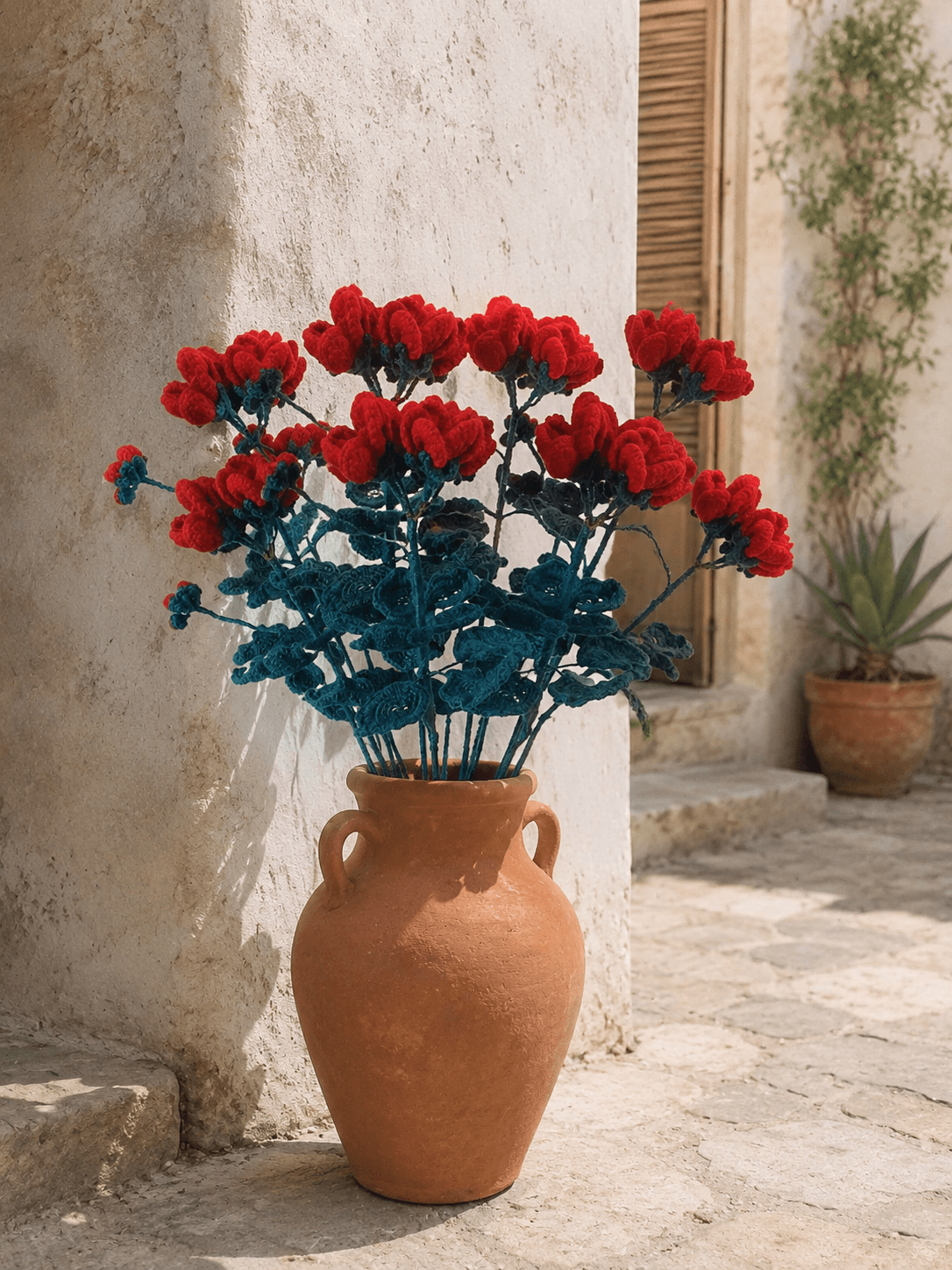
Some crochet flowers are cheerful decorations. Others make people stop for a second and ask, “Wait… is that really crocheted?”
That second reaction has always been my goal. When I design a flower, I don’t start by wondering how many petals it should have. I start by looking at the real plant. I study how the petals overlap, how the stem bends under the flower’s weight, where each leaf grows, and even the tiny imperfections that make nature believable.
The good news is that creating realistic crochet flowers isn’t about using complicated stitches. It’s about paying attention to details that many patterns overlook.
Quick Answer
Realistic crochet flowers are created by combining accurate botanical shapes, thin cotton yarn, wire support, careful petal shaping, natural colors, and lifelike assembly. Small details such as curved stems, layered petals, and realistic leaf placement make a much bigger difference than complicated crochet stitches.
Why do realistic crochet flowers look different?

Most crochet flowers are designed as decorations. Realistic crochet flowers are designed as botanical sculptures. Instead of simplifying nature, they try to recreate it.
That means paying attention to:
- petal proportions
- flower centers
- stem thickness
- leaf placement
- natural curves
- realistic colors
When these details work together, the flower feels believable before anyone even notices it’s crocheted.
1. Study the real flower before picking up your hook
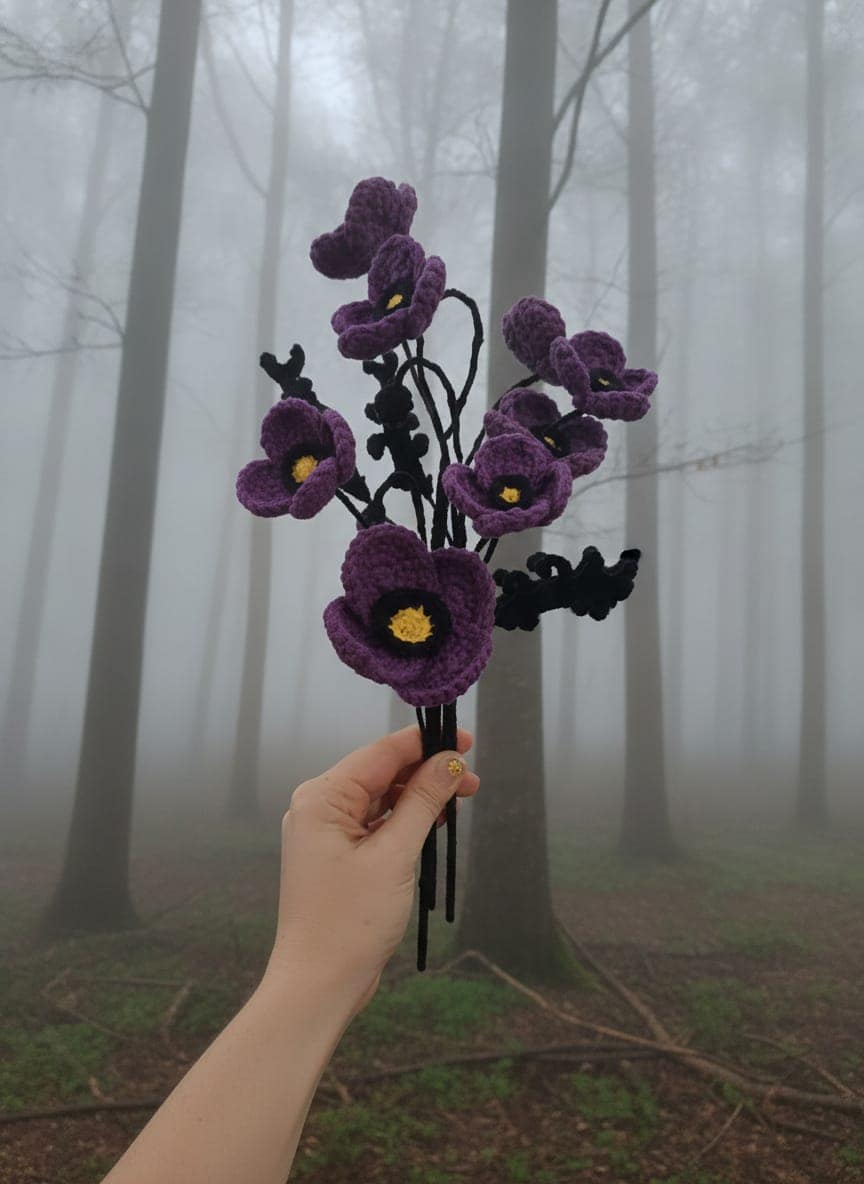
Nature is the best designer you’ll ever work with. Before I design a new flower, I spend time looking at photographs from different angles.
I ask myself questions like:
- Do the petals overlap?
- Are they flat or cupped?
- Does the stem stand upright or lean?
- Where do the leaves grow?
- Does every flower on the plant look identical?
Those observations become part of the pattern. The more carefully you observe, the more realistic your finished flower becomes.
2. Choose thin cotton yarn
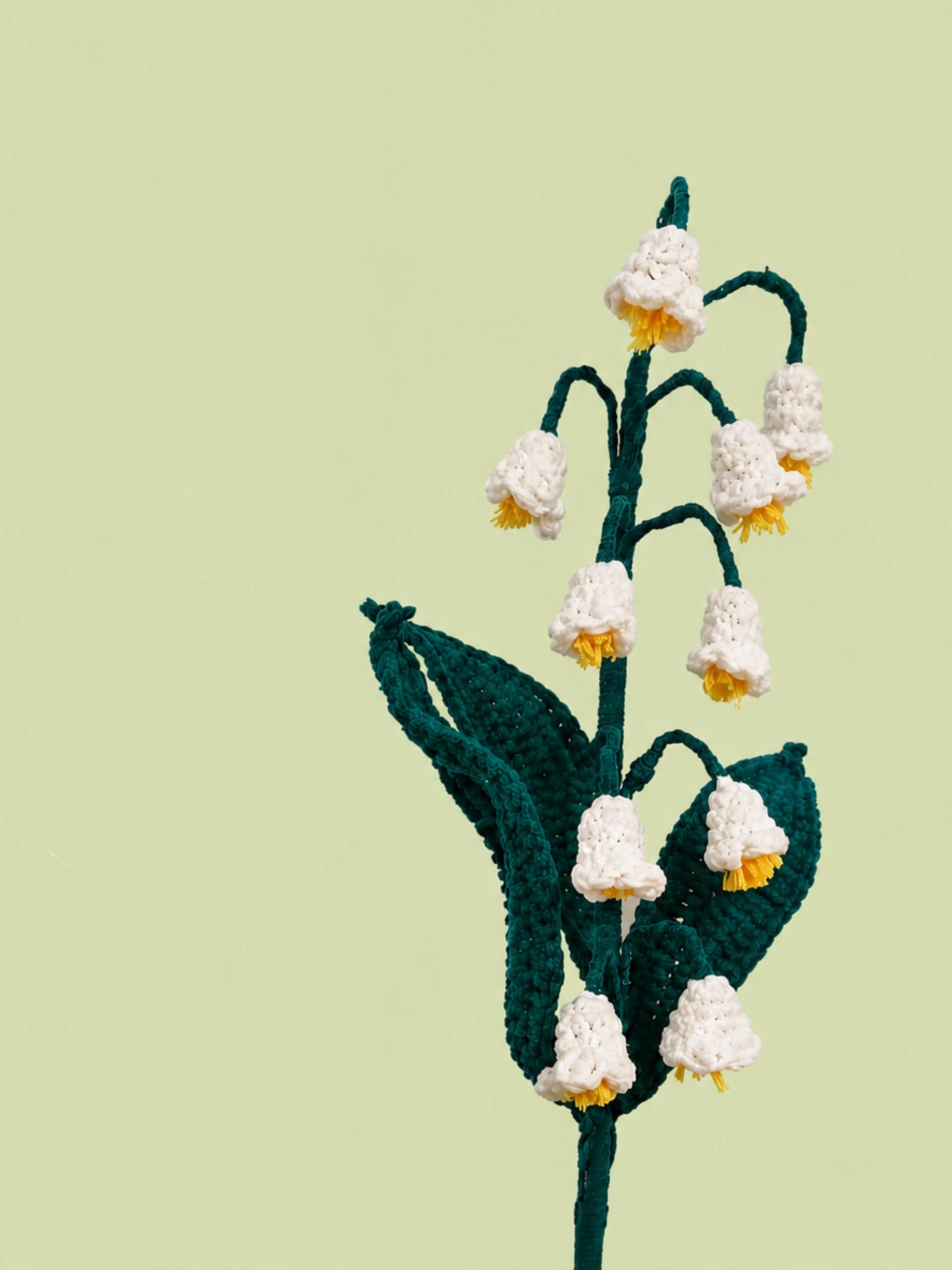
Thicker yarn creates charming flowers, but it rarely creates botanical realism. Mercerized cotton produces cleaner stitches, sharper edges, and more defined details.
Thin cotton also allows petals to keep their shape without looking bulky. That’s one of the reasons most of my realistic flowers are designed with fine cotton yarn.
3. Wire changes everything
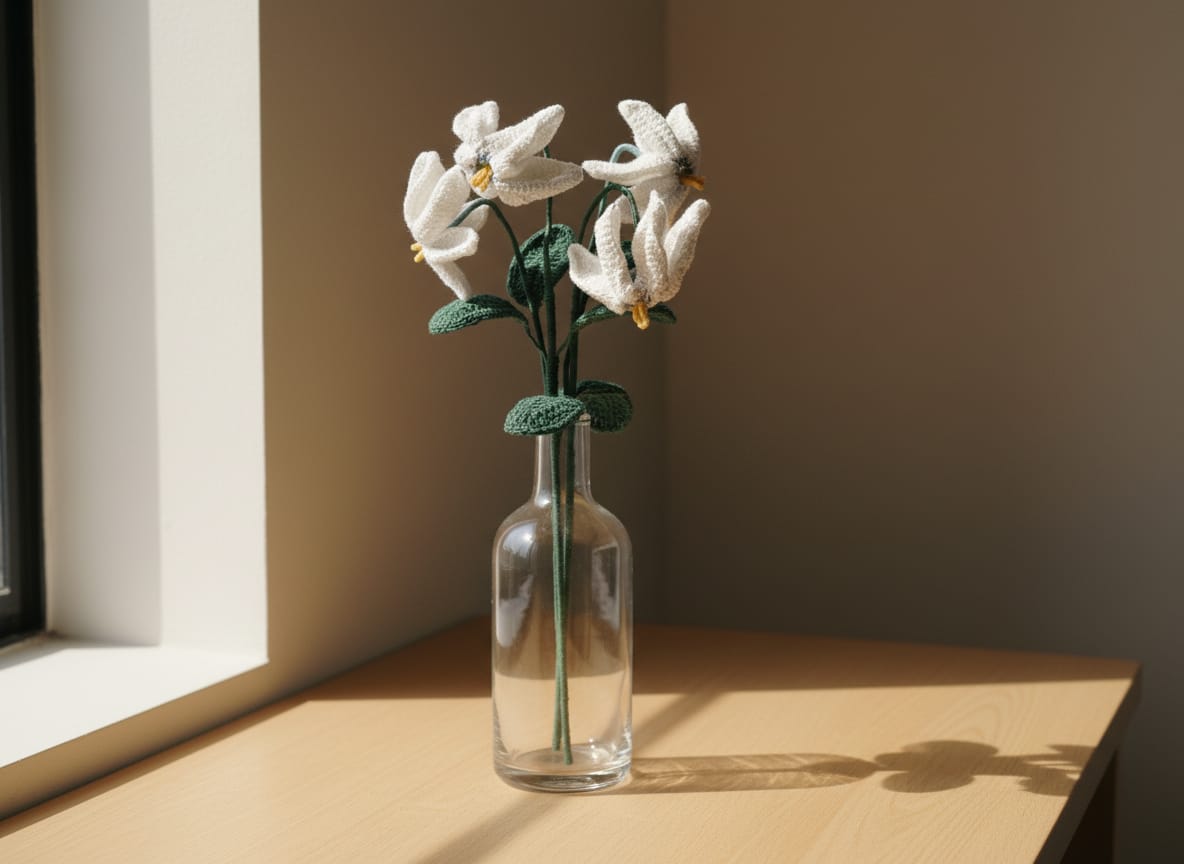
One of the biggest differences between decorative flowers and realistic flowers is movement. Real flowers aren’t perfectly straight.
They bend, droop and twist toward the light. Wire lets you recreate those natural movements.
It allows you to:
- curve stems
- shape petals
- bend leaves
- create graceful branches
Instead of fighting gravity, your flowers begin working with it.
4. Shape every petal by hand
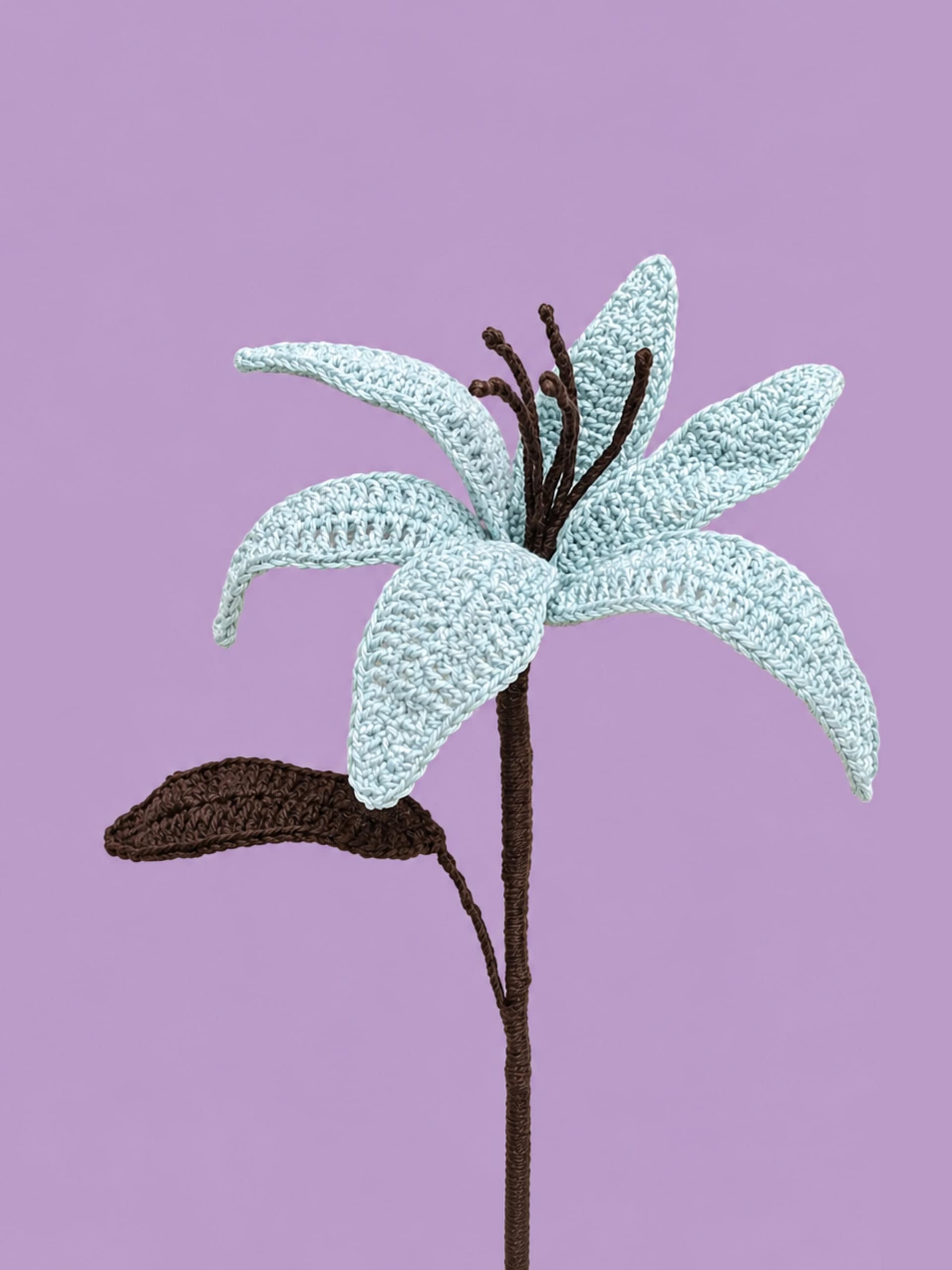
Finishing doesn’t end when the last stitch is made. In fact, that’s where realism begins. Spend a few moments gently bending petals. Open some. Curl others. Tilt the flower slightly.
Real flowers are wonderfully imperfect. Your crochet version should be too.
5. Use colors found in nature
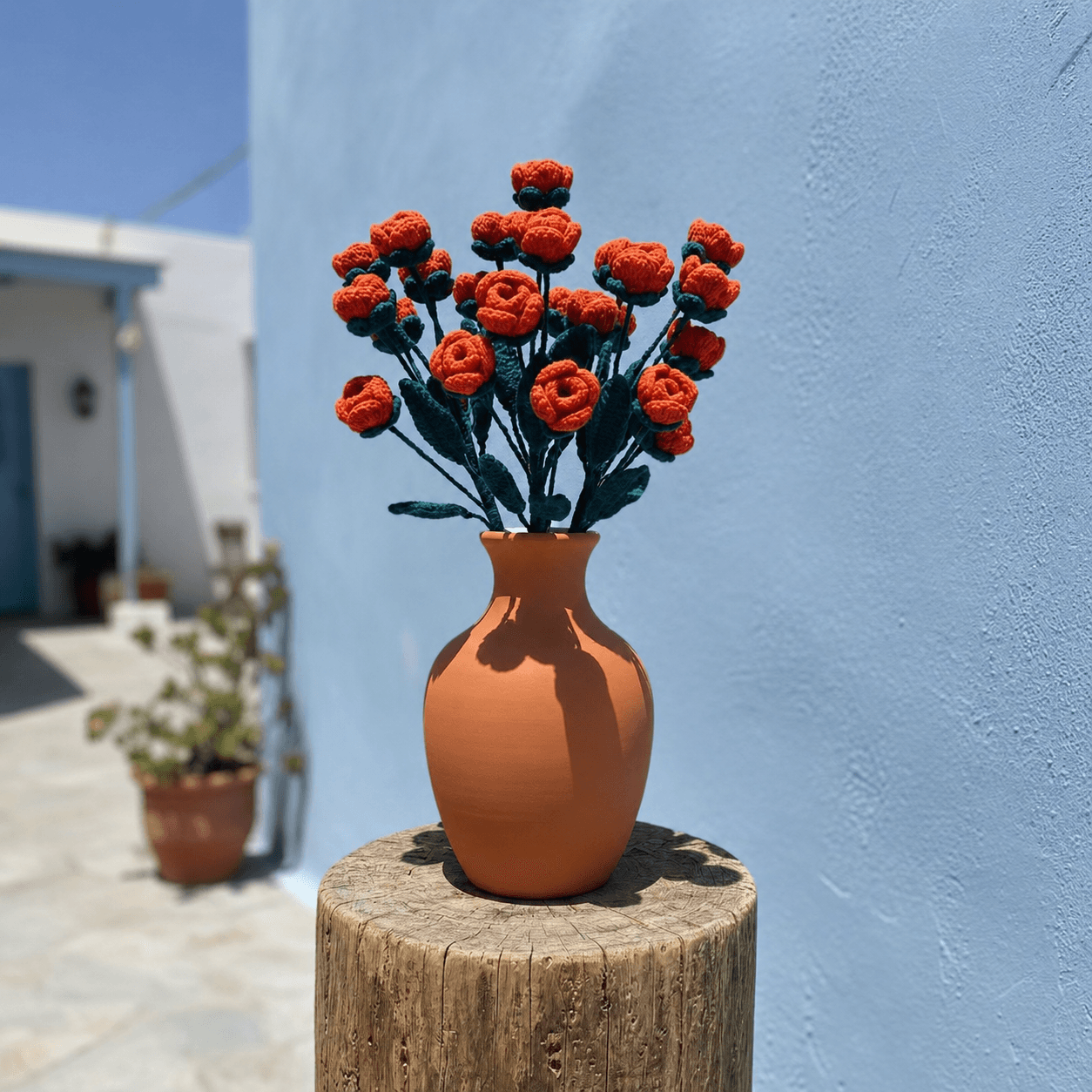
Nature rarely uses one flat color. Petals often fade from darker centers to lighter edges. Leaves have different shades depending on age. Even white flowers contain cream, green, or soft yellow tones.
Choosing natural color combinations instantly makes a bouquet feel more believable.
6. Don’t make every flower identical
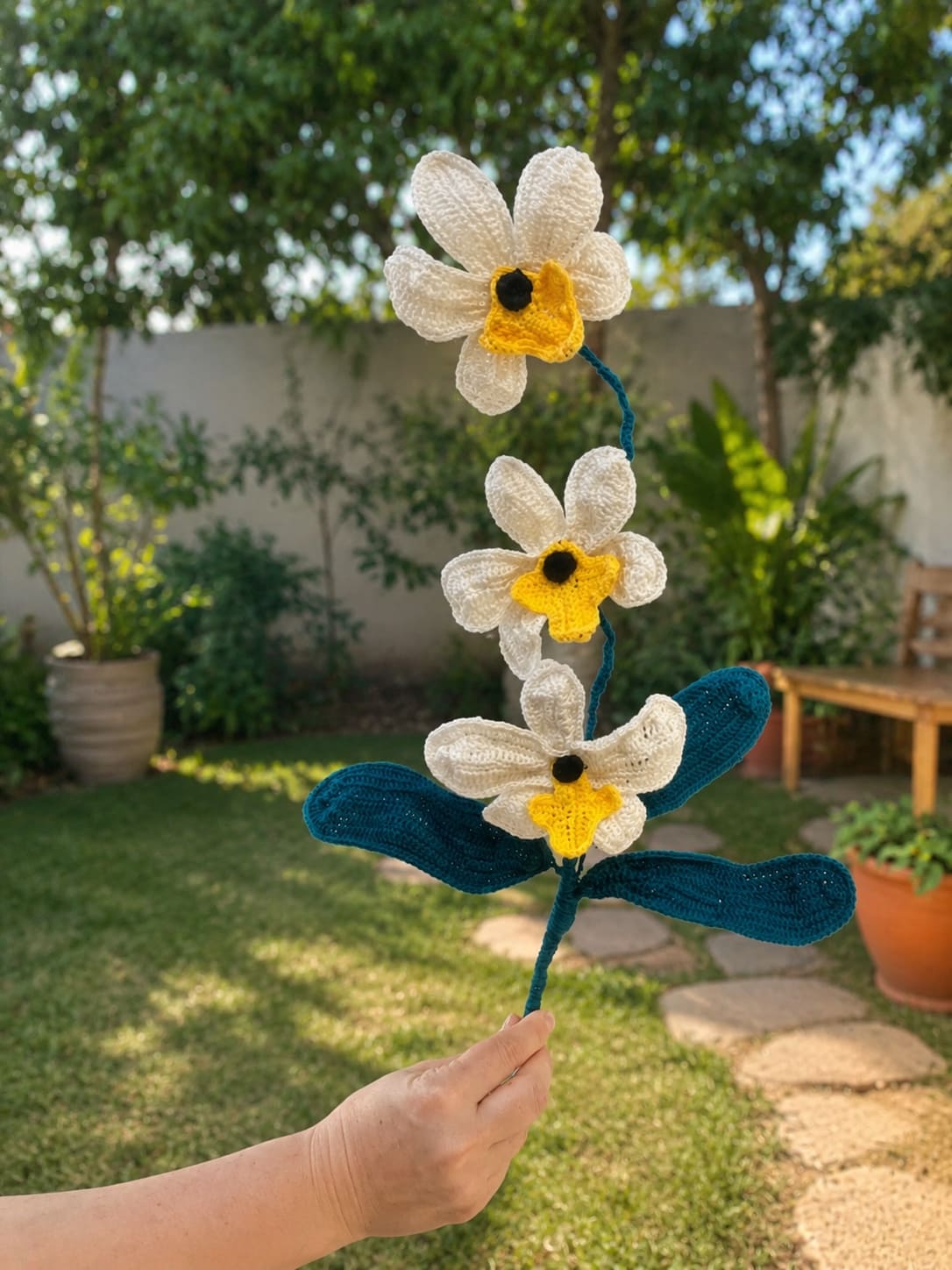
One of the easiest ways to spot an artificial bouquet is perfect uniformity. Nature doesn’t repeat itself exactly.
Some flowers bloom fully. Others are just opening. Some petals curl while others remain flat. Adding small variations creates a bouquet that feels alive.
7. Think like a florist
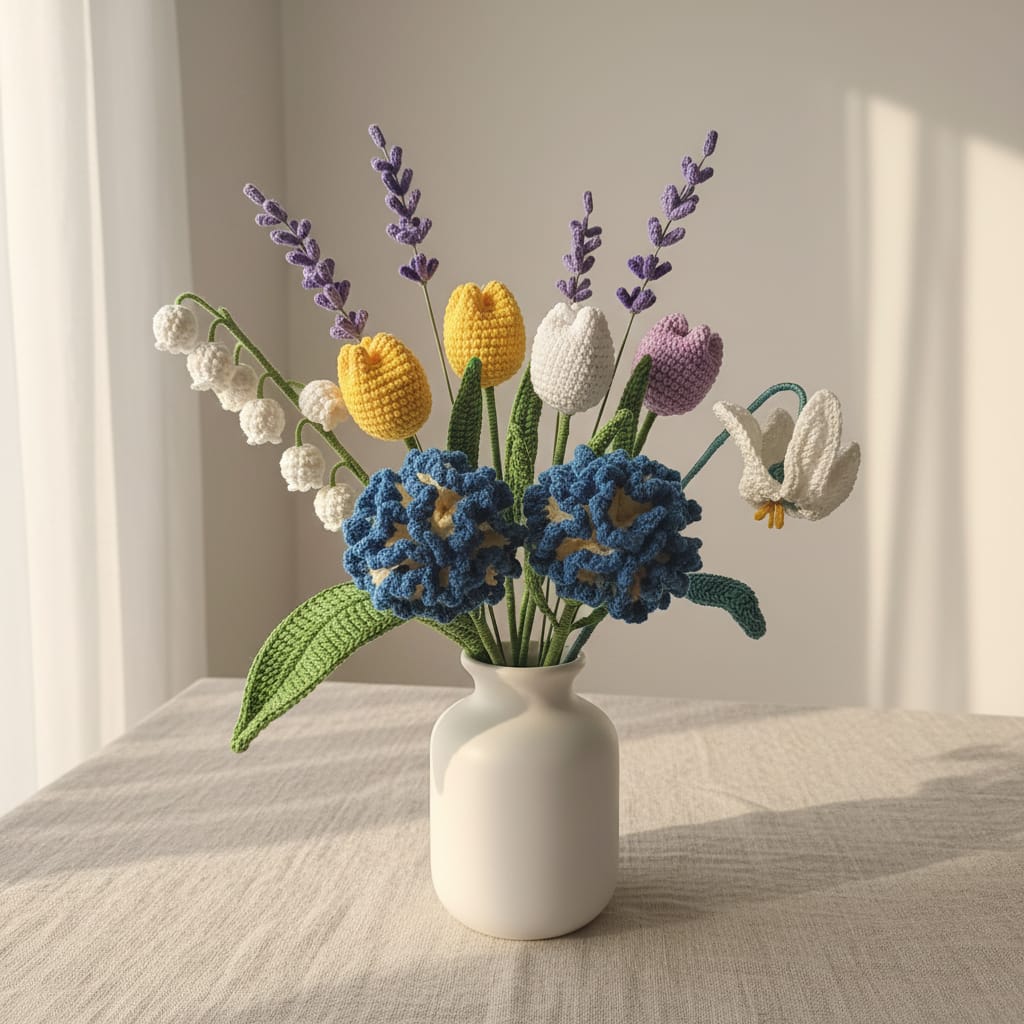
A realistic bouquet isn’t just a collection of flowers. It’s an arrangement.
Mix different heights. Allow stems to cross naturally. Leave small gaps between flowers. The empty spaces help each bloom stand out.
8. Pay attention to leaves
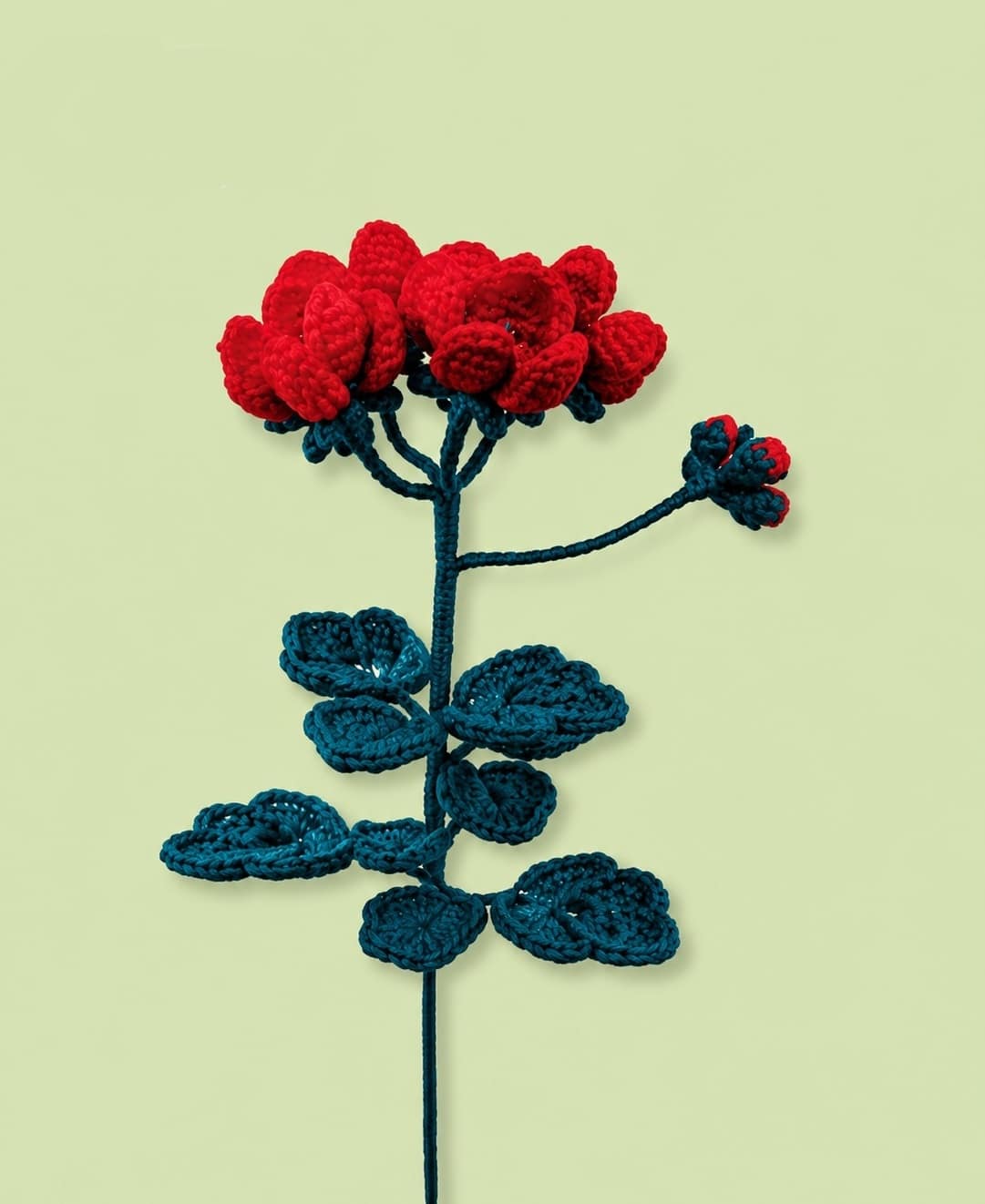
Leaves often receive less attention than flowers, but they have a huge influence on realism.
Notice where leaves attach to the stem. Notice their direction. Notice how they twist slightly rather than sitting perfectly flat.
A beautifully designed leaf can completely transform a bouquet.
9. Less is often more
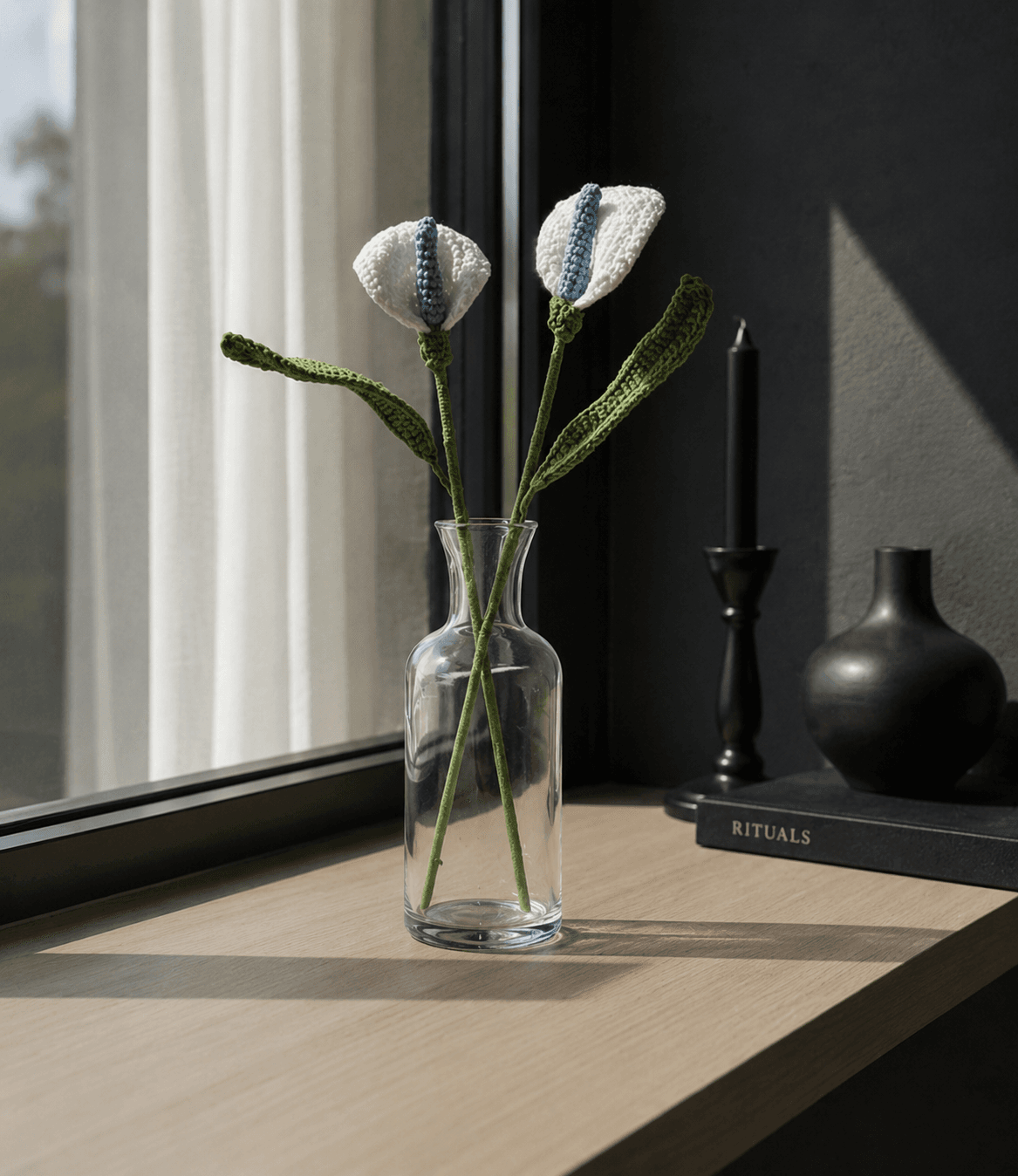
Adding extra petals doesn’t automatically create realism. Sometimes the opposite is true. A flower becomes more convincing when every element has the correct proportion.
Accuracy usually looks more realistic than complexity.
10. Practice observing, not copying

Realism doesn’t come from copying another crochet designer. It comes from learning to observe nature. Spend time in a garden. Visit a flower market. Photograph interesting blooms.
The better you understand real plants, the easier it becomes to recreate them in yarn.
Frequently Asked Questions
What yarn is best for realistic crochet flowers?
Fine cotton yarn produces crisp stitches and delicate petals that closely resemble real flowers.
Do realistic crochet flowers always need wire?
Not always, but wire makes shaping stems, petals, and leaves much easier and creates a more natural appearance.
Are realistic crochet flowers suitable for beginners?
Yes. Many realistic flowers use simple stitches. The realism comes from assembly and shaping rather than difficult crochet techniques.
Why do my crochet flowers look flat?
Petals usually need shaping after crocheting. Adding wire, gently curving petals, and assembling them at different angles creates much more depth.
How long does it take to crochet a realistic flower?
Depending on the design, a single flower can take anywhere from one hour to several hours. Larger botanical flowers with multiple petals and leaves naturally require more time.
Can crochet flowers last forever?
Unlike fresh flowers, crochet flowers don’t wilt. With occasional dusting and careful storage, they can remain beautiful for many years.
Inside My Design Process – from a real flower to a finished pattern.
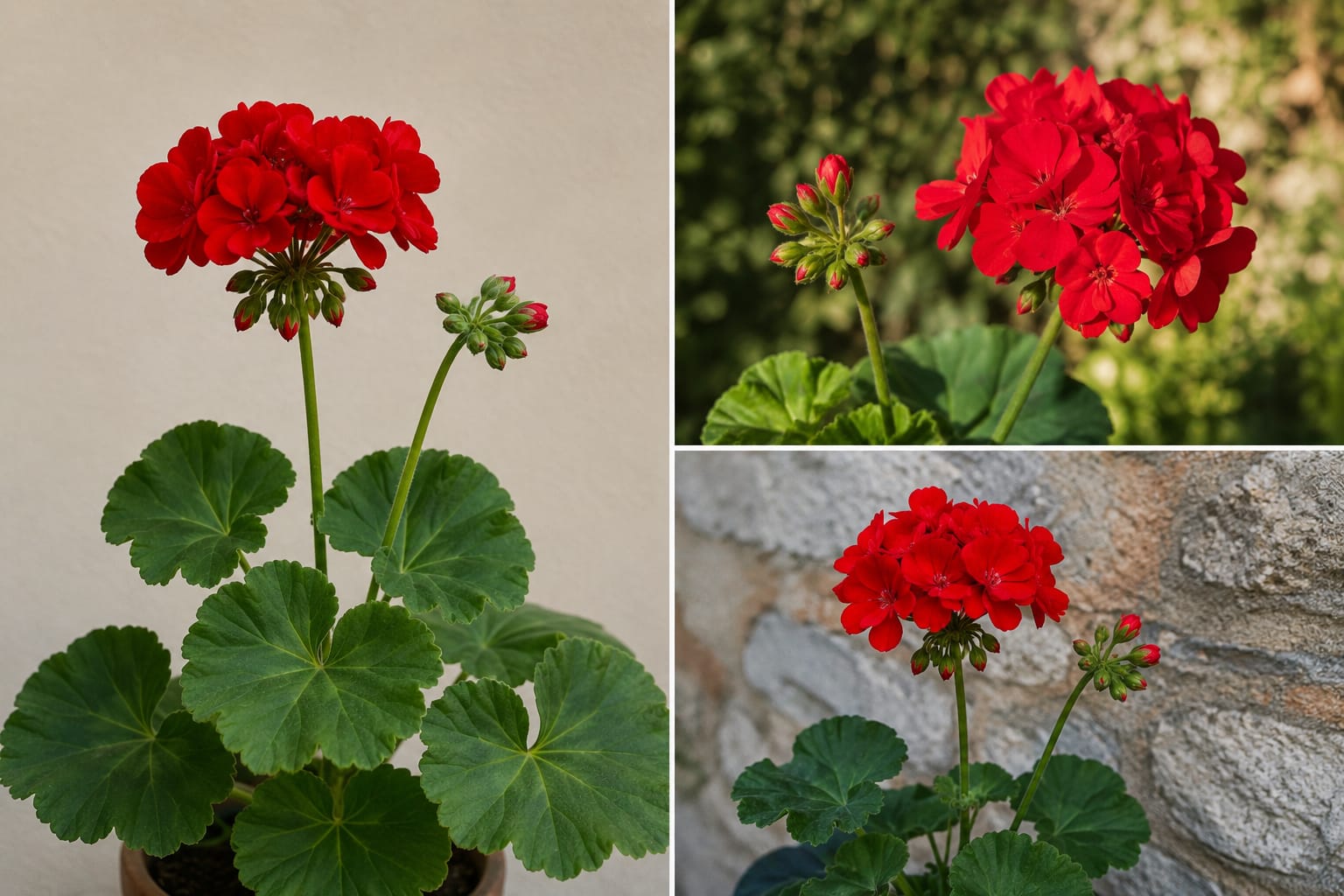
Discover More Realistic Crochet Flowers
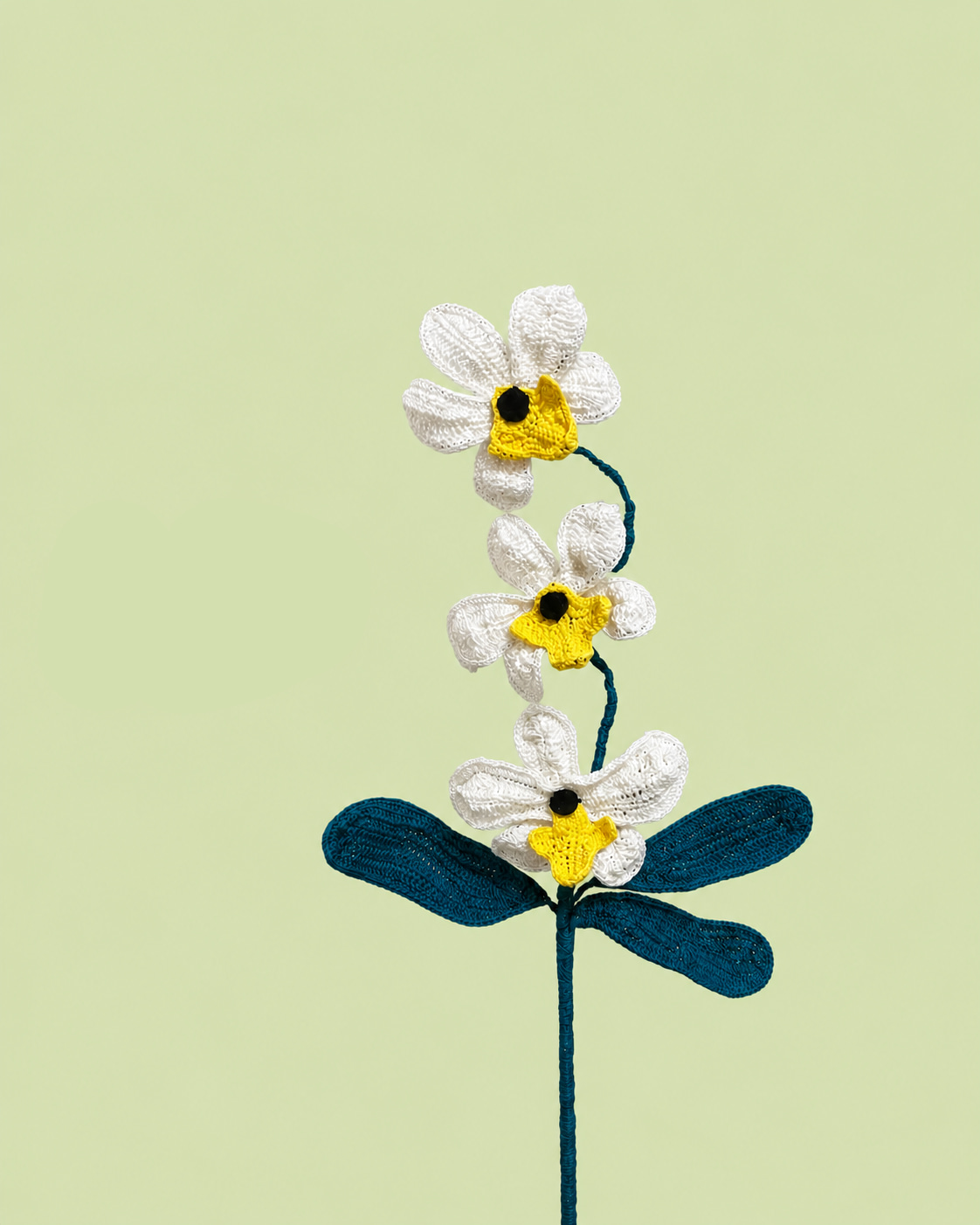
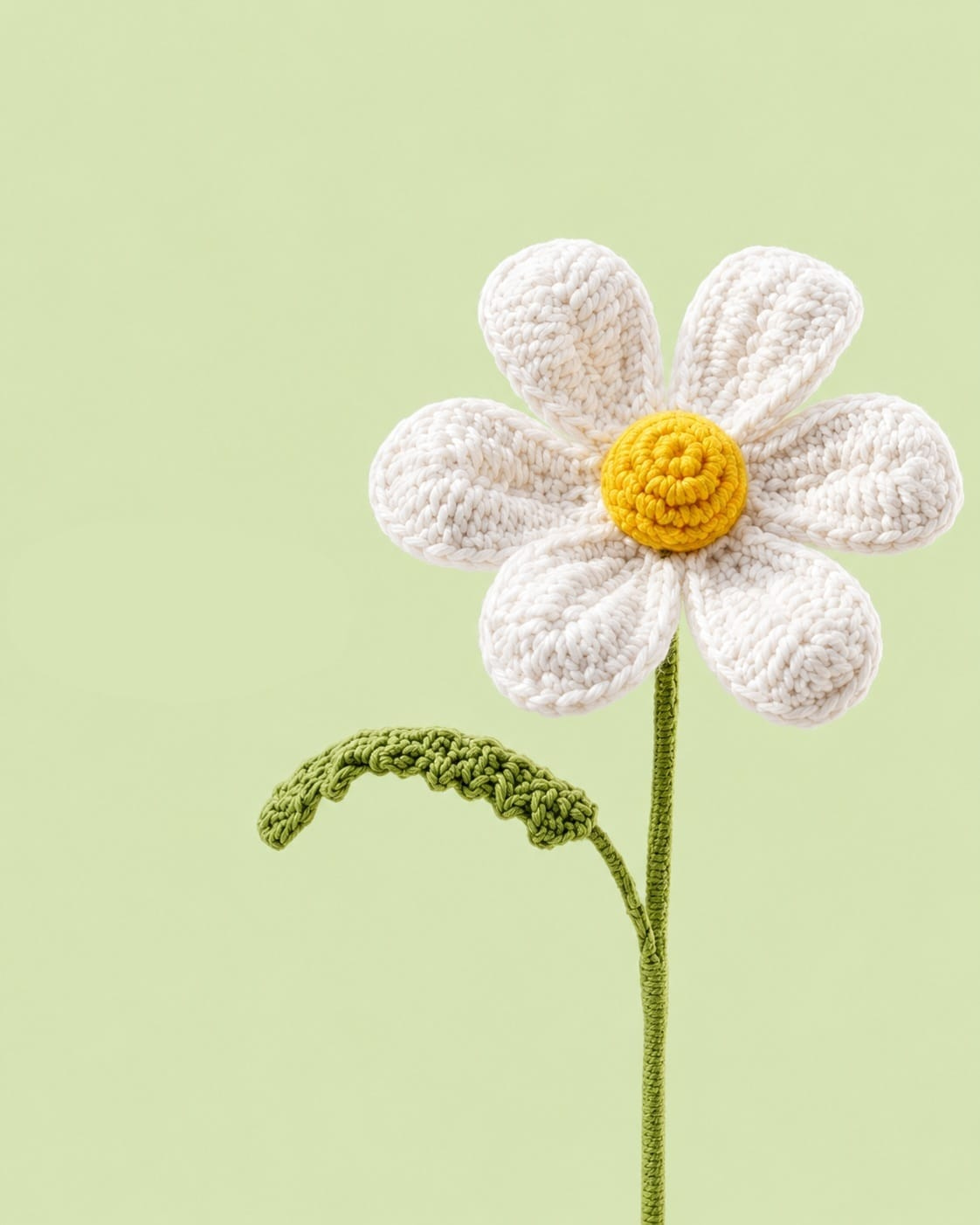
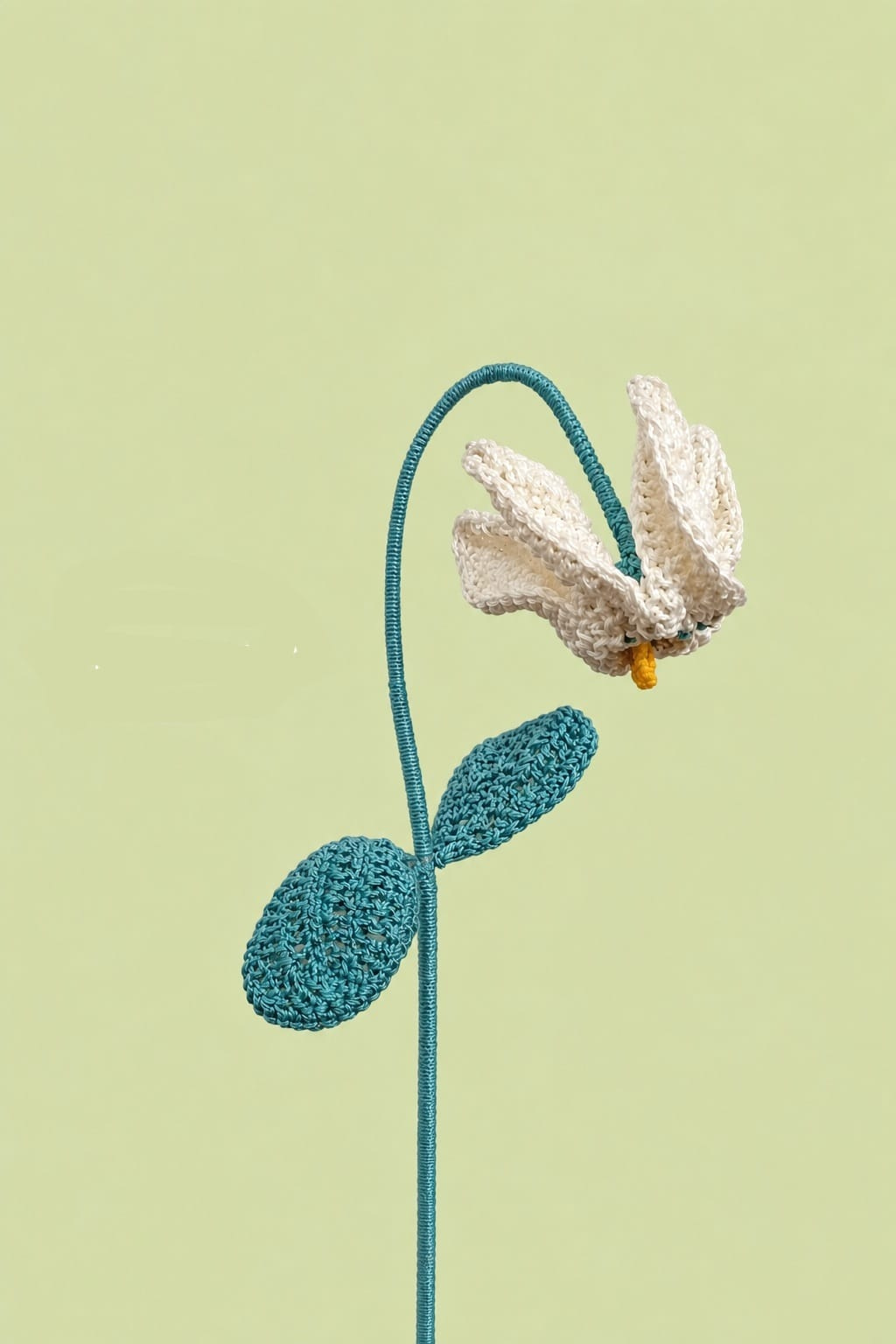
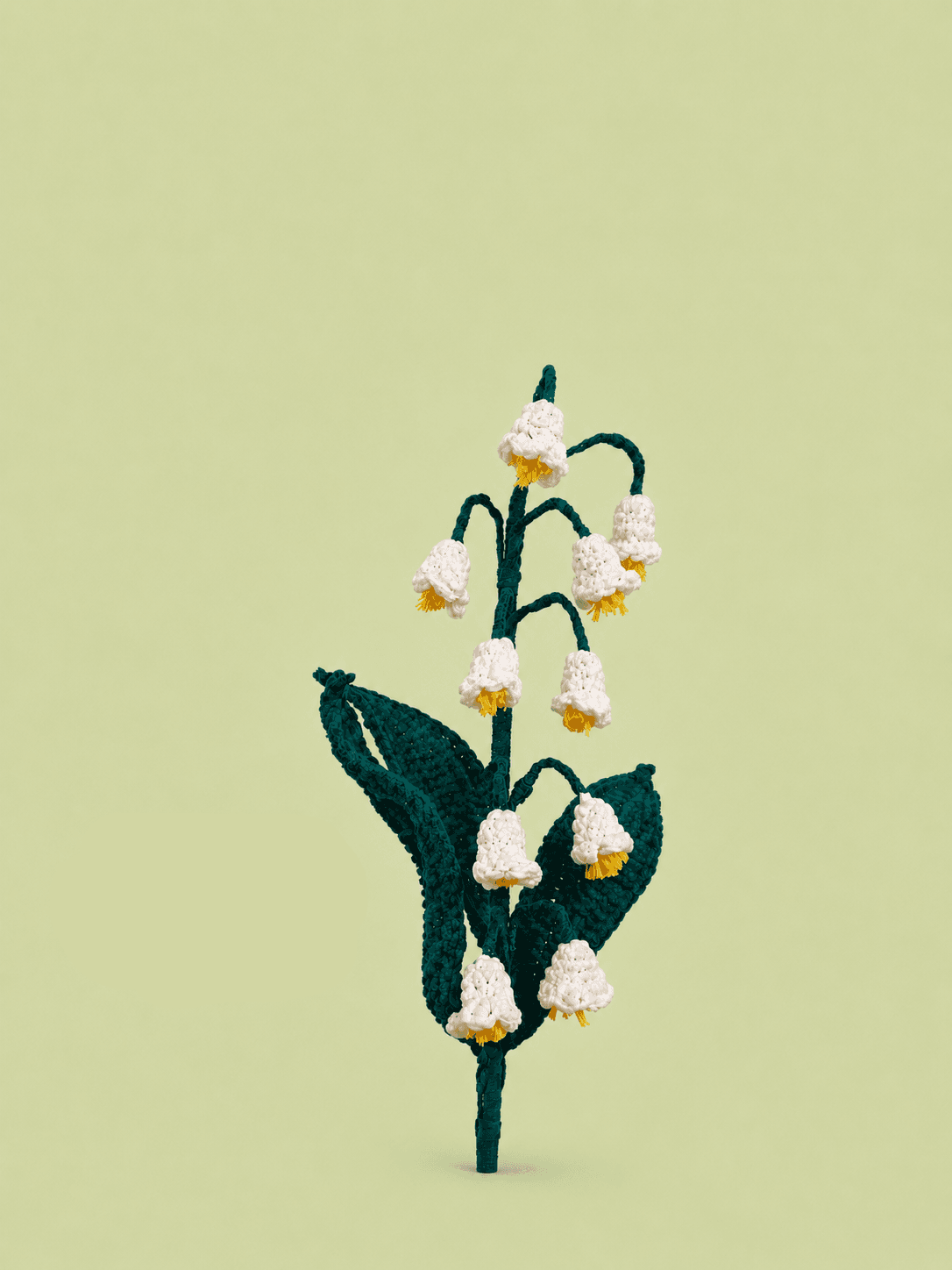
If you’d like to put these ideas into practice, you might enjoy exploring some of my botanical-inspired patterns. Each one is designed by studying real flowers first, then translating their natural shapes into crochet.
You might enjoy:
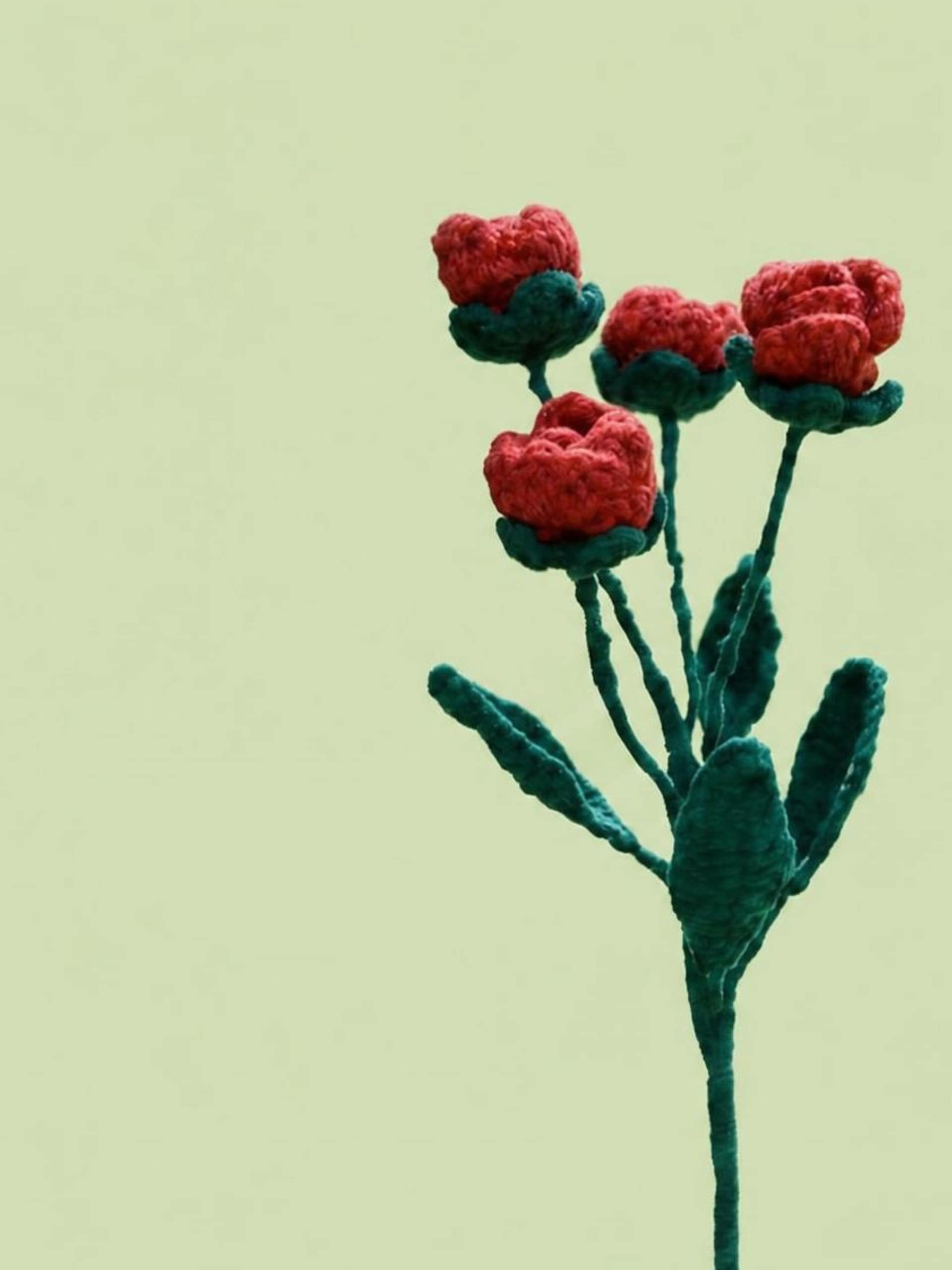
Whether you make a single stem or an entire bouquet, the most rewarding part isn’t making a perfect flower. It’s creating one that makes someone lean in a little closer before realizing it’s made from yarn.
Until next bloom,
🖤
Kootsiko
Join my newsletter to receive new patterns, tutorials, and the occasional free surprise.
Read more
Crochet Flowers as Gifts: A Thoughtful Choice for Allergies, Pregnancy and Pets
Thinking of giving crochet flowers as gifts? They do not produce pollen, have no natural floral frag…
How to Spot AI Crochet Patterns Before You Buy
AI crochet patterns are everywhere, but an AI-looking image doesn’t necessarily mean the pattern is …
Birth Month Flowers You Can Crochet: Meanings, Symbolism & Pattern Ideas for Every Month
Looking for the perfect birthday crochet gift? Discover every birth month flower, what each one symb…
How to Choose Flowers for a Crochet Bouquet That Looks Beautiful
A beautiful crochet bouquet isn't just about making pretty flowers. It's about choosing blooms that …
How to Make Realistic Crochet Flowers: 10 Secrets That Bring Yarn to Life
Learn how to make realistic crochet flowers with better yarn choices, petal shaping, wire techniques…
Zephyra – Free Crochet Flower Pattern
Create your own Zephyra crochet flower with this free crochet flower pattern. An easy pinwheel-inspi…
Crochet Flowers With Dark Meanings: 10 Blooms That Tell a Story
Discover crochet flowers with dark meanings and the symbolism behind each bloom. Create handmade bou…
10 Ways to Style Crochet Flowers in a Modern Gothic Home
Think gothic decor means skulls and cobwebs? Think again. Here are 10 stylish ways to decorate a mod…
From Cottagecore to Gothic: My Crochet Poppy Pattern Obsession
One crochet poppy pattern led to another. Discover cute mini bouquets, moody Midnight Poppies and go…
How to Read a Crochet Pattern: A Beginner’s Guide
Learning how to read a crochet pattern can feel like decoding a secret language. In this beginner's …