Blocking Crochet Flowers: The Magic Fix for Droopy Petals

easy crochet flower pattern gothic fantasy crochet bouquet amigurumi crochet pattern beginner crochet flower pattern PDF

You finish a crochet flower, lay it down, and for a moment it looks perfect. Then you come back later and the petals have softened, curled inward, or completely lost their attitude.

It happens to everyone. Especially if you live somewhere humid, if you work with softer yarns, or if the flower is meant to be worn rather than just admired.

Blocking is the quiet step that turns a nice flower into a finished one. It’s what gives petals memory. It helps stitches relax into shape and stay there instead of slowly collapsing back into themselves.

If your crochet flowers ever look a little tired after all that work, blocking is usually the reason.

You’ve probably noticed it lately too. Crochet and fabric flowers are everywhere again, pinned onto coats, bags, scarves, even denim jackets. Brooches have quietly made their comeback, and suddenly flowers aren’t just decorative. They’re worn, moved, handled, and expected to hold their shape all day. That’s usually when drooping becomes impossible to ignore.

Why crochet flowers droop in the first place

When you crochet, the yarn is held in shape by tension. Your hook pulls it, twists it, and locks it temporarily into position. Over time, that tension eases. Gravity, humidity, and handling do the rest.

Petals begin to sag. Edges lose definition. Curves soften until everything looks flatter than you imagined.

Blocking works by retraining the fibers. It tells the yarn, this is your shape now. Once set, the stitches remember it.

For appliqué-style flowers, especially ones used as brooches, blocking makes a visible difference. Fuller three-dimensional flowers hold their form better on their own, but even they benefit from a little shaping.

Wet blocking for sculpted petals

Wet blocking is ideal for cotton and other natural fibers. It allows you to fully reshape the flower and gives you the most control over petal movement.

Start by filling a small basin with cool water. If you want extra structure, you can add a light stiffener such as diluted starch, a simple sugar-water mix, or watered-down PVA glue. The goal is support, not stiffness.

Submerge the flower and let it soak for about ten to fifteen minutes. When you remove it, gently press out the excess water using a clean towel. Never twist or wring. Crochet petals are delicate when wet.

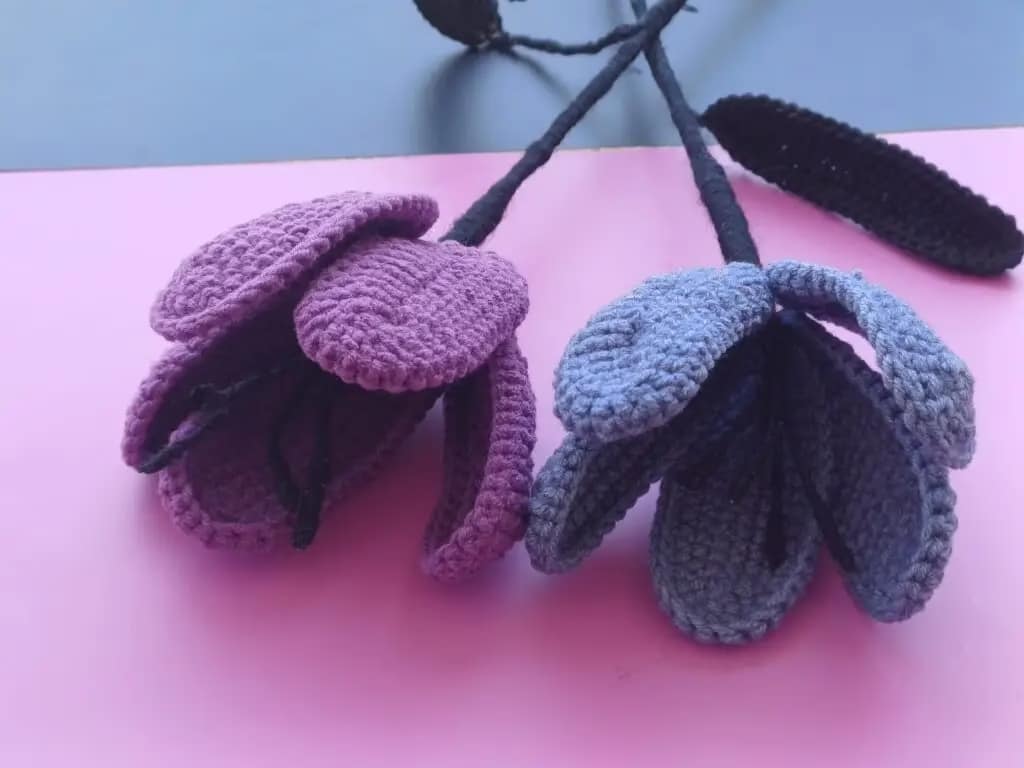
Place the flower on a blocking mat or a towel-covered surface. Using rust-resistant pins, stretch and shape each petal slowly. This is where the magic happens. You can open curves, sharpen tips, or exaggerate movement slightly so it settles beautifully once dry.

Let the flower air dry completely. This usually takes a full day. Once dry, remove the pins and you’ll see the difference immediately.

A note about acrylic yarn. Acrylic does not respond well to stiffeners and may bleed color in water. For acrylic flowers, wet blocking offers limited results, and other methods work better.

Steam blocking for quick fixes

Steam blocking is perfect when you need fast results or when soaking feels risky.

Lightly mist the flower with cool water, just enough to relax the fibers. Then hold a steamer or iron above the surface without touching the yarn. The steam softens the stitches and makes them pliable.

As soon as the petals relax, pin them into shape and allow everything to cool and dry completely. Once set, the shape holds surprisingly well.

Important warning. Never apply steam directly to acrylic yarn. It can melt or flatten permanently. If you’re unsure, always test on a small swatch first. Steam blocking works beautifully for wool blends and cotton, especially when you want gentle curves rather than dramatic stiffness.

The real secret for flowers that must never droop

Blocking gives shape, but wiring gives permanence. If your flowers are meant to be worn as brooches, shipped long distances, or displayed in humid conditions, thin floral wire is your best ally and this is why in almost all my patterns I suggest adding wire.

The most invisible method is to thread wire through the final row of stitches, then crochet back over it. This locks the wire inside the petal edge and keeps everything flexible but firm.

You can also weave wire through finished petals if the piece is already complete. Black-coated wire blends beautifully with dark yarns and disappears visually.

Once wired, petals can be gently bent into position and will hold that shape almost indefinitely. Blocking first and wiring afterward gives the strongest result.

This combination is what turns a soft crochet flower into something that behaves more like a preserved bloom.

Tools that make the process easier

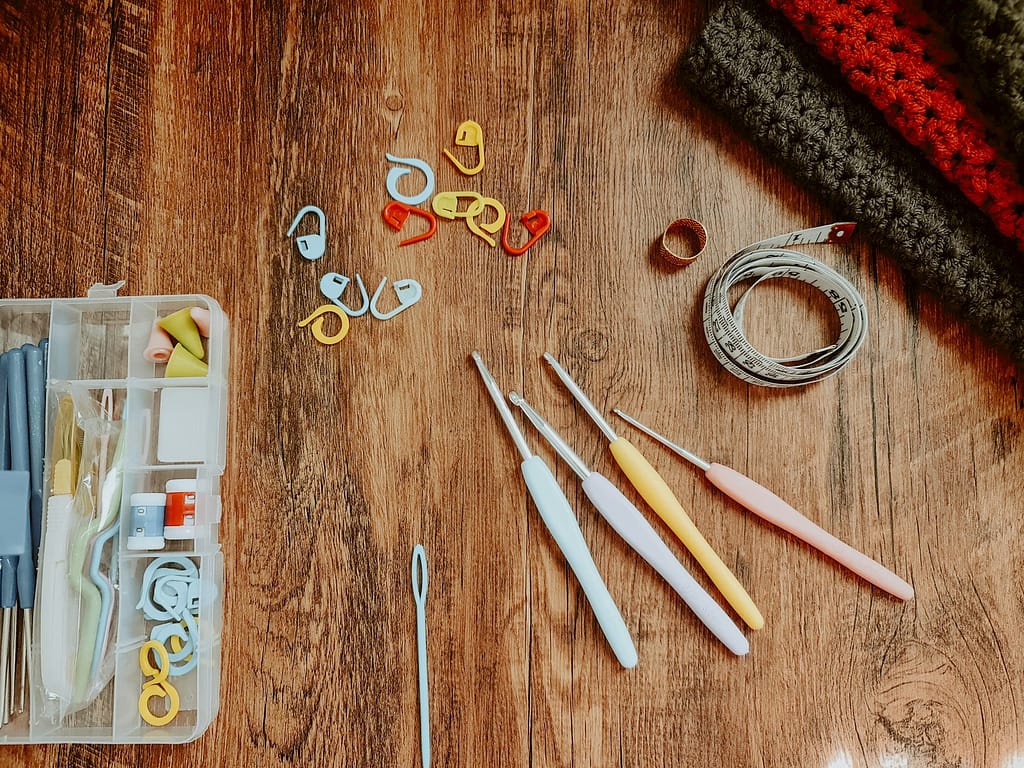
You don’t need much to block flowers well. A padded surface, rust-resistant pins, and patience will take you far.

If you work often with brooches or display flowers, floral wire and small cutters are worth keeping nearby. Distilled water helps prevent color bleeding, especially with darker shades (but if you use acrylic yarn the color bleeding can still happen).

The most important tool, though, is time. Blocking works best when you let it dry fully without rushing the process. So a day or two will be necessary.

A small habit that changes everything

One of the best ways to prevent drooping before it starts is crocheting with slightly tighter tension than usual. A smaller hook gives petals more structure from the beginning and reduces how much blocking is needed later.

Think of blocking not as fixing mistakes, but as finishing work. The same way fabric is pressed before being worn, crochet flowers need that final moment of intention.

When blocking becomes part of your style

Once you start blocking regularly, your flowers begin to look more confident. Petals separate cleanly. Shapes feel deliberate. Even simple patterns take on more presence.

It’s one of those steps that feels optional until you try it. Then it becomes impossible to skip. Blocking doesn’t just improve how your flowers look. It changes how they feel in your hands and how long they hold their beauty. Unless of course you add wire.

A small note about my patterns

If you’ve worked with my flower patterns before, you’ll notice that they’re built a little differently. I design them to rely entirely on wire for structure, not stiffeners or heavy blocking.

The petals are shaped from the inside as you crochet, so the flower already knows what it’s meant to be before it’s finished.

Blocking is not needed because the real strength comes from the wire itself. It means your flowers keep their shape over time, whether they’re worn as brooches, displayed on a stem, or packed away and brought out again months later.

Final thoughts

If your crochet flowers have ever drooped, softened, or lost their shape over time, nothing is wrong with your skills. Yarn simply needs guidance.

Blocking is that gentle guidance. A quiet ritual that turns something handmade into something finished. Whether your flowers are meant to be worn, gifted, or kept close, shaping them with care makes all the difference.

And once you see the transformation, you’ll never look at an unblocked petal the same way again.

Until next bloom,
🖤
Kootsiko


Read more

Blocking Crochet Flowers: The Magic Fix for Droopy Petals

Droopy crochet petals are not a mistake. Blocking is the final step that shapes, sets, and gives you…

How to Create a Moody Corner with Crochet Flowers

Learn how to create a dark, cozy corner with crochet flowers. A quiet, poetic way to style your home…

I’ve Been Crocheting for Months… So Why Does Everything Still Look Wrong?

Been crocheting for months and still unhappy with your work? You’re not bad at crochet. You’re stuck…

Your Craft Your Rules A Love Letter To Every Kind Of Crocheter

Crochet has no rulebook. Just joy, yarn, and your hands. Here is your permission slip to create your…

Natural vs Synthetic Yarn A Friendly Guide for Crocheters

Natural or synthetic yarn? This friendly guide helps you choose what works best for your crochet wit…

Crochet vs Knitting: A Beginner’s Guide to Choosing Your Yarn Craft

Knitting vs crochet: what’s faster, easier, calmer, and more fun? A friendly, funny guide to choosin…

Crochet Tools for Beginners: The Only Guide You Actually Need

A fun, no-nonsense guide to the crochet tools beginners actually need, the ones they can live withou…

Stop Wasting Yarn (and Money): 15 Clever Hacks

Save yarn, save money, save your sanity! Discover 15 clever, funny and totally doable ways to make y…

The Psychology of Making Something That Lasts Forever

When you make something with your hands, something that stays, it feels almost rebellious.

Meet the Spellvine: The Dark Thread That Ties It All Together

The story and the free pattern of that thin, black, swirling vine you see in my photos. The Spellvin…

How to Create a Moody Corner with Crochet Flowers

Not every space in your home needs to be bright, productive, or politely cheerful. Some corners are meant to whisper instead of shout. They exist for slow moments, half finished thoughts, and the kind of calm that only shows up when the lights are low and the world finally quiets down.

A moody corner is not about darkness for the sake of drama. It is about atmosphere. About softness, depth, and intention. It is a place that feels held rather than styled, layered rather than decorated. And crochet flowers, especially in darker tones, are perfect for creating that feeling because they bring texture, symbolism, and a sense of permanence that fresh flowers never quite manage.

If you have ever felt drawn to gothic interiors, shadowy palettes, or romantic spaces that feel slightly mysterious, this is for you.

Let’s build a moody corner, slowly and thoughtfully, one stitch at a time.

Step 1: Find a Corner That Wants to Be Quiet

Start by observing your space instead of forcing an idea onto it. The best moody corners are rarely the obvious ones. Look for a place that already feels calm or slightly overlooked. A reading nook near a window, a small table that never quite found its purpose, a shelf in a room where the light softens in the afternoon.

You do not need much. A chair, a side table, or even just a surface that can hold a vase is enough. What matters is the feeling. If the light hits gently, if shadows linger instead of disappearing, you have found a good starting point.

Natural light is welcome, but it should be indirect. Think glow rather than glare. Your crochet flowers will catch the light quietly, creating depth instead of demanding attention.

Step 2: Let the Flowers Lead

Crochet flowers are not just decoration in a moody corner. They are the heart of it. Their shapes, colors, and textures set the tone for everything else.

Choose deeper shades and muted palettes. Black, charcoal, deep red, dusty teal, muted purple, and shadowy greens all work beautifully. These colors absorb light instead of reflecting it, which is exactly what gives the space its softness.

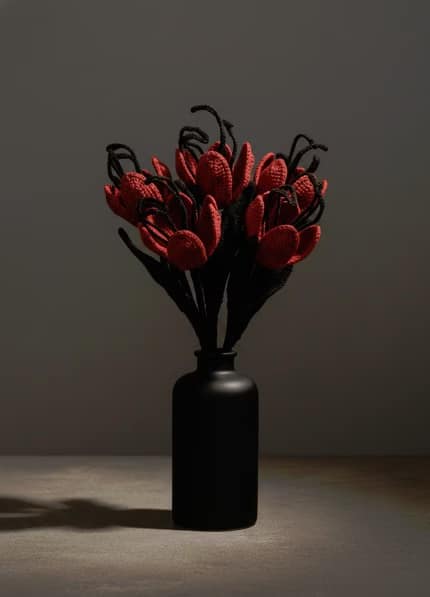
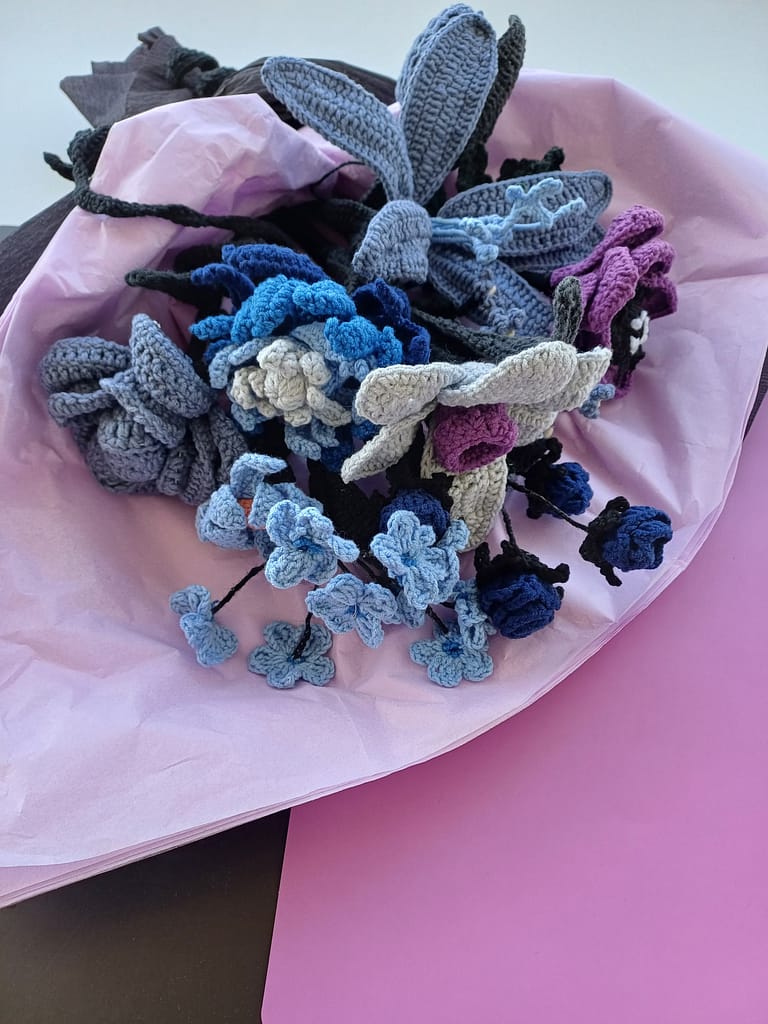
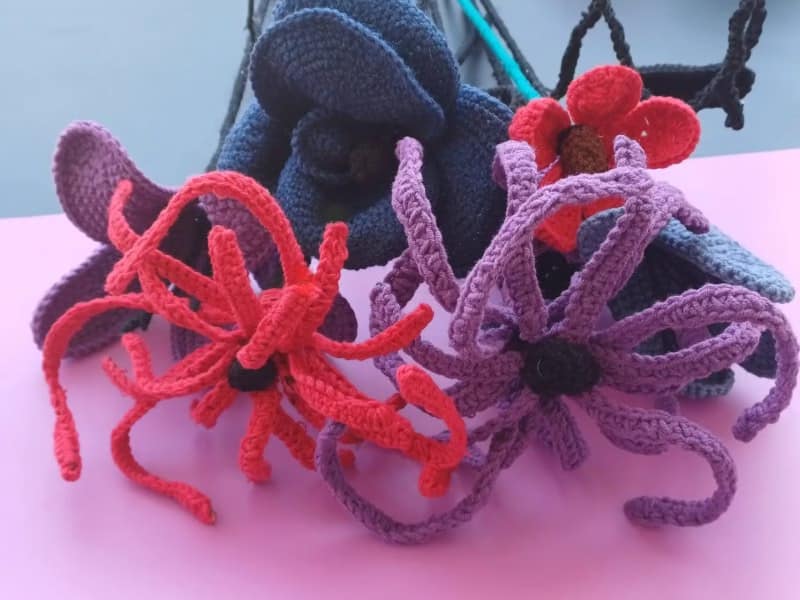
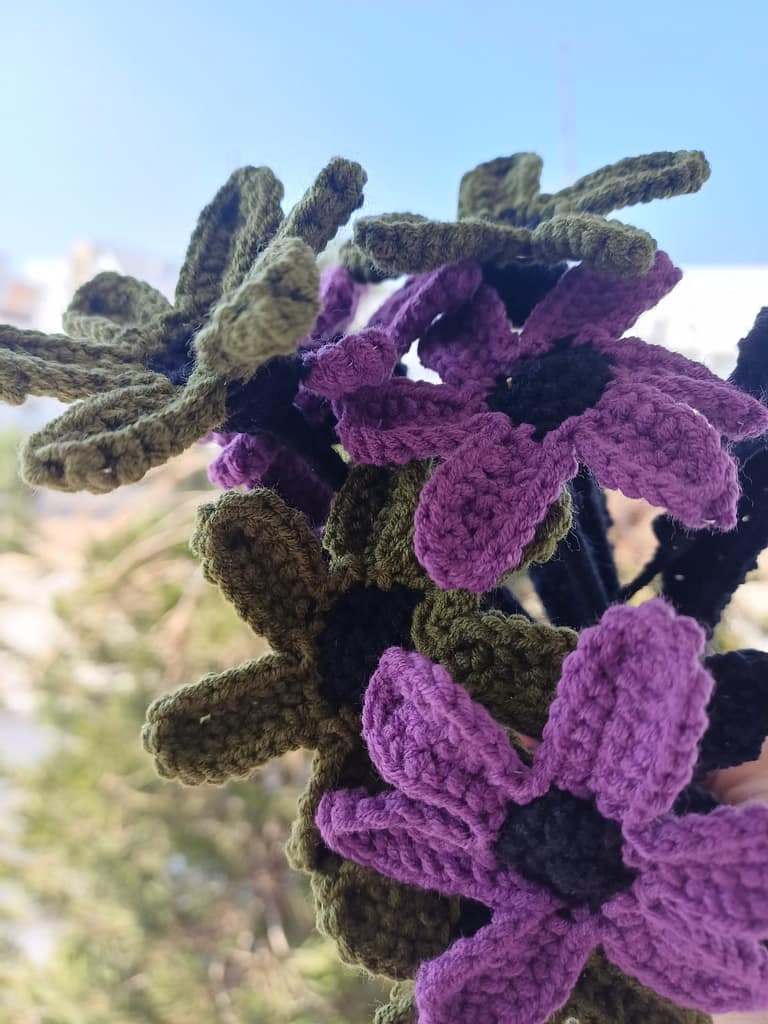
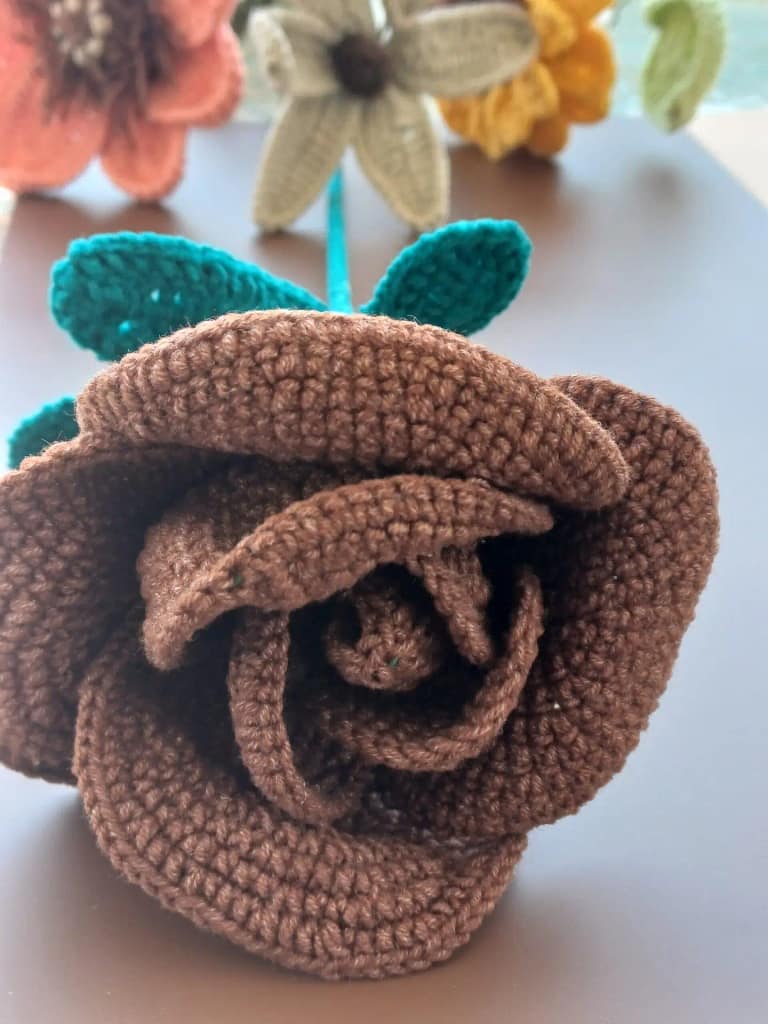
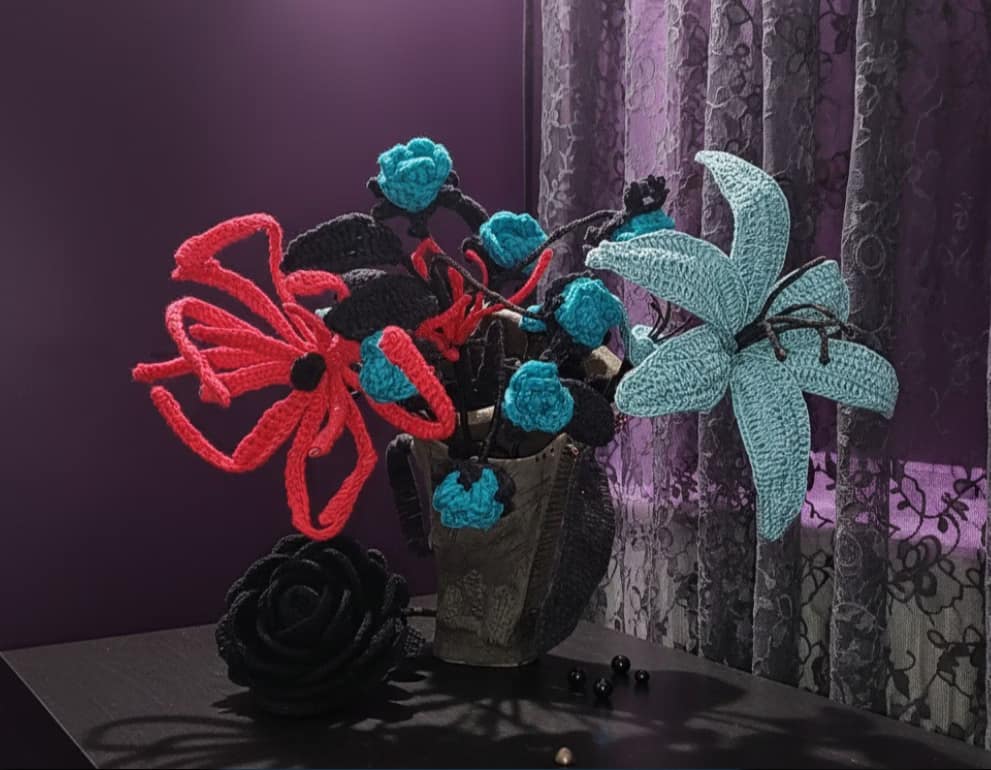
In main photo of this article, the Medousa flower brings movement and tension, almost sculptural in its shape. The Midnight Lilium adds elegance and structure, while the Nocturne Rose grounds everything with weight and quiet drama. Together, they create contrast without chaos, which is exactly what you want.

Mix sizes and forms. Pair something bold with something restrained. A large flower with reaching petals next to smaller blooms creates visual rhythm and keeps the arrangement from feeling static.

Display ideas that work especially well in moody spaces include vintage vases, ceramic containers with texture, dark glass bottles, or even unexpected vessels that look slightly worn. Perfection is not the goal. Character is.

Step 3: Build the Mood in Layers

Mood does not come from a single object. It comes from layers that work together.

Lighting is where everything changes. Avoid anything harsh or overhead. Choose candles, lanterns, fairy lights with a warm tone, or a small lamp with a soft bulb. Shadows are part of the design here, not a problem to solve.

Textures matter just as much as color. Crochet naturally brings softness, so echo that with velvet cushions, woven throws, linen, aged wood, or metal accents with a patina. These materials absorb sound and light, making the space feel intimate and grounded.

Keep the color palette cohesive. You do not need many colors, just variations of a few that speak to each other. Burgundy, forest green, charcoal, deep blue, and black all work beautifully together when layered thoughtfully.

Think of your crochet flowers as the main characters, and everything else as the set design supporting their presence.

Step 4: Add Meaning, Not Clutter

A moody corner should feel personal, almost secret. This is not the place for trends or filler objects.

Choose a few items that hold meaning for you. A book you return to often. A framed quote that feels like a spell. A tarot deck, a crystal, a small object you found while traveling. These things add emotional weight, which is what makes the space feel alive.

This is also a beautiful place to crochet. A corner where you sit with your yarn, your thoughts, and maybe a candle burning quietly beside you. Over time, the space absorbs those moments, and that is something you can feel when you step into it.

crochet flower bouquet, crochet flower gift, handmade crochet flowers, everlasting crochet bouquet, crochet flower home décor, modern crochet flower arrangement

Step 5: Let It Change with You

A moody corner is not meant to be finished. Rearrange it when the seasons change. Swap flowers when your mood shifts. Add a new bloom when you complete a pattern that feels special.

Dust it gently, care for it slowly, and allow it to evolve. This is not about perfection or styling rules. It is about presence.

A reminder that beauty does not have to be loud. That handmade things carry energy. That shadows can be comforting.

If you want to create your own crochet flowers for a moody corner like this, you can find my patterns in my shop. They are designed to be expressive, a little dark, and full of character, perfect for spaces that bloom best away from the spotlight.

Claim your corner. Let it hold your flowers, your craft, and your quiet moments. And let it bloom, softly, in the shadows.

Until next bloom,
🖤
Kootsiko

Read more

Blocking Crochet Flowers: The Magic Fix for Droopy Petals

Droopy crochet petals are not a mistake. Blocking is the final step that shapes, sets, and gives you…

How to Create a Moody Corner with Crochet Flowers

Learn how to create a dark, cozy corner with crochet flowers. A quiet, poetic way to style your home…

I’ve Been Crocheting for Months… So Why Does Everything Still Look Wrong?

Been crocheting for months and still unhappy with your work? You’re not bad at crochet. You’re stuck…

Your Craft Your Rules A Love Letter To Every Kind Of Crocheter

Crochet has no rulebook. Just joy, yarn, and your hands. Here is your permission slip to create your…

Natural vs Synthetic Yarn A Friendly Guide for Crocheters

Natural or synthetic yarn? This friendly guide helps you choose what works best for your crochet wit…

Crochet vs Knitting: A Beginner’s Guide to Choosing Your Yarn Craft

Knitting vs crochet: what’s faster, easier, calmer, and more fun? A friendly, funny guide to choosin…

Crochet Tools for Beginners: The Only Guide You Actually Need

A fun, no-nonsense guide to the crochet tools beginners actually need, the ones they can live withou…

Stop Wasting Yarn (and Money): 15 Clever Hacks

Save yarn, save money, save your sanity! Discover 15 clever, funny and totally doable ways to make y…

I’ve Been Crocheting for Months… So Why Does Everything Still Look Wrong?

easy crochet flower pattern gothic fantasy crochet bouquet amigurumi crochet pattern beginner crochet flower pattern PDF

You’ve been crocheting for months.
Not days. Not one overly ambitious weekend fueled by coffee and optimism.
Months.

You know how to chain without counting out loud like a deranged accountant. You can single crochet without checking YouTube every three stitches. You’ve even memorized some abbreviations. And yet…

Your edges are wavy. Your tension has moods. Your finished pieces look like they were made by someone who almost knows what they’re doing. And the question keeps circling your brain like an annoying mosquito: “Why can’t I do anything right?”

First of all, welcome. You’re exactly where you’re supposed to be.

Before We Begin, Let Me Confess Something

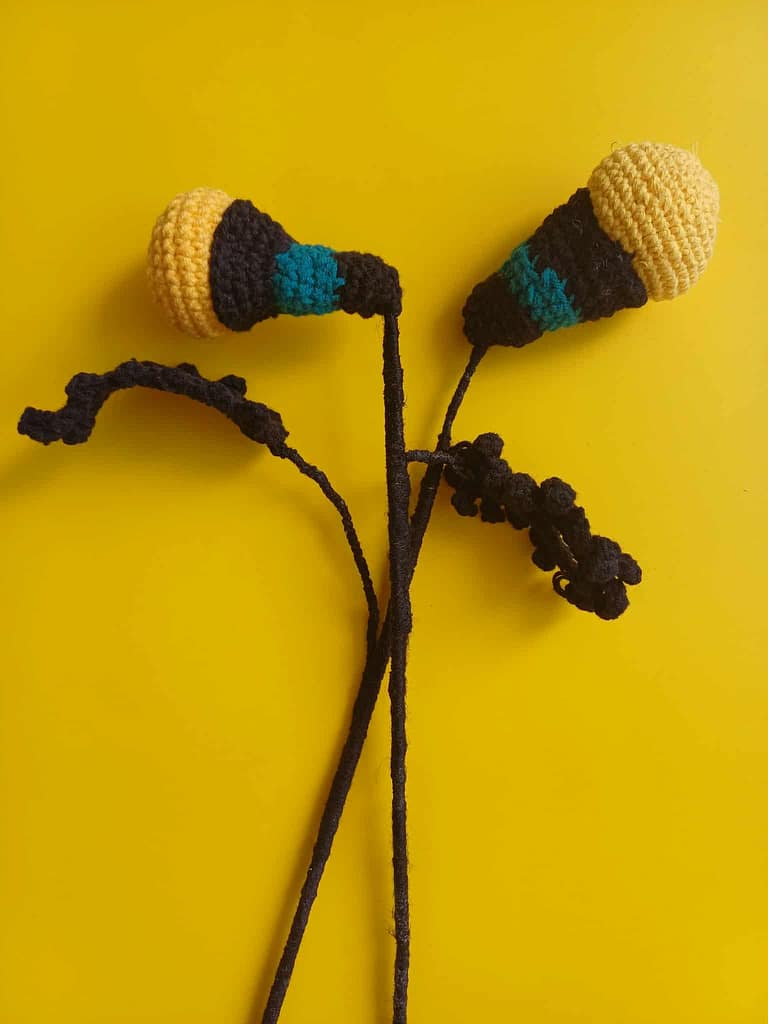
Before I tell you why crochet still feels impossibly hard after months, I need to show you something.
This.

Yes. I made that. At the time, I’d already been crocheting for a while. I knew the stitches. I tried to create a pattern. I was confident enough to think, “Oh, this will be cute.”
It was… not cute.

It leaned aggressively to one side. Its proportions were questionable. And no matter how lovingly I looked at it, it had strong “made in a hurry by someone under emotional stress” energy. I remember staring at it and thinking, “How is it possible that I’ve been crocheting for months and THIS is what I produce?”
I didn’t feel like a beginner. I also didn’t feel like someone who knew what they were doing.
I felt like I’d somehow missed a secret crochet meeting where everyone else learned how to make things look right.

If you’ve ever looked at your own work and thought, “I’m just bad at this,” you’re in very good company. Now, let’s talk about why that feeling shows up right when you think it shouldn’t.

The Crochet Confidence Crash No One Warns You About

The beginning of crochet is deceptively encouraging.
You learn the basics quickly. You make something. It vaguely resembles the thing in the tutorial. Dopamine is released. You think, “Oh. I’ve got this.”

Then a few months pass. And suddenly everything feels harder, uglier, slower. You notice mistakes you didn’t even know existed before. Your work looks… off. Not terrible. Just not good. This is not failure. This is the confidence crash phase. It’s the moment when your eyes improve faster than your hands.

The Biggest Lie Beginners Believe

Somewhere along the line, many crocheters absorb this idea: “If I’ve been crocheting for months, I should be good by now.” Crochet would like a word with that statement. But crochet is not a linear skill. It doesn’t reward time served. It rewards repetition, muscle memory, and a frankly rude amount of patience.

You can crochet for months and still be learning how your hands hold tension. You can crochet for a year and still fight uneven edges. You can crochet for a decade and still occasionally mutter threats at your yarn. Being “good” at crochet isn’t a milestone you hit. It’s a moving target.

crochet flower bouquet, crochet flower gift, handmade crochet flowers, everlasting romantic crochet bouquet, crochet flower home décor

What “Doing It Wrong” Actually Looks Like

When people say they can’t do anything right, they usually mean:
• Their stitches aren’t even
• Their edges don’t behave
• Their finished pieces don’t match the photo
• Their yarn seems personally offended by them

Here’s the truth: most of this isn’t about skill. It’s about control.
Tension takes time, reading stitches takes time, understanding why something looks wrong takes even more time. And frustratingly, noticing your mistakes is a sign that you’re improving. Ignorance was bliss. Awareness is annoying. Growth is rude like that.

Why Crochet Is Harder Than It Looks

Crochet tutorials make it seem simple because the person teaching has done the same motion thousands of times. Your hands are still learning what consistent tension feels like. Your eyes are still learning how stitches are supposed to sit. Your brain is still translating written patterns into physical movement.
That’s three learning curves happening at once. No wonder you’re tired.

The Comparison Trap (A Crochet Classic)

You scroll, you see flawless stitches and perfect color choices. Speed crocheters finishing projects in an afternoon. And suddenly your lumpy square feels like a personal failure.

What you’re seeing is not reality. It’s experience, editing, and selective sharing. No one posts their wonky first attempts or the project they frogged 4 times while questioning their life choices.

Comparing your learning stage to someone else’s highlight reel is like comparing a house’s foundation to the finished living room. Unfair. And unnecessary.

The Awkward Middle Stage Nobody Talks About

There’s a phase in crochet that sits between beginner and confident maker. You’re no longer clueless. But you’re also not comfortable. You know enough to see your mistakes but not enough to fix them easily. This stage is uncomfortable. It’s where many people quit. Not because they’re bad at crochet but because crochet stops giving instant validation.

Signs You’re Actually Getting Better

Let’s reality-check for a second. If you can:
• spot uneven tension
• recognize twisted stitches
• understand why something looks off
• read a pattern and know where you’re confused

Congratulations. You’re progressing. Beginners don’t notice these things. Improving crocheters do. Progress often feels like regression because your standards rise faster than your hands can keep up.

crochet flower pattern, crochet bouquet pattern, crochet lily pattern, crochet rose pattern

How to Stop Feeling Bad at Crochet

Instead of asking, “Why can’t I do this right?” try asking:
• Am I learning something new with each project?
• Do I understand more than I did last month?
• Can I fix mistakes faster than before?

Also, repeat after me: Not every project is meant to be a masterpiece.
Some projects exist purely to teach you something. Others exist to be ripped out and forgotten. Both are valid. Both count.

A Necessary Reality Check

Crochet is a skill. Not a measure of intelligence, not proof of creativity and not a personality test. Struggling does not mean you’re untalented. It means you’re learning something with your hands instead of your head. And that kind of learning is slow, messy, and deeply human.

Epilogue: If You’re About to Give Up

If you’re this close to quitting, let me say this: You’re not behind. You’re not broken. And you’re definitely not bad at crochet. You’re standing in the hardest, quietest part of the journey. The part where progress isn’t flashy and confidence hasn’t caught up yet.

It’s okay to take a break. It’s okay to swear at your yarn. It’s okay to put the hook down and come back later. Just don’t mistake frustration for failure.

Because one day soon, you’ll pick up your work, tilt your head, and think,
“Huh. This actually looks… good.” And that moment? Worth every wonky stitch.

Until next strange bloom,
❤︎
Kootsiko

Keep reading

Your Craft Your Rules A Love Letter To Every Kind Of Crocheter

easy crochet flower pattern gothic fantasy crochet bouquet amigurumi crochet pattern beginner crochet flower pattern PDF

Crochet culture can be dramatic. One minute you are happily chaining along and the next someone insists you must reach Advanced Level Wizard or your hook will self destruct. Honestly no. Your craft is not an exam, a competition or the Yarn Olympics. It is your personal playground and you get to run it exactly how you want.

So let me open the doors to every crocheter and hand out some honorary reality checks complete with sparkles and a hint of sass.


The Beginner Camp Is Not A Temporary Residence

Some people love being beginners. Some set up a permanent home in Intermediate Land complete with indoor plants and a comfortable sofa. And here is the secret. They are thriving. The crochet universe is overflowing with patterns that never require dramatic stitch acrobatics. You can make breathtaking things without ever whispering the words complex shaping like a bouquet of Medousas made with single crochets.

Advanced skills are lovely but so is peace of mind. Stay where you enjoy it. Your transcript will not be checked.


The Sacred Right To Reject Weird Yarn Gifts

You know the moment. A well meaning friend hands you a ball of yarn that looks like it was designed during an emotional roller coaster. And suddenly you are expected to adore it.

You do not have to adore it. You do not even have to pretend. Your hands deserve yarn you actually love. That is not picky. That is protecting your creative joy.

If neon variegated eyelash yarn has never called your name then you owe it nothing. Rehome it, release it or let it return to the glittery parallel universe it crawled out of.


The WIP Graveyard Is A Place Of Honor

Abandoned projects are not failures. They are simply former ideas that decided to take a different career path. Maybe the color combination betrayed you or the pattern made no sense. Maybe you looked at it one day and thought absolutely not.

Your creativity shifts and so does your mood. Your projects are allowed to shift too. The WIP pile is simply a museum of things that helped you grow even if they never became the final masterpiece.


Ugly Work Deserves Its Own Trophy

There is something sacred about the awkward first attempts. The wobbly swatch, the misshapen granny square or the amigurumi that looks like it is plotting something.

These pieces are your milestones and prove you were brave enough to try. They also become your favorite little relics later because when you compare them with your new work, you suddenly realize oh look at me accidentally improving.

Joyful making is valuable even if the result belongs in a horror comedy. Joy is the value. The rest is decoration.


Acrylic Yarn Appreciation Club Forever

Let me say it loudly: acrylic is fabulous. It comes in more colors than my brain can process. It is soft, durable and machine washable which automatically makes it saintly.

There is zero shame in loving acrylic. Not everyone wants to hand wash their creations like Victorian laundry maids. Some of us simply want our blankets to survive both children and enthusiastic pets.


Not Everyone Will Clap And That Is Not Your Problem

Some people will admire your work. Some will glance at it and say oh nice did that take like an hour. These people mean well but also have no idea that each stitch contains emotional turbulence, minor triumphs, and at least one snack break.

Your pride is enough because only you know the journey behind the yarn. Applause from others is optional. Self celebration is mandatory.


Asking For Help Is A Superpower Not A Weakness

Yes, there are thousands of tutorials online and yes, you can theoretically learn everything from them. But sometimes the brain refuses to cooperate. Sometimes, a video glosses over the exact part you needed. Sometimes the hook magically appears in a different loop and the laws of physics collapse.

Asking another human to show you is perfectly normal. You are not less skilled. You are simply saving yourself from rewinding the same 10 seconds until you start questioning your entire existence.


Epilogue

You may…
Love velvet yarn
Love plush yarn
Love granny square blankets
Love wearables
Love doilies
Love weaving ends
Love your magic ring like the tiny sorcery it is

You also may…
Dislike blocking
Side eye temperature blankets
Run screaming from amigurumis
Groan at starting chains

All preferences are valid and all makers are welcome.
Your craft, your rules.

If your hook is itching for its next adventure, sign up for my newsletter and grab a mystery flower pattern for free. Consider it your bonus level.

Until next bloom,
❤️
Kootsiko

Read more

Natural vs Synthetic Yarn A Friendly Guide for Crocheters

easy crochet flower pattern gothic fantasy crochet bouquet amigurumi crochet pattern beginner crochet flower pattern PDF

Choosing yarn should feel like a treat not a test. Yet every crocheter eventually reaches the moment where they hold a cotton skein in one hand and an acrylic one in the other and wondering which to use.

If you have ever been there welcome. This is your gentle no drama guide to natural and synthetic yarn. No guilt. No shame. No judgment if your stash leans heavily toward whatever was on sale that week.

My goal here is to help you choose yarn based on your project, your comfort and your personal craft joy. Not on rules created by yarn purists who pretend they were never tempted by a perfectly neon acrylic at three in the morning.

So let us explore what each yarn family brings to your hook and how you can decide what suits you best.

Why Natural Yarn Feels Special

Natural fibers like cotton wool bamboo or linen come from plants or animals and they usually offer a softness that feels very comforting. When you hold a cotton strand there is a familiar earthy presence to it, something that whispers hey, I used to be a plant and now I am a flower again in a new way.

Natural yarn is often breathable and comfortable against the skin which makes it ideal for wearables or accessories that sit close to the body. Even crocheted flowers feel different in natural fibers. The petals fall more gently the stitches look slightly more organic and there is something satisfying about holding a bloom that feels like it has a tiny heartbeat.

Natural yarn can also support sustainability goals because many natural fibers are biodegradable or renewable. Of course, it still depends on how the fiber was produced, processed, and transported but in general, many makers feel good knowing their materials come from nature.

The trade off natural yarn can be pricier. Some fibers need careful washing. And certain natural fibers can split or stretch if your tension is strong. But when a natural yarn works for your project it feels like a tiny miracle.

Why Synthetic Yarn Deserves Appreciation Too

Let me be very clear: synthetic yarn is not the villain of the yarn world. Many crocheters rely on it for excellent reasons.

It is affordable which matters especially for big projects or beginners who are still learning how to wrangle their tension. Synthetic yarn is also consistent and colour rich which means you can find exactly the shade you want without hunting across five shops and three continents.

Synthetic yarn is easy to care for. You can wash it, tumble dry it, and toss it in your bag without worrying that it will felt shrink or cry quietly in the laundry basket. For flowers that might live on a tote bag or travel around in suitcases synthetic yarn holds up beautifully.

Yes, synthetic yarn does not breathe like natural fibers and does not always feel as soft or as warm. It is also plastic-based which means it is not biodegradable. But for many makers synthetic is practical, reliable, and perfect for projects where durability matters more than luxurious drape.

And for the record, I have never met a crocheter who has not enjoyed an acrylic colour that practically glows in the dark. It happens to the best of us.

How to Choose the Right Yarn for Your Crochet Project

Picking yarn becomes much easier when you ask yourself a few simple questions.

💜Will this project touch skin or be worn?
Natural yarn might feel nicer.

💜Do I want strong bright colors and easy care?
Synthetic yarn is very helpful.

💜Do I want a delicate drape?
Natural fibers usually shine here.

💜Do I want something tough washable or child friendly?
Synthetic yarn is a great option.

💜Do I want texture depth and sculptural petals?
Both natural and synthetic can work beautifully depending on the look you want.

There is no wrong answer. There is only the yarn that suits your intention. The smartest crocheters mix both depending on the project. It is not a team sport. You are allowed to love both without conflict.

crochet flower bouquet, crochet flower gift, handmade crochet flowers, everlasting romantic crochet bouquet, crochet flower home décor

A Little Crochet Flower Insight From Me

Since flowers are my entire universe, I can tell you with confidence that both natural and synthetic yarns have a place in floral design. Cotton and cotton blend yarns create soft matte petals with beautiful definition, and they often look surprisingly close to real blooms.

Bamboo adds elegant drape and a gentle shimmer that feels almost ethereal. Wool brings dramatic texture and depth and sometimes even gives a flower a slightly wild personality, which I secretly love.

Synthetic yarn, on the other hand, offers incredible color options and holds its shape in a firm structured way. That makes it perfect for bold stylized decor pieces or statement blooms that need a bit of attitude. I use both types depending on the mood of the project and the personality I want the flower to have.

For my own flower patterns though, I usually recommend cotton or cotton blends if you want crisp definition durability and a more premium aesthetic. They show off the stitchwork beautifully and give each petal that refined polished look.

At the end of the day, crochet is an art form and every flower has its own energy. Choose the fiber that lets that personality bloom.

Final Thoughts

Yarn is not about rules, it is about joy. Pick the fiber that inspires you makes you smile and supports the project you want to make. Natural yarn, synthetic yarn, blend yarn. Your craft is yours and the best yarn is the one that feels right in your hands.

Want to Explore My Crochet Flowers?

If you want to play with natural or synthetic fibers in a beautiful way, take a look at my collection of crochet flower patterns. I design them so you can experiment, feel inspired and bring gorgeous blooms to life in whatever yarn you love most.

Until next bloom,
❤️
Kootsiko

Read more

Further information: Yarn by Wikipedia

Crochet vs Knitting: A Beginner’s Guide to Choosing Your Yarn Craft

easy crochet flower pattern gothic fantasy crochet bouquet amigurumi crochet pattern beginner crochet flower pattern PDF

If you’ve decided to enter the yarn world, congratulations! You’ve officially upgraded your life. You’re about to make things with your hands… and also question your sanity at least twice per project. Welcome to the club!

Now, onto the big question almost every beginner asks: “Should I knit or crochet?”
Both crafts use yarn. Both create gorgeous things. Both will eventually lead you to stash storage problems you swear you’ll fix next weekend. But the way they work, the tools they use, and the overall experience are completely different.

Let’s break it down honestly, clearly, and with just enough humor to keep you from panic-Googling “why is my yarn like this?”

Tools: One Hook or Two Sticks?

Knitting uses two needles. Crochet uses one hook. This one difference changes everything.

Crochet: One Tool to Rule Them All

One hook. One active loop. One tool to lose under the sofa. You build fabric stitch by stitch, loop by loop, with just one live stitch at a time. It feels intuitive, rhythmic, and slightly magical. Like conducting a tiny orchestra with yarn.

It’s also beginner-friendly because if you drop a stitch, the rest of your project doesn’t unravel like a dramatic telenovela.

Knitting: Two Needles, Many Loops

Knitting keeps many live stitches sitting on the needle. The fabric grows in rows, and the stitches hold hands in long chains.
Beautiful? Yes. Terrifying when one stitch jumps off? Also yes.

The good news: both methods create beautiful things.
The better news: only one of them requires fewer tools to misplace.

Speed: Slow and Steady or Turbo Mode?

Crochet is generally faster. The stitches are taller, the motions are quicker, and you can see progress sooner, which is very motivating when you’re still trying to figure out tension and counting. Knitting tends to grow slower but produces smoother, finer fabric.
It’s the difference between:

Crochet: “Look! A scarf in two evenings!” vs Knitting: “Look! A scarf in… January!” If you’re impatient (no shade, I exist on the same wavelength), crochet feels incredibly satisfying.

Mistakes & Fixes: Which Craft Saves Your Sanity?

Let’s be honest. Mistakes will happen. Usually right when you’re finally proud of what you made.

Crochet: “It’s okay, we can fix this.”

Because crochet uses one live stitch, undoing and redoing stitches is wonderfully easy.
Did you mess up? Rip back a few loops, pop your hook in, keep going. No tears. No drama.

Knitting: “Don’t drop that stitch.”

Knitting mistakes are fixable too, but they take more patience and sometimes a small prayer. Dropped stitches can unravel into ladders. Missed increases hide like little gremlins.
Tinking back (yes, that’s a real word) takes time.

If you want the craft with the lowest stress levels, crochet steals the crown.

easy crochet flower pattern fantasy crochet bouquet pattern beginner crochet flower pattern PDF

The Feel of the Fabric: Thick, Structured or Soft, Drapey?

Crochet tends to create thicker, more structured fabric.
It’s perfect for: 💜Amigurumi 💜Bags 💜Baskets 💜Blankets 💜Coasters 💜Anything that needs shape

Knitting creates softer, drapier fabric. The kind that feels like it belongs in a cozy winter movie montage. It’s wonderful for: 🩶 Sweaters 🩶Socks 🩶Shawls 🩶Anything soft, stretchy, and light

Your project decides the craft, not the other way around.

Creativity & Style: Which One Sparks More Joy?

Both crafts are incredibly versatile, but in different ways.

Crochet gives you: 💜Instant texture 💜Sculptural freedom 💜Complex shapes without complicated techniques 💜Endless 3D possibilities (hello, amigurumi!)

Knitting gives you: 🩶Elegant stitch definition 🩶Flowing garments 🩶Softness 🩶Beautiful colorwork

I t’s not about which is “better.”It’s about what you enjoy making. And sometimes the answer is… both. Yarn doesn’t judge.

So Which Should You Choose?

Here’s the simplest breakdown:

Choose crochet if you want: 💜Fast progress 💜Easy fixes 💜One hook, one loop, one tool to worry about 💜Textured projects and amigurumi 💜Stress-free crafting

Choose knitting if you want:

🩶Smooth, drapey fabric 🩶Garments that flow beautifully 🩶Meditative repetition 🩶Structured, elegant stitches

And choose both if you’re chaotic, adventurous, or unable to resist yarn in any form. (No shame, welcome home.)

Let’s sum up with the facts

Before you choose your side, here’s everything you should know:

Crochet uses one hook and one live stitch

This is the core mechanical difference between the two crafts.

Knitting uses two needles and many live stitches

Also accurate and it is why dropped stitches can be trickier.

Crochet is generally faster for many people

Because crochet stitches are taller and build fabric more quickly.

Crochet fabric tends to be thicker and more structured

True: single crochet, half double, and double crochet all create denser fabric.

Knitted fabric tends to drape more and is stretchier

Correct: knits naturally have elasticity and smoothness.

Crochet is easier to fix when a mistake happens

Yes, fewer live stitches = fewer disasters.

Knitting excels at garments; crochet excels at texture and 3D work

This is a well-known practical distinction.

In the end, whether you pick up a hook, a pair of needles, or both, the only thing that truly matters is that you enjoy the making. Yarn crafts aren’t a test. They’re an escape, a pleasure, and occasionally a creative meltdown followed by triumph.

Whatever path you choose, may it bring you joy, calm, and a very satisfying pile of finished projects.

But if you choose crochet keep reading!

Want a Free Pattern to Start Your Crochet Journey?

If you’re feeling inspired to try crochet or dive deeper, come join my newsletter. You’ll get a mystery flower pattern for free as soon as you subscribe. Start from this article to learn the basic stitches and find out the essential beginner’s tools and then make your first flower!

Perfect for beginners. Perfect for yarn lovers. Perfect if you’ve ever looked at your yarn stash and whispered, “I promise I’ll use you someday.”

Until next bloom,
❤️
Kootsiko

Read more

Crochet Tools for Beginners: The Only Guide You Actually Need

easy crochet flower pattern gothic fantasy crochet bouquet amigurumi crochet pattern beginner crochet flower pattern PDF

So you have decided to start crocheting. Congratulations. You have officially joined the world of soft sculptures, endless yarn choices, and the deeply spiritual experience of misplacing your hook every five minutes.

Before you sprint to the craft store and adopt every sparkly tool the internet waves at you, let us slow things down. This is your calm honest friend talking. We are going to sort crochet tools into three neat piles

1# Things you truly need to begin
2# Things that are very nice but not urgent
3# Things that are basically home decor for your hobby

By the end you will know exactly what to buy first, what can wait, and what to leave in the shopping basket while you back away slowly.

The Essentials: What You Actually Need To Start Crocheting

These are the tools that move you from watching crochet videos to actually making crochet things.

Yarn

Start with a friendly yarn. Something around DK or worsted weight is perfect. It is thick enough to see your stitches but not so chunky that you feel like you are wrestling a rope.

Try to avoid:
🧶Furry yarn
🧶Feathery yarn
🧶Sparkly yarn with tiny threads of mystery
🧶Anything described as eyelash cloud brushed halo or similar poetry

These yarns are gorgeous, but for a beginner they are like trying to count stitches in fog. You want to be able to see each loop clearly so that when the pattern says work into the third chain you are not squinting at your work like it just insulted your family.

If you are not sure what fiber to pick, an acrylic or cotton acrylic blend is a good start. It is affordable, easy to find, and does not usually throw a tantrum in the wash.

Crochet Hooks

Good news! You do not need a full royal family of hooks at the beginning. One or two sizes are enough. Metal aluminium hooks are the classic choice. They are cheap, sturdy, easy to slide through stitches, and will not suddenly decide they have artistic differences with your yarn.

Ignore for now:
🧶The eighty euro rainbow set that looks like it came from a fantasy novel
🧶The limited edition hand carved set that promises to transform your life
Lovely later. Not necessary now.

If you plan to start with DK yarn, a four millimeter or four and a half millimeter hook will usually be fine. Check what your yarn label suggests, then live your best beginner life.

Scissors

Any small sharp pair will do. They do not have to be shaped like a stork, a dragon, a cat, or a slightly judgmental Victorian aunt. You just need something that cuts yarn cleanly. Kitchen scissors can work in the short term, but a dedicated pair in your project bag will save you from wandering around the house muttering has anyone seen the good scissors.

Tapestry Needle

This is the tool you use to weave in your yarn ends so your project does not slowly unravel like your patience. You only need one. Plastic or metal are both fine. Go for a big eye so the yarn fits easily, and a blunt tip so you do not stab through the strands.

You will absolutely lose it at some point. This is a rite of passage. One day you will find three of them hiding together in the same place, laughing.

Stitch Markers

For beginners, stitch markers are tiny heroes in plastic form. They help you keep track of rounds, decreases, and where on earth that first stitch went.

If you do not have official markers you can use:
🧶Paperclips
🧶Safety pins
🧶Scrap pieces of yarn in a contrasting color
🧶Earrings in a true emergency
As long as it can clip onto a stitch without destroying it, it counts.

The Nice To Haves: Fantastic Tools, Not Mandatory

These are the upgrades. They can make your crochet life easier and more comfortable, but you can begin without them.

Ergonomic Hooks

These are hooks with thicker handles, soft grips, or shaped bodies that make them more comfortable to hold. If you crochet for a long stretch your hands and wrists may appreciate the support.

Great reasons to get them:
🧶Your hands cramp after a few rows
🧶You plan to crochet for hours while watching series
🧶You have wrist or joint issues

Not a great reason to get them:

🧶They are pastel and have little sparkles and you heard they will make you magically faster
🧶They are lovely, but let them be a reward after you finish a couple of projects with your basic hooks.

Row Counter

Row counters come as clickers, rings, digital apps, or tiny devices that sit on your finger and make you feel like a crochet cyborg.

You can also:
🧶Use a simple notes app
🧶Draw little boxes on paper and tick as you go
🧶Count out loud in a slightly threatening parent voice

If you are working on amigurumi or anything in the round, a row counter can save your sanity, especially when someone talks to you mid count.

Measuring Tape

A flexible tape measure is very useful if you want:
🧶Your amigurumi to match the pattern size
🧶Your hat to actually fit a head and not a melon
🧶Your garments to reach your waist instead of your knees

You can technically live without one at first, but you will be surprised how often you reach for it, so it is a good early addition.

Blocking Tools

Blocking means gently shaping and setting your finished piece so it looks neat, flat, and professional. For lacy pieces it is the difference between sad noodle and wow did you buy this.

Do you need special blocking mats on day one: No.

You can improvise with:
🧶A towel on a bed or sofa
🧶Straight pins or sewing pins

Once you make more advanced projects, investing in foam mats and rust free pins will make life easier, but it is not a beginner emergency.

The Pretty But Totally Optional Temptations

These are the items that make your craft corner look like a dreamy studio on social media. They are fun, but entirely optional.

Aesthetic Scissors With Wings Or Jewels

They are gorgeous. They are dramatic. They look amazing in photos. They also do exactly what your three euro scissors do. If they bring you joy and fit your budget, go for it. Just know they are a luxury, not a starting point.

Fancy Wooden Hooks

Smooth, beautiful, warm in the hand, sometimes hand painted. They are like the luxury spa version of hooks. They make a lovely treat after you have finished a few projects and know which sizes you use most.

For now, aluminium hooks will do just fine and are less likely to make you cry if you lose one between the couch cushions.

Yarn Bowls

A yarn bowl is a pretty container with a swirl or hole to feed the yarn through so it does not roll away.

Alternatives that work just as well:
🧶A regular bowl
🧶A box
🧶A tote bag
🧶A shoe you are not using
We are creative people. We can improvise.

Project Bags With Many Compartments

You will see project bags with more pockets than a camping backpack. They are nice for organizing big projects, multiple wips and all your notions.

To begin, you can use:
🧶A simple zipper bag
🧶A tote or backpack
🧶A lunchbox
🧶A free promotional bag from that random event
The yarn does not judge.

Charm Stitch Markers

Tiny metal charms, mini donuts, stars, pumpkins, ghosts, you name it. They are adorable and they make your project look extra cute.

They are also absolutely optional and suspiciously good at convincing you to buy ten at once. If you love them, collect them slowly. Your crochet will still work perfectly with plain plastic markers or pieces of yarn.

Beginner Budget: What To Buy First

If money is limited or you just like to keep things minimal here is the true entry level list.

🧶One or two aluminium hooks in sizes that match your yarn
🧶One ball or a couple of balls of DK or worsted yarn
🧶A small pair of scissors
🧶A tapestry needle
🧶A handful of stitch markers or a few paperclips

That is it. With this list you can already make:
🧶Simple shapes and practice swatches
🧶Granny squares
🧶Small amigurumi
🧶Coasters and simple accessories

You are ready to start without needing a dedicated IKEA aisle for your tools.

Final Thoughts

Start simple. Learn the basic stitches. Finish a project or two. Then upgrade your tools as you discover what you actually like making.

Maybe you will fall in love with tiny amigurumi and decide ergonomic hooks and a row counter are your best friends. Maybe you will become a blanket person and invest in blocking mats and measuring tape. Maybe you will become the proud owner of twelve charm stitch markers shaped like fruit. Maybe you’ll become the crazy flower lady like me. You do not have to decide that today.

The magic is not in the expensive scissors or the limited edition hook set. It is in your hands, your patience, and those small victories. Like finally mastering the magic ring without swearing. Or realizing your slightly lumpy first project is still something you made with your own two hands. And that is huge.

Now let’s start learning the first stitches and terms:
Your Ultimate Crochet Beginners Checklist

Until next bloom,
❤️
Kootsiko

Want more beginner tips, free goodies, and patterns?
Subscribe to my newsletter and get a free mystery flower pattern as a welcome gift.

Read more:

Blocking Crochet Flowers: The Magic Fix for Droopy Petals

Droopy crochet petals are not a mistake. Blocking is the final step that shapes, sets, and gives your flowers the confidence to last.
How to Create a Moody Corner with Crochet Flowers

Learn how to create a dark, cozy corner with crochet flowers. A quiet, poetic way to style your home with texture, shadows, and handmade beauty.

I’ve Been Crocheting for Months… So Why Does Everything Still Look Wrong?

Been crocheting for months and still unhappy with your work? You’re not bad at crochet. You’re stuck in the most misunderstood learning phase.

Your Craft Your Rules A Love Letter To Every Kind Of Crocheter

Crochet has no rulebook. Just joy, yarn, and your hands. Here is your permission slip to create your way and love every stitch of the journey.

Natural vs Synthetic Yarn A Friendly Guide for Crocheters

Natural or synthetic yarn? This friendly guide helps you choose what works best for your crochet without guilt pressure or confusion Just yarn love.

Crochet vs Knitting: A Beginner’s Guide to Choosing Your Yarn Craft

Knitting vs crochet: what’s faster, easier, calmer, and more fun? A friendly, funny guide to choosing your yarn craft without losing your mind or your hook.
Stop Wasting Yarn (and Money): 15 Clever Hacks

easy crochet flower pattern crochet bouquet pattern beginner crochet flower pattern PDF

If you’ve ever said, “I’ll just look at the yarn store,” and came out €60 poorer… welcome to Yarnaholics Anonymous. You’re among your people. Yarn is love, yarn is therapy, yarn is — let’s face it— expensive.

But fear not! I’ve gathered the best, funniest, and most surprisingly clever ways to save money on yarn without giving up your crochet habit. Whether you’re broke, eco-conscious, or just secretly competitive about stash management, these tips will save you yarn and dignity.

1. Hunt at Thrift Stores & Charity Shops

Forget high-end yarn boutiques. Thrift stores are the real treasure chests. You can often find yarn people donated after abandoning their knitting dreams.

Or, go full detective mode: grab old sweaters and unravel them. Instant free yarn! (Bonus: feels like a heist.)

2. Never Pay Full Price

Before you click “checkout,” check for offers and sales. Yarn stores constantly run discounts, and online platforms or Etsy shops often have clearance sections. Subscribe to newsletters (with your spam email, obviously).

3. Buy in Bulk

If there’s a yarn you actually use, buy in bulk. It’s cheaper in the long run, especially if you design or sell your work. Plus, you get to say “I bought 3 kilos of yarn” and sound like a professional instead of an addict.

4. Swap Yarns with Friends

Organize a “yarn swap party. You’ll trade colors, textures, and stories of projects you’ll “definitely finish someday.” It’s social, fun, and you leave feeling like you went shopping, for free.

5. Search Facebook Marketplace

Type “yarn” into Marketplace and prepare to be amazed. People sell unopened skeins, half-used balls, and even full boxes of brand-new yarn for ridiculous prices. (Warning: may lead to more stash.)

crochet flower ideas, crochet Forget Me Not pattern

6. Don’t Buy Polyfill. Hack It!

Need stuffing for your amigurumi? Don’t pay for overpriced fiberfill. Buy the cheapest small pillows you can find and use their stuffing instead. One pillow can fill a lot of plushies. And nobody will know your cute monster is stuffed with home décor.

7. Raid Your Closet

That old wool sweater you haven’t worn since 2009? Unravel it. Ask friends for unwanted knits too. It’s recycling at its best and you get “vintage yarn” with a story.

8. Stuff with Yarn Scraps

Keep your yarn scraps! Use them as stuffing for toys, or brush them out with an old hairbrush for a fluffier filling. It’s free, sustainable, and you’ll finally find a use for all those 10cm leftovers you refuse to throw away.

9. Become “That Yarn Person”

Make it known: you always accept yarn as a gift. Friends and family will never again struggle to find you a birthday present. “What should we get her?” “Yarn.” Done.

10. Frog Your Unfinished Projects

You know those half-done scarves, headless amigurumi, and mysterious shapes in your drawer? Unravel them.

“Frogging” (rip it, rip it!) is oddly satisfying and gives you free yarn. I have two entire bags filled with abandoned projects. My guilt always disappears right after frogging!

11. Organize Your Yarn

Sometimes the yarn you need is… already yours. It’s just buried under chaos. Organize your stash by color, fiber, and type. You’ll find forgotten treasures hiding in corners and drawers. It’s like discovering free yarn you already paid for!

12. Tap Your Network

Need just a bit of green for that cactus or frog pattern? Ask around! Chances are, a fellow crocheter has the exact color you need sitting unused. Crocheters are a generous bunch (until you touch their hooks).

13. Choose Small-Yarn Patterns

Some projects eat up entire skeins; others, like my crochet flowers, need a lot less yarn! Focus on patterns that use less yarn but still look impressive. You’ll feel productive and thrifty all at once.

crochet flower pattern, crochet bouquet pattern, crochet lily pattern, crochet rose pattern

14. Spin Your Scraps (If You’re Fancy)

If you’re into spinning, you can turn your leftover bits into a new, colorful yarn. I haven’t tried it yet. But rumor has it, it’s a yarn-saving miracle.

15. The Final (and Hardest) Step: Use Your Stash

Say it with me: “I do not need more yarn.” (Pause for internal screaming.) Before you buy, look at your current stash and start there. The planet and your bank account will thank you.

My final Thoughts

A true yarn artist can make magic from leftovers. The rest of us? We call it stash management.

Now, off I go to unravel something for the planet.

Until next bloom,
🌹
Kοotsiko

👉Join the Kootsiko Newsletter and get a free mystery pattern!

The Psychology of Making Something That Lasts Forever

easy crochet flower pattern crochet bouquet pattern beginner crochet flower pattern PDF

Let’s be honest. Most of what we do these days disappears faster than a cup of coffee in a meeting. You post a photo, it’s forgotten in six hours. You send a text, it’s buried under three new group chats and a spam message from DHL that’s not really DHL.

So when you make something with your hands, something that stays, it feels almost rebellious. A little like saying: fine, world, you can scroll past me. But this flower’s not going anywhere.
Why We Make Things That Last

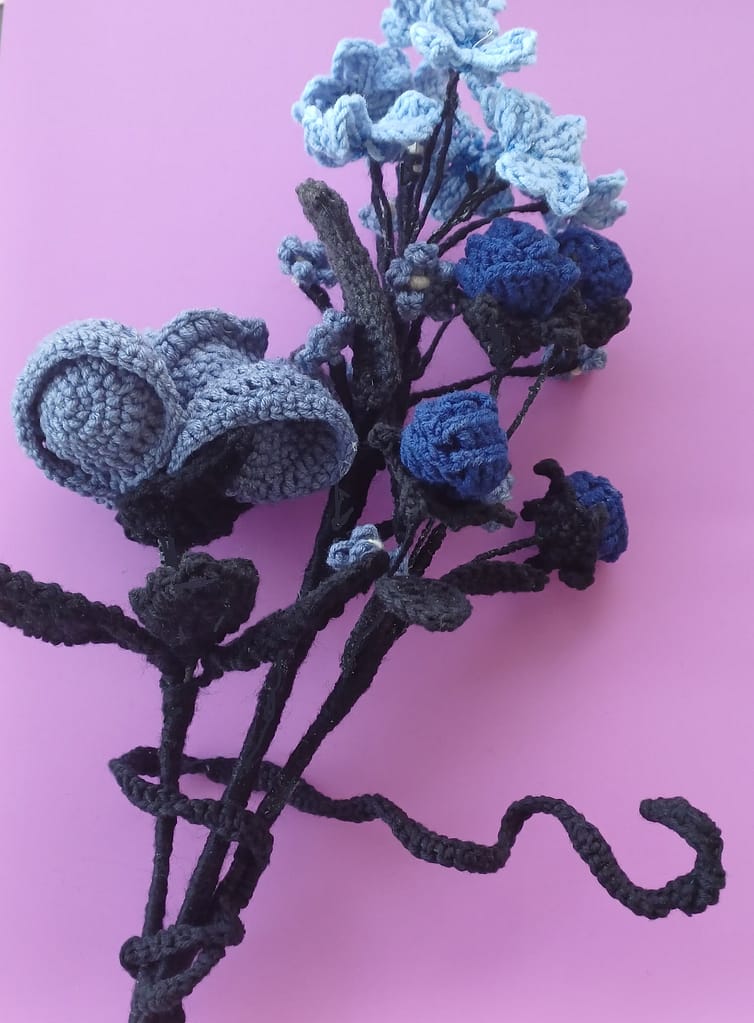
Nobody admits it, but part of creating is a tiny panic about being temporary. Some people have kids, some people plant trees, and some of us make crocheted Vociras that will outlive us all (and possibly enslave humanity).

easy crochet flower pattern crochet bouquet pattern beginner crochet flower pattern PDF

It’s not about ego. It’s about proof. Proof that you were here. That you did something slow, detailed, and beautiful in a world that rewards fast, average, and cheap. When you spend hours shaping petals that don’t wilt, it’s like you’re quietly time-traveling, leaving behind a soft, colorful fossil.

The Slow Maker Brain

Here’s what psychologists might say if they ever touched yarn. Making things slowly rewires your brain. Every stitch, every petal, every do-I-have-enough-yarn panic (crocheters call it yarn chicken game) keeps you grounded in the moment.

Crocheting isn’t just crafting. It’s a kind of sneaky meditation. You’re counting, focusing, breathing, zoning out in a good way. It’s the opposite of doom scrolling. You finish a flower and realize your brain feels rinsed. Not in a bubble bath way. In a “wow, I made something real” way.

Forever Isn’t About Time

We say “lasts forever,” but that’s not really the point. Forever doesn’t mean indestructible. It means meaningful. It’s the thought that someone, years from now, might find your crochet flower, hold it, and feel something.

It might remind them of you. Or it might just sit on a shelf, judging dust particles. Either way, it exists. And in a world that erases things daily, that’s huge.

The Beautiful and Slightly Creepy Part

I have old crochet pieces that freak me out a little. They’re like tiny time capsules of my past moods, the angry purple one, the hopeful pink one, the “what even is this stitch” experimental disaster, (actually, I have a whole bag of disasters).

They remind me who I was when I made them. That’s both comforting and mildly haunting. But that’s the deal when you make something meant to last, it doesn’t forget.

So Why Do We Do It

Because it feels good to fight against the fade. You see, handmade things carry fingerprints, not barcodes. And when you make something slowly, lovingly, ridiculously obsessively, it becomes a tiny rebellion against everything disposable.

And maybe, just maybe, when someone holds one of your flowers long after you’re done making them, it’ll whisper, “She was here.”

Until next bloom,
Kootsiko

Meet the Spellvine: The Dark Thread That Ties It All Together

crochet flower bouquet, crochet flower gift, handmade crochet flowers, everlasting crochet bouquet, crochet flower home décor

Every bouquet needs something to hold it together, a little twist, a little tension, something that says “I’m not your average bunch of flowers.” At Kootsiko, that something is the Spellvine. 🖤

It’s that thin, black, swirling vine you see in my photos. The one that seems to curl through the air on its own, like it’s alive… or enchanted. It doesn’t just tie bouquets. It casts a mood.

The Story Behind the Spellvine

The idea came to me after watching Maleficent the moment when the forest comes alive under her magic. The way vines grow, twist, and protect… how beauty and darkness coexist, wild and graceful all at once. That scene stayed in my head. I wanted something that carried that same energy: delicate yet powerful, organic yet otherworldly. Something that looked like it could come straight out of an enchanted forest… or Maleficent’s garden.

So, I designed a vine that could bring that feeling to life in yarn form: the Spellvine. It had to swirl, it had to hold, it had to move. And, of course, it had to be black because no one tells a better love story than shadow and light. But try it in every color you can imagine. The Spellvine is just as magical in deep reds, mossy greens, purples or ghostly whites.

The Free Pattern

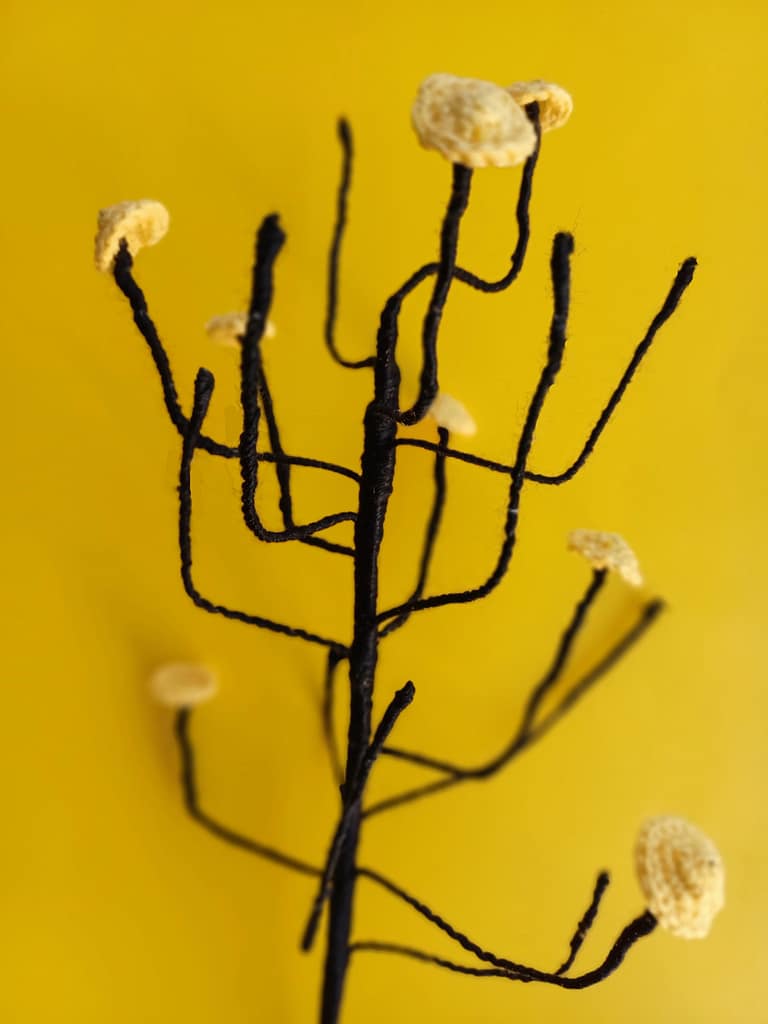
The Spellvine is incredibly simple to make. Just a few single crochet stitches and a bit of wire, and suddenly you have something that feels alive between your fingers.

You can twist it, shape it, wrap it around bouquets, or let it spiral freely. It turns every bouquet into something a little more dramatic and weird. A little more Kootsiko.

Want to make your own Spellvine?

You can read the free pattern here. It’s my gift to everyone who believes flowers should look just a little bit haunted. Or strange. And next time you tie your bouquet, remember: you’re not just wrapping yarn around stems.
You’re casting a spell of your own. 🌙

Want More Free Patterns?

👉Join the Kootsiko Newsletter and get a mystery flower pattern as a welcome gift!
You’ll also be the first to know about new designs, tips, special offers and behind-the-yarn stories.

Also

👉 Explore Kootsiko Patterns for gift-worthy makes
👉 Discover Unique Crochet Flowers that bloom forever

Until next bloom,
🌹
Kοotsiko

Hauntingly Beautiful Handmade Gifts: Why You Still Have Time to Learn Crochet Before Christmas

crochet flower bouquet, crochet flower gift, handmade crochet flowers, everlasting dark crochet bouquet, crochet goth flower home décor

Every year it’s the same story. You promise yourself you’ll plan Christmas early. That this time you’ll avoid the panic of last-minute shopping and the awkward dance of pretending to love socks. And yet, here we are again.

If the idea of fighting through crowds and buying stuff that’ll be forgotten by New Year’s makes your soul sigh, here’s a softer rebellion: make your own gifts.

And yes, you still have time.

The handmade kind of magic

There’s something ancient about creating things with your hands. Crochet is part craft, part meditation, part small act of love disguised as yarn. And the result is luxury presents that would cost a fortune to buy from a crocheter.

When you make a gift, you’re not just giving an object, you’re giving time, care, and a little piece of yourself. Every stitch says, I thought of you. I stayed up late. I cared enough to make something that doesn’t exist anywhere else.

And if you’re thinking, “That sounds lovely, but I have zero idea how to crochet,” don’t panic — I’ve got you covered.

Where to start: the gentle entry point

If you’ve ever wanted to learn crochet, the best time to start is now, before the holiday chaos begins. I wrote a post called Your Ultimate Crochet Beginner’s Checklist, which covers everything you need to get started: tools, yarn, the basic stitches, and how to avoid throwing your hook across the room.

It’s not about being perfect. It’s about finding rhythm. Crochet is strangely forgiving. You can mess up, unravel, redo, and it’ll still come together. It’s like therapy that accidentally produces art.

Vocira - crochet flower pattern - Allien Echo Collection

From first stitches to heartfelt gifts

Once you’ve mastered the basics, you can move on to simple projects that make incredible gifts and things that look like they took forever but really just took patience and good music (or Netflix shows).

Start with one of my beginner-friendly patterns. They’re designed for people who can barely tell a single crochet from a slip knot but want to make something striking anyway.

You’ll find dark romantic flowers, alien blossoms, and a few designs that look like they wandered in from another dimension. Perfect for your witchy friend, your weird cousin, or that one person who always prefers mysterious gifts wrapped in black paper.

Before long, you can gather your creations into bouquets, hauntingly beautiful arrangements that never wilt and will absolutely steal the show.

Crochet bouquets: where craft meets art

There’s something theatrical about a crochet bouquet. It’s handmade and emotional, but it’s also dramatic. The kind of décor that stops people mid-sentence.

Picture a dark red rose next to a violet lilium, a mossy green stem twisting around them like it knows a secret.

It’s a love letter, an art piece, and a rebellion against mass production, all in one vase.

And the best part? These flowers last forever. You can give them as gifts or keep them as part of your winter décor — they look just as stunning on a mantle as they do in someone’s hands.

crochet flower pattern, crochet bouquet pattern, crochet lily pattern, crochet rose pattern

Don’t spend money — spend meaning

You don’t need to empty your wallet to show love. You just need to give your time, your thought, your energy.

Anyone can click “add to cart.”

But it takes intention to sit down, learn something new, and make a gift that’s truly personal.

When your friend unwraps a crochet flower — made by *you* — they’ll know this wasn’t bought in a rush. It’s a story stitched in yarn. It’s time you could have spent scrolling, but didn’t.

That kind of gift is unforgettable.

What to make (if you start now)

Here’s a quick path if you begin today:

Week 1: Read my Ultimate Crochet Beginner’s Checklist, get your yarn, and practice the basic stitches.

Week 2: Choose your first beginner pattern. Maybe a small Forget Me Not or an impressive Midnight Lilium.

Week 3–4: Crochet more flowers and start combining them into bouquets or décor pieces.

By Christmas: Wrap your finished blooms in ribbon, lace, or recycled paper and gift them proudly. You’ll have created something entirely your own, and maybe discovered a new way to calm your mind along the way.

crochet flower bouquet, crochet flower gift, handmade crochet flowers, everlasting crochet bouquet, crochet flower home décor, modern crochet flower arrangement

The true gift

Crochet has this quiet way of healing you while you create. You focus. You breathe. You turn a single thread into something alive. By the time you tie that last knot, you’ve given two gifts. One to someone you love, and one to yourself.

So, if you’re craving a slower, more meaningful holiday, skip the store. Pick up a hook, a skein of dark yarn, and a cup of tea. There’s still time to make something beautiful, strange, and completely yours.

Until next bloom,
🌹
Kοotsiko

👉Join the Kootsiko Newsletter and get a mystery flower pattern as a welcome gift!
You’ll also be the first to know about new designs, tips, special offers and behind-the-yarn stories.

Yarn Therapy: How Crochet Heals the Mind, Calms the Heart, and Untangles the Soul

crochet flower bouquet, crochet flower gift, handmade crochet flowers, everlasting crochet bouquet, crochet flower home décor

Let’s be honest, most of us didn’t start crocheting to heal our souls. We just wanted to make something cute. A hat, maybe. A flower. A weird little blob that was supposed to be a bunny. But somewhere between the first chain and the fifteenth “just one more row” something happened.

Crochet stopped being a hobby. It became a coping mechanism, a quiet rebellion against chaos, a soft, string-shaped kind of therapy.

Because really, when life feels tangled, there’s nothing quite like untangling actual yarn to make you feel in control again.

The cheaper, quieter cousin of therapy

Crochet is a rare kind of therapy where you don’t have to talk about your feelings. You just loop them into something pretty. It’s cheaper, quieter, and you get a forever bouquet, a blanket (or at least a coaster) at the end.

There’s rhythm in it. Repetition. That hypnotic yarn over, pull through that slows down your brain when it’s racing too fast.

Even science agrees. Repetitive handwork can calm your nervous system, lower stress, and boost dopamine. (So yes, when you say crochet makes you happy, you’re medically correct.)

And sure, there’s always a bit of chaos. The knot in your skein, the row you have to frog three times, the mystery of where your 3.5 mm hook disappeared to. But somehow, the frustration still feels gentle. Manageable. Like a storm you can pause with a deep breath and a cup of tea.

crochet flower pattern, crochet bouquet pattern, crochet lily pattern, crochet rose pattern

Every stitch is a story

(and sometimes a small crisis)

Every crocheter knows that every piece you make holds more than just yarn. There’s the blanket you made when you couldn’t sleep. The flower you finished while waiting for news. The tiny monster you made just because you needed to laugh.

Every stitch carries a thought, a mood, a moment. And even the mistakes, the miscounts, the frogged sections, the little bumps. They’re part of it too. Proof that you kept going.

Maybe that’s why crochet feels so healing: it turns frustration into texture. Chaos into something you can hold.

The calm patterns for stormy brains

When you need your yarn to double as self-care, go for patterns that feel like meditation. Easy, repetitive, grounding.

Gothic Rose
Soft, flowing, and gentle like a deep breath.

crochet flower pattern, crochet bouquet pattern, crochet lily pattern, crochet rose pattern

Medusa Bloom
Mesmerizing repetition that feels almost hypnotic.

crochet flower bouquet, crochet flower gift, handmade crochet flowers, everlasting crochet bouquet, crochet flower home décor, dark goth romantic decor

They’re the kind of projects you can make while your brain is busy thinking, feeling, or even healing. Because I try to design crochet flowers that don’t demand precision, just presence.

Crochet won’t fix everything but it helps

It won’t make the world less stressful, or magically solve your problems. But it gives your hands something kind to do while your heart figures things out. And sometimes, that’s enough.

So if today feels heavy, grab your yarn. Don’t worry about perfection. Just make loops. Create something small and soft and entirely yours. Because when life unravels, you always have the power to start another row.

Until next bloom,
🌹
Kοotsiko

👉Join the Kootsiko Newsletter and get a mystery flower pattern as a welcome gift!
You’ll also be the first to know about new designs, tips, special offers and behind-the-yarn stories.

👉 Explore Kootsiko Patterns for gift-worthy makes
👉 Discover Unique Crochet Flowers that bloom forever

Netflix Crochet: Because Counting Shouldn’t Interrupt Your Show

crochet flower bouquet, crochet flower gift, handmade crochet flowers, everlasting crochet bouquet, crochet flower home décor, modern crochet flower arrangement

There’s a special kind of joy in crocheting with your favorite series running in the background when your hands move almost on autopilot, your yarn flows, and your brain drifts between stitches and storyline. That’s Netflix Crochet.

There are sometimes when you can follow a 17-page pattern with military precision and actually enjoy it.

And then… there are the times when you just want to relax. The ones you want to sink into the couch, press play on Netflix, and crochet something beautiful without having to pause every 30 seconds to say, “Wait, was that 23 or 24 stitches?

Welcome to the sacred art of Netflix Crochet. It’s that sweet spot where your hands move almost on autopilot, your yarn flows like a dream, and your only worry is whether your show will ask, “Are you still watching?” before you finish your row.

Why we crave the no-count life

There’s nothing wrong with a challenge. Complicated patterns can be exciting. They make us feel clever, capable, like crochet wizards who can summon lace from thin air.

But sometimes… you just want to relax. You want something that looks wow, feels fun, and doesn’t make you count like you’re balancing the national budget.

Because let’s face it, crochet math is sneaky. You think you’re doing fine, then one stitch goes rogue, and suddenly your project looks like it’s melting off the hook.

That’s when you realize: maybe the true luxury isn’t a rare yarn. It’s an easy, memorable pattern that still looks like you spent hours figuring it out.

I know there’s also freehand crocheting and I love it, but a pattern will ensure the result. And I want nothing less than stunning to decorate my home or gift my friends.

The myth of the “difficult equals great” pattern

Here’s a spicy thought: not every complicated pattern is a masterpiece. Some designers (you know who you are) make their patterns hard on purpose.

Like, unnecessarily hard. Because somewhere along the way, “difficult” became a badge of honor.

But real greatness? Real design skill?

It’s when you can make something stunning that’s simple enough to remember and relaxing enough to enjoy. Because crochet, at its best, isn’t supposed to test your patience. It’s supposed to soothe it.

The Kootsiko-approved Netflix Crochet list

Now, let’s talk about the stars of your next binge-and-stitch session.

These are my go-to designs when I want to feel creative without pausing to rewind an episode just because my stitch count fell apart somewhere between snacks.

Medusa Bloom
Hypnotic, textured, and practically crochets itself. (No snakes, promise.)

crochet flower bouquet, crochet flower gift, handmade crochet flowers, everlasting crochet bouquet, crochet flower home décor, dark goth romantic decor

Gothic Rose
Dark, dramatic, and perfect for mystery marathons.

crochet big flower pattern, crochet rose pattern

Forget-Me-Not
Tiny, charming, and easy to remember (just like the name).

crochet flower bouquet, crochet flower gift, handmade crochet flowers, everlasting crochet bouquet, crochet flower home décor

Mystic Daisy
The flower child of crochet. Effortless and full of personality.

crochet flower pattern, crochet bouquet pattern, crochet lily pattern, crochet rose pattern

Midnight Lilium
Elegant, serene, and totally binge-worthy.

crochet flower pattern, crochet bouquet pattern, crochet lily pattern, crochet rose pattern

Each of these designs is made for maximum beauty with minimum brain strain, because sometimes, your brain just wants to vibe.

So here’s the deal. Next time you sit down with your hook, your yarn, and your streaming queue, pick a project that feels like a treat, not a task.

Because crochet doesn’t have to be complicated to be beautiful.

And the best kind of project? The one you can make while rewatching Good Omens for the fifth time and still know exactly where you are, both in the pattern and in the plot.

So go ahead, grab your favorite yarn, pick a show, and get stitching.

crochet flower bouquet, crochet flower gift, handmade crochet flowers, everlasting crochet bouquet, crochet flower home décor

Your only homework tonight is to answer one important question:

Are you still watching… and still crocheting?

👉 Explore Kootsiko Patterns for gift-worthy makes
👉 Discover Unique Crochet Flowers that bloom forever

👉Join the Kootsiko Newsletter and get a mystery flower pattern as a welcome gift!
You’ll also be the first to know about new designs, tips, special offers and behind-the-yarn stories.

Until next bloom,
❤️
Kootsiko

How to Crochet a Flower That Never Wilts

crochet flower pattern, crochet bouquet pattern, crochet lily pattern, crochet rose pattern

Fresh flowers are lovely. Until they start dying on your table like tiny floral tragedies.

That’s where crochet flowers come in. Especially the dark, dramatic kind that look like they could’ve grown in a haunted greenhouse.

So grab your hook, your deepest yarn, and let’s make something that laughs in the face of decay.

Step 1: Choose Your Mood (and Your Yarn)

Every eternal bloom starts with a vibe.

If you’re going for gothic romance, choose rich shades like black, burgundy, plum, or stormy grey.
If you want something more witchy forest, try moss green, indigo, or faded lavender.

When in doubt: if it looks like it belongs in a spell book, you’re on the right track.

For yarn, pick something with structure: cotton or a cotton-blend keeps your petals crisp and elegant. Fuzzy yarns may look ethereal, but they can blur your detail (and your patience).

Step 2: Pick a Petal Pattern

You can start with a simple rose, lily, or dahlia or, you know, one of mine.
(You’ll find plenty of moody and easy patterns in the Kootsiko pattern shop. I’d suggest a Forget Me Not)

If you’re new, a rose is the easiest gateway bloom. The spiraling petals look impressive but are basically a clever strip of stitches rolled into romance.

Once you master that, you’ll be unstoppable and possibly start crocheting entire bouquets while watching horror movies.

Step 3: Shape & Stitch with Intention

Crochet is slow magic. Every petal is a spell. Every stitch is a heartbeat.

As you work, shape each petal gently with your fingers. If the yarn feels stiff, loosen your tension. If it feels too floppy, tighten up a bit.

Remember: perfection is boring. Slightly uneven petals give your flower personality, the same way cracks make old statues more interesting.

Step 4: Assemble Your Dark Bloom

Once your petals are ready, roll or layer them until they feel right. Not too tight, not too open. Secure with a tapestry needle and matching yarn.

For stems, use floral wire wrapped 0.4mm-0.7mm in yarn or dark green tape. For eternal bouquets, mix different blooms and leaf shapes.

And if you want that Victorian-garden-after-midnight energy, tuck in some dried twigs or black lace.

Step 5: Style It Like a Spell

Now comes the fun part: where will your eternal bloom live?

  • In a small glass dome, like a gothic fairy tale trophy.
  • As part of a dark bouquet on your desk.
  • Attached to a gift wrap, for a poetic touch.
  • Or even turned into a brooch or hairpiece. Yes, we accessorize with darkness here.

No matter where you place it, it will remind you that some beauty doesn’t fade. It just changes form.

Why We Love Flowers That Don’t Die

Crochet flowers don’t wilt, crumble, or need water but they do carry meaning.
They’re tiny testaments to patience, imagination, and the quiet joy of making something by hand.

And unlike real flowers, they last through heartbreak, moves, and that one time your cat decided a bouquet was lunch.

So go ahead, make your immortals.

👉 Explore Kootsiko Patterns for gift-worthy makes
👉 Discover Unique Crochet Flowers that bloom forever

👉Join the Kootsiko Newsletter and get a mystery flower pattern as a welcome gift!
You’ll also be the first to know about new designs, tips, special offers and behind-the-yarn stories.

Until next bloom,
❤️
Kootsiko

Notes from the Hook: join the newsletter today and enter my secret garden with all the amazing flowers and behind-the-yarn stories.

Skull Poppy: A Flower With a Dark Sense of Humor

crochet flower bouquet, crochet flower gift, handmade crochet flowers, everlasting crochet bouquet, crochet flower home décor

Skull Poppy: A Flower With a Dark Sense of Humor

The Skull Poppy crochet pattern is where innocence gets a cheeky makeover. Made with cotton yarn and a tiny 1.5 mm hook, this design transforms the delicate poppy into something bold, lasting, and a little deliciously spooky.

When Cute Decides to Get Creepy

Some designs tiptoe into existence. The Skull Poppy kicked down the door. The very first day I made it, I got so excited that I immediately crocheted two more in different colors. It is that addictive. The endless color combinations make it impossible to stop at just one.

Poppies themselves always carried a special place in my heart. I grew up in Greece where they covered spring landscapes like confetti from nature herself. Even in the middle of the city, in the tiniest neglected patch of land, you could count on finding a daisy and a poppy waving hello.

The problem? Bees. Every time I tried to pick a poppy as a kid, there was a bee hiding inside ready to ruin my day. The thrill of the flower turned into terror of the buzzing surprise.

So when I sat down years later with my cotton yarn and my trusty 1.5 mm hook, I thought, why not embrace the contradiction? A flower that looks soft and innocent but hides a darker side. And what is darker and cheekier than a tiny skull smiling back at you?

Beauty With a Wicked Twist

That is how the Skull Poppy was born. The soft petals frame the stark skull in the center, creating this perfect marriage of fragile and bold, innocent and daring. It is sweet and eerie all at once, the kind of flower that would grow in a fairy tale forest if the story came with a little warning label.

And oh, the colors. Red petals with a white skull feel dramatic and gothic. Pink petals with a black skull feel like a mischievous wink. Purple petals with a golden skull practically scream dark sorcery. With this pattern, the mood changes every time you pick a different shade.

Why You Will Love Making It

It is a quick win project. The Skull Poppy works up fast and keeps your hook happy.

It is endlessly customizable. Every flower is a new experiment in color and mood.

It is a guaranteed conversation starter. No one can walk past a bouquet of skull poppies without raising an eyebrow.

It makes a gift that feels both thoughtful and wonderfully unexpected.

Ready to Crochet Your Own Skull Poppy?

Grab your cotton yarn, your tiny 1.5 mm hook, and let your dark side blossom in the sweetest way.

👉 Get the Skull Poppy Pattern Here

👉 Discover More Crochet Flowers

👉 Join the Kootsiko Newsletter for a free mystery pattern, sneak peeks, discounts, and stories from behind the yarn.

The Skull Poppy crochet pattern is a bold twist on the delicate poppy, blending soft petals with a cheeky skull motif. Inspired by Greek wildflowers and childhood memories, it is made with cotton yarn and a 1.5 mm hook, customizable in endless colors, quick to make, and guaranteed to stand out.

💐 Thank you so much for stopping by my secret garden!

Until next bloom,
❤️
Kootsiko

Skull Ivy: Cute, Creepy, and Hanging Around

crochet hanging plant for car pattern
crocheted hanging pot with green plant

Not every plant plays fair. Skull Ivy looks like a sweet hanging vine at first, but look closer and every “leaf” is a tiny skull staring back at you.

Cute, creepy, and the ultimate double-take crochet pattern.
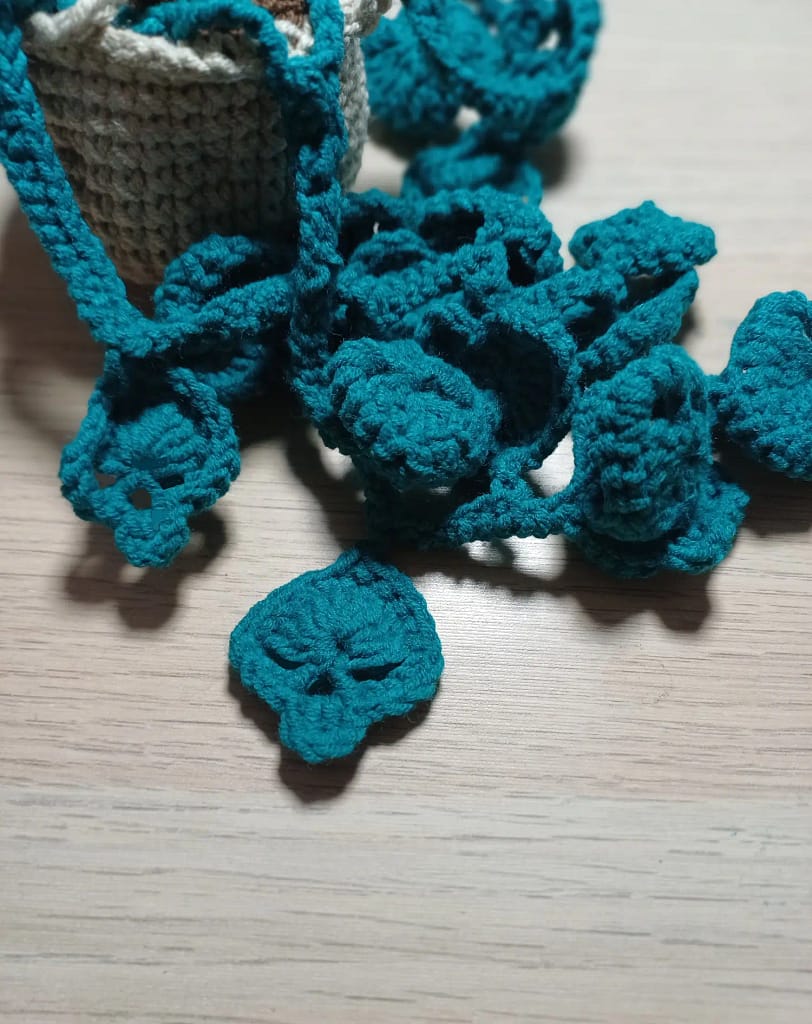
It began, as many questionable ideas do, with car décor. I kept seeing those cute little hanging plants dangling from mirrors, all green and innocent, and thought: what if one of those… wasn’t?

What if you took a second glance and realized, oh no, those aren’t leaves—they’re skulls. Still leafy. Still green. Just with a little more… personality.

That’s what I love about Skull Ivy. At first glance, it’s a perfectly ordinary plant. Soft, dangling vines. Sweet little leaves. Harmless.

Until you lean in and—surprise! Each leaf is actually a tiny skull grinning back at you. It’s cute and creepy in equal measure, which honestly might be my favorite combination in life.

Why green?

Normally, I love to experiment with color. Purples, reds, even white in my other designs. But Skull Ivy had to stay green. If it were black or purple, you’d expect something strange.

Green makes it sneaky. You don’t notice right away that this plant is quietly plotting your doom or at least staring you down with skull eyes.

(That said, don’t think I won’t try a black Skull Ivy eventually. Rules are meant to be broken. Especially mine.)

Beyond the pot

This isn’t just a hanging pot plant. I’m already scheming about how to sneak Skull Ivy into my gothic bouquets.

A dark cascade of vines, skulls peeking out between roses and lilies, yes, please. It’s the sort of thing that makes your guests go “aww” and then “…wait, what?” Perfect.

Why I love it

I love patterns that look innocent but come with a twist. Skull Ivy is a little trickster. It hangs out quietly, looking like just another crocheted plant, until the moment someone realizes it’s a whole vine of skulls.

And that moment? Priceless. Skull Ivy turned out to be one of those designs that makes me laugh every time I see it. It is cute. It is creepy.

It is the plant that looks like it belongs in a Tim Burton greenhouse. And honestly, that is exactly where I want to hang out.

Want to meet Skull Ivy up close?
More info here: Skull Ivy
Grab the pattern here: Buy Skull Ivy

Curious what else is growing? Read more from the Kootsiko blog.

Until next bloom 💨
❤️
Kootsiko

Crafting is Resistance

crochet flower bouquet, crochet flower gift, handmade crochet flowers, everlasting crochet bouquet, crochet flower home décor
Photo: Skull Ivy Hanging Plant

Crafting is Resistance

We live in a world where most of what we do with our hands is… tap. Tap to order food. Tap to buy clothes. Tap to “like” something you’ll forget in a heartbeat.

Our hands spend their days scrolling, swiping, and clicking. Useful, maybe, but not exactly soul-stirring. Our hands and brains deserve more than screens.

Our hands were made for more. For holding, shaping, building, weaving. For making.

Why Crafting Feels Like Rebellion

That’s why crafting isn’t just a hobby. It’s an act of quiet resistance.

It’s refusing to let the world reduce you to a passive consumer. It’s choosing patience in a culture addicted to speed.

When you create by hand, you’re doing something radical. You’re putting in care, intention, and a little bit of yourself. A scarf isn’t just yarn. A quilt isn’t just fabric.

They carry time, attention, mistakes, pride, and the quiet satisfaction of I made this.

In a world where everything is mass-produced, handmade is powerful. Handmade is personal. Handmade lasts.

Crochet: The Slow Art That Fights Back

And then there’s crochet. Crochet is the ultimate protest against fast everything. Loop by loop, stitch by stitch, you transform a simple thread into something real.

A flower that never wilts. A toy that carries comfort. A creature that didn’t exist until your hands gave it life.It’s slow. It demands patience. It requires focus. But that’s exactly the point.

In a disposable world, crochet says: No. I’m making something real. Something slow. Something mine.

Each piece is proof that time and intention still matter. And that in the middle of all the noise, you can choose to create something lasting.

Why It Matters

Crafting is resistance. Crochet is resistance too. Against fast fashion. Against fast scrolling. Against the idea that we’re only here to consume. Against being reduced to a pair of tapping thumbs.

Pick up a hook. Grab some yarn. And make something the world can’t scroll past.

And if you’re curious how I found my way into this craft, I’ve shared the full story in My Personal Journey Into Crochet.

👉 Explore Kootsiko Patterns for gift-worthy makes
👉 Discover Unique Crochet Flowers that bloom forever

👉Join the Kootsiko Newsletter and get a mystery flower pattern as a welcome gift!
You’ll also be the first to know about new designs, tips, special offers and behind-the-yarn stories.

Until next bloom,
❤️
Kootsiko

The Birth of Medousa Bloom

crochet flower bouquet, crochet flower gift, handmade crochet flowers, everlasting crochet bouquet, crochet flower home décor, dark goth romantic decor

How I ended up crocheting a flower that looks like it crawled out of a sci fi movie

The Birth of Medusa Bloom

Medousa Bloom was never planned. It appeared while I was playing with yarn and daydreaming about alien gardens, Discworld jokes, and the Avatar universe.

It is a flower that can look sweet, spooky, or completely unhinged depending on how many petals you decide to give it.

When I first picked up my hook for this one, I was not thinking, “Yes, let me create a yarn monster disguised as a flower.”

But that is exactly what came out.

Medousa Bloom is my love letter to everything I enjoy: Avatar’s glowing plants, Discworld’s odd logic, and anything that feels like it belongs in a fantasy forest where the flowers might hiss at you.

The fun part is that Medousa can be anything. Sometimes I make her tiny with just a handful of short petals, perfect for tucking into a bouquet.

Other times I go full drama with 30 or even 50 petals so she takes over the whole arrangement like she owns the place.

I have tried her in purple for mystery, in red for a gothic diva, and in white for haunted innocence. Each one feels like a completely different character.

And I am not done yet. I am planning a whole bouquet made only of Medousas. It will look like a nest of strange and beautiful little creatures.

Crocheting her feels like building my own alien garden one petal at a time.

And crochet makes me happy because it lets me play god with yarn.

You can make something delicate, weird, or completely over the top, all from the same ball of yarn.

And Medousa is one of those creations where I feel like I’ve opened a door to a whole other garden.

A weird, wonderful, slightly terrifying garden.

And honestly? That’s my happy place.

So if anyone asks why crochet something like that my answer is simple.

Because the world needs stranger flowers.

Grab the pattern here.

Until next time, may your yarn never run out 🧶
your parrot doesn’t turn it into confetti 🦜
and your hook never vanish! 💨
❤️
Kootsiko

Your Ultimate Crochet Beginner’s Checklist

crochet flower bouquet, crochet flower gift, handmade crochet flowers, everlasting crochet bouquet, crochet flower home décor

Are you an absolute beginner at crochet? Here is all you need to know.

Some people go to crochet school or hire teachers. Some of us (hi, hello, guilty 🙋‍♀️) just wing it at home, at our own pace, learning in between coffee refills and YouTube spirals.

I’m in the second camp, and let me tell you: self-taught does not mean you’ll learn less.

The real challenge? Figuring out what to learn first and in what order.
Sure, it’s exciting to whip up your first scarf… but trust me, it’s even better when you know what half-double crochet and treble crochet are before you start.

That’s why I wish I had a beginner’s checklist when I started. Something to save me from endless 30-minute intros in “beginner” videos when all I needed was a clear, close-up shot of the actual stitch. So, I made one for you.

This is the checklist I wish I had: the right order to learn stitches, clear explanations, and links to short, actually helpful videos, so you can spend less time searching and more time crocheting. Because you don’t have to hate crochet to learn crochet.

Before we dive in, let me make something clear:

Crochet: Art, Not “Just” Craft

For me, crochet is an art, not a craft. Why is it often treated as the “less serious cousin” of painting or sculpting? Crochet is just as creative, just as expressive, and just as capable of jaw-dropping beauty. Prepare to be astonished by what your hands can create.

Yes, there will be a learning curve. Your first chains will be uneven, your tension will play hide-and-seek, and your fingers may feel like rebellious spaghetti.

But give it a little time, and the progress you’ll see month by month will feel like magic.

And the learning never stops. I’ve been crocheting for years, and I still discover new stitches, techniques, yarns, and “wait, what is this wizardry?” methods.

Crochet is endless curiosity, awe, and wonder. And that’s what makes it my happy place.

What You’ll Need to Start

Forget the fancy toolkits for now. As a beginner, you really only need three things:

Yarn
Start with a medium-weight yarn (look for a “4” or “worsted” label). Choose a lighter color so you can actually see what you’re doing — dark yarn hides mistakes, and trust me, you’ll want to see your stitches clearly.

A crochet hook
Check the yarn label for a suggested hook size. Start there. If you’re struggling with tension (your stitches are tight like overcooked rice), try going up a hook size.

Scissors
Because teeth are not an option. (Technically they are, but let’s keep this classy.)

Pro tip: You’ll also need good lighting and a comfy seat. Bad lighting = swearing. Bad seating = back pain. Don’t learn this the hard way.

Now, let’s first talk about the elephant in the room:

The Hook-Holding Drama
You may have noticed: crocheters hold their hooks differently.

Some grip it like a knife, others like a pencil. Which is right?

Answer: whichever doesn’t make you want to throw your hook across the room.
There’s no “correct” way. Just the way that feels natural to you.

Now, let’s start with your first steps.

Step 1: The Magic Ring (a.k.a. The Trickster)

This little circle of yarn is the start of all projects especially the round ones (think amigurumi, flowers, hats, etc.). Is it the easiest place to begin? Honestly, no. It looks fiddly, your fingers aren’t trained yet, and your tension is basically non-existent.

If it feels like too much, skip it for now. Make a few chains first to get your hands used to moving yarn. Come back later. You’ll be shocked at how simple the magic ring actually is once your hands are warmed up.

Short, sweet, and helpful – Watch this video by Crafting Hapiness

Step 2: The Chain (your foundation)

Chains are your best friend. They’re the backbone of almost everything you’ll make that isn’t round. Practice making chains until your tension starts to look even. At first, they’ll be a mix of “so tight the hook won’t go through” and “so loose a mouse could crawl through.” That’s normal.

Here’s the best video I found from With Love, Leisha

Stay here for a few days. This is where muscle memory forms and where your hands learn to move on autopilot, so later you can focus on counting stitches without overthinking every move.

Step 3: Master the Basic Stitches

Here’s where the fun begins. Crochet stitches build on each other, getting taller as you go. Learn these in order:

Slip Stitch (sl st) – the shortest, useful for joining.
How: Insert hook, yarn over, pull through stitch and loop. The shortest stitch, great for joining.

See the magic happen with this video by Nicole Chase who also shows you how to fasten off →

Single Crochet (sc) – neat, compact, and your entryway into “real” crochet.
How: Insert hook, yarn over, pull through, yarn over, pull through both loops.

Check out this great video by Rich Textures Crochet:

Half Double Crochet (hdc) – a little taller, nice and squishy.
How: Yarn over, insert hook, yarn over, pull through, yarn over, pull through all three loops.

Watch a quick demo by Desert Blossom Crafts and master it in no time →

Double Crochet (dc) – versatile, airy, and used everywhere.
How: Yarn over, insert hook, yarn over, pull through, yarn over, pull through two, yarn over, pull through two again.

Here’s a super short video by Bella Coco to make it crystal clear →

Treble Crochet (tr) – tall, dramatic, and a little showy.
How: Yarn over twice, insert hook, yarn over, pull through, yarn over, pull through two, yarn over, pull through two, yarn over, pull through two.

Need a visual? This tutorial by A Menangerie of Stitches has got you covered →

Practice each for a few days. Try making them on your chain, one row each. You’ll actually be practicing tension without realizing it.

✨ Fun fact: Also, you may have just accidentally made your first scarf.

Step 4: Increase and Decrease

Want to shape your projects? This is how.

Increase (inc): Put two stitches in the same place to make your project wider.
How: Make two single crochet stitches in the same stitch. Your go-to for shaping wider pieces.

Let’s make it simple. Watch this video by Annie’s Attic

Decrease (dec): There’s is “normal” and “invisible” decrease. I always use invisible decrease by simply crocheting two stitches together to make it narrower.
How: Work two stitches together into one (e.g. sc2tog). Perfect for narrowing or shaping.

For a clear, easy guide on both visible and invisible decreases, check this video by elendipity

With these, you can go from flat swatches to hats, amigurumi, and beyond.

Step 5: Crochet Language & Lingo

Now that your hands are busy, let’s decode the words you’ll bump into:

Gauge: Patterns are written for a specific size. Your tension might be different. Gauge = the measurement that keeps your project from turning into an accidental crop top.

Frogging: The act of ripping back stitches when you mess up. It’s called frogging because you “rip it, rip it” 🐸.

Amigurumi: The Japanese art of crocheted plushies. They start with a magic ring, are worked in rounds, and usually involve stuffing. Cute level: off the charts.

Blocking: The spa treatment for your crochet. Wet your finished piece, pin it down, let it dry, and watch it magically relax into shape. Great for lace, scarves, and anything flat. (Not for amigurumi, unless you want sad, soggy bunnies.)

If you want to see the full list of abbreviations and terms visit the Crochet Abbreviations Master List by Craft Yarn Council. You will find all crochet terms & common measurements as well as abbreviation & term differences between the U.S., United Kingdom (U.K.) and Canada. Save that page, too.

Epilogue: The Never-Ending Joy

Here’s the thing: crochet isn’t something you “finish learning.” It grows with you. Each project teaches you something new. A stitch, a technique, a mistake that turned into a discovery. That’s why it never gets boring.

And somewhere between your first wobbly chain and your tenth masterpiece, you’ll realize you’ve created your own rhythm, your own style, and your own joy. That’s what crochet gives you: a little magic you can hold in your hands.

Ready for More?

👉 Check out my Crochet Hacks for Beginners for time-saving tips.
👉 Or, if you’re ready to make something gorgeous, explore my Crochet Flower Patterns and start stitching beauty right away.

Because life’s too short for boring scarves. 🌸✨

Until next time, may your yarn never run out 🧶
your parrot doesn’t turn it into confetti 🦜
and your hook never vanish! 💨
❤️
Kootsiko

What Yarn and Hook Should You Use to Crochet Flowers?

crochet flower pattern, crochet bouquet pattern, crochet lily pattern, crochet rose pattern

What Yarn and Hook Should You Use to Crochet Flowers?

Choosing the right yarn and hook can make or break your crochet flowers. Cotton or blends? Tiny hooks or chunky ones? Let’s dive into the world of yarn weights, textures, and hook sizes that bring your blossoms to life, without turning them into wilted daisies.
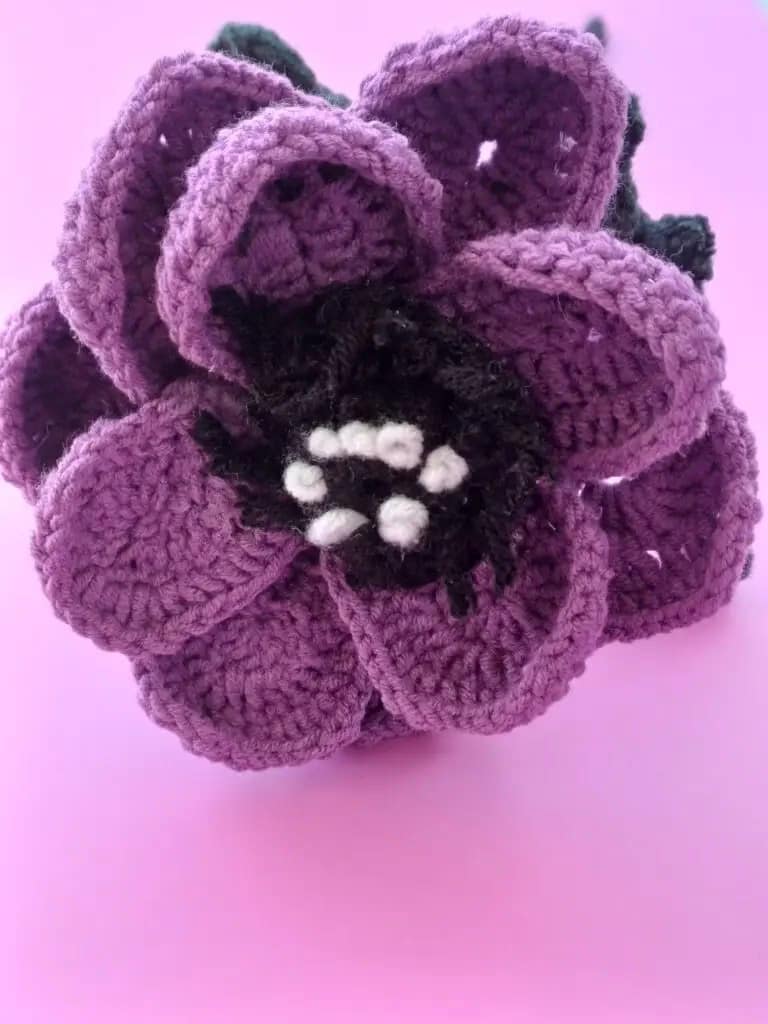

Cotton is Queen

Ask any crochet flower fan what yarn they reach for first, and nine times out of ten they’ll say cotton. Why? Because cotton yarn has excellent stitch definition, giving your petals that crisp, structured look. Think of it as the “high-definition TV” of crochet fibers. Every detail pops.

When Tiny Is Mighty

Lace Weight / Crochet Thread → Perfect for delicate buds, teeny-tiny roses, or intricate accents. Your flowers will look like they belong on an antique doily (in the best possible way).

Lightweight (4-ply) → A great all-rounder. If you’re just starting out, this is your “training wheels” yarn.

Medium Weight (5-ply) → Full-bodied blooms ahead! Great for larger petals, fuller daisies, and statement roses that won’t be ignored.

Cotton-Acrylic: The Dream Team
Want flowers that don’t just look good but also last? Enter the cotton-acrylic blend. It’s soft, breathable, durable, and—bonus—those colors stay bright forever. Imagine a daisy with sunny yellow petals that never fade, even after years of display. That’s crochet magic.

Hooks Matter Too
Think of your hook as your flower’s fairy godmother. It decides whether your bloom is dainty or dramatic.
Small hooks (1.5–2.5mm): Perfect for lightweight yarns or threads. Great if you want intricate, detailed petals.
Medium hooks (2.5–3mm): Pair beautifully with medium-weight yarns to give your flowers some volume and oomph.
Pro tip: The hook size on your yarn label is just a suggestion. Feel free to go up or down a size depending on whether you want tighter or looser stitches.

Beginner’s Bouquet Tip
If you’re brand new to crocheting flowers, start with a slightly thicker yarn and a hook that feels comfy in your hand. The stitches will be easier to see, easier to control, and way less likely to make you want to fling your yarn across the room. You also might want to start with this helpful guide: Your Ultimate Crochet Beginner’s Checklist

Get Creative With Texture
Once you’re confident, start experimenting:
Add a strand of mohair for a fuzzy, romantic effect.
Try embroidery thread for dainty accents (bonus: those multi-colored packs are budget-friendly). Mix different yarns together for multi-dimensional flowers that look like they leapt out of a painting.

And remember, choosing yarn should feel like a treat not a test. There is no natural vs synthetic yarn dilemma. It’s how you feel best. At the end of the day, the “best” yarn and hook for crochet flowers is the one that sparks joy in your hands. Whether you’re making a single rose or an entire bouquet, don’t be afraid to experiment.

Ready to put your yarn and hooks to work?
Get my free mystery pattern just by signing up for my newsletter

Read more
Check out my crochet flower patterns for inspiration or hop over to another article like one of my favorites with all my hacks:
My Crochet Survival Guide: Hooked on Hacks

Until next bloom,
❤️
Kootsiko

Crochet Mistakes I Keep Making

how to crochet flowers, crochet flower ideas, DIY crochet bouquet, modern crochet flower arrangement

(and why I don’t care anymore)

crochet anemone handmade - my designs

Crochet Mistakes I Keep Making

(and why I don’t care anymore)

Crochet is full of little quirks. Some we laugh about, some we frog, and some we just let slide because honestly, life’s too short to panic over one loose stitch. Even after years of designing patterns, I still trip over the same things again and again. The funny part? They’ve never stopped me from loving crochet or from creating designs I’m proud of.

Here are my “repeat offenses”, and why I don’t let them get in the way of making something beautiful.


The Eternal Frog

Yes, I still frog. Everyone does. Sometimes a stitch feels wrong, sometimes my yarn has other plans. I’ve learned to see it as part of the process instead of a disaster. The restart usually makes the project better anyway.

The Forgotten Chain
Counting chains? Not my strongest skill when I’m just experimenting. I’ll skip one, add one, or forget the number completely. But when I write a pattern, I count them like a hawk (and double-check myself too). And yet somehow, the piece usually turns out fine. Or at least interesting.

Ends That Multiply
I’ll admit it: sometimes I weave ends “later.” And by “later,” I mean “eventually.” They sneak up on me like yarn confetti. But when I finally sit down to deal with them, it’s oddly satisfying.

The Wonky Stitch
Every project has one. A stitch that just doesn’t look like its neighbors. I’ve stopped fixing it. I just call it my signature. Nobody ever notices anyway.

The Yarn Stash Myth
I always believe the same lie: “I’ll use this yarn immediately.” And then it sits on the shelf looking at me. But honestly? Having options makes me happy. Stash = possibility.

The Pattern Rebel
Sometimes I follow a pattern. Sometimes I just… don’t. If it says 40 chains and I feel like 37, I go with it. Freestyling is half the fun.

Epilogue: Imperfection Makes Us Makers
So yes, I keep making these little mistakes. They’re part of being human with yarn in hand. And honestly? They make me love crochet even more. Perfection is overrated, wonky stitches and all.


If you liked this little confessional, you might love my Crochet Hacks That Actually Work post. It’s full of the weird tricks that save me from myself.

And if you prefer patterns without the frogging and forgotten chains, you can peek at my designs. They’re tested, tidy, and won’t forget a stitch.

Until next time, may your yarn never run out 🧶
your parrot doesn’t turn it into confetti 🦜
and your hook never vanish! 💨
❤️
Kootsiko

The Easy Trick for Crocheting Narrow Tubes Like a Pro

easy crochet flower pattern crochet bouquet pattern beginner crochet flower pattern PDF

The Easy Trick for Crocheting Narrow Tubes Like a Pro

If you’ve ever tried crocheting tiny tubes-like amigurumi necks, hands, or even plant vines, you know the struggle is real.

The stitches get tight, your hook feels like it’s wrestling with yarn spaghetti, and sometimes you wonder if it’s even worth it.

I get it. It actually took me months to figure out a way to make those tricky little parts less of a headache. And guess what? The solution is surprisingly simple.

Here’s the trick: flatten your work before you start crocheting the narrow section.

Once your piece is flat, crochet only through the front layer of stitches (ignore the back layer completely).

This keeps things open, manageable, and way less fiddly. Just make sure you don’t accidentally catch the back stitches—or you’ll seal the tube shut.

Why this works

By flattening and crocheting only the front layer, you give yourself more control over the hook, so those tight little rounds stop feeling like a wrestling match.

The result? Smooth, professional-looking narrow parts without all the frustration.

✨ A tip for practicing:

Start with a wider tube of around 12 single crochet stitches.

Work 20–30 rows this way until it feels natural, and then slowly decrease your stitches down to 8, 6, or even 4 sc.

Before long, your hands will just know what to do and you won’t even think about it.

Give it a try, and you’ll see how much easier it makes those tiny amigurumi details.

And if you found this helpful, stick around. I’ve got more tips, tutorials, and inspiration coming your way to help you level up your crochet and bring your creative ideas to life.

Keep reading: Crochet mistakes I keep making

Until next time, may your yarn never run out 🧶
your parrot doesn’t turn it into confetti 🦜
and your hook never vanish! 💨
❤️
Kootsiko

5 Ways Crocheting Boosts Your Well-being

crochet flower pattern, crochet bouquet pattern, crochet lily pattern, crochet rose pattern

5 Ways Crocheting Boosts Your Well-being

Crocheting isn’t just a hobby. It’s a relaxing activity with powerful mental and emotional benefits. Studies show that crocheting can lower stress, ease anxiety, and even improve focus.
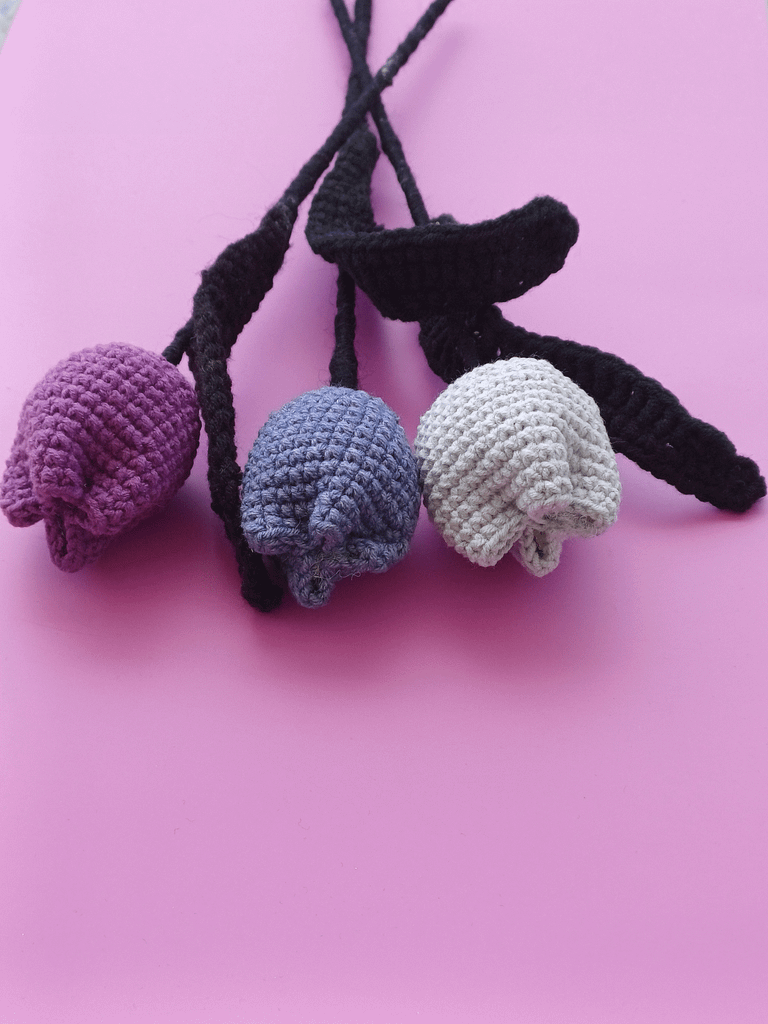
By working on patterns and creating with your hands, you can achieve a mindful state similar to meditation. Crafting handmade items like clothing, flowers or amigurumi stuffed toys, can bring immense satisfaction, making crochet a joyful path to well-being!

But let’s see all the benefits.

Crocheting: The Health Benefits

#1. Crocheting Reduces Stress and Anxiety

Engaging in repetitive actions, like stitching in crochet, has a calming effect on the mind. This rhythm can lower your heart rate and promote relaxation, much like meditation. Each stitch draws your focus away from stressors, helping you feel more grounded and calm.

#2. Crocheting Promotes Mindfulness

Crocheting requires concentration on the present moment, helping to keep distracting thoughts at bay. The repetitive, tactile nature of crochet makes it easier to reach a mindful state. When you’re in the “flow” of crocheting, it’s easier to let go of worries and simply enjoy the process.

#3. Crocheting Improves Focus and Patience

Following crochet patterns and counting stitches can sharpen mental clarity and boost concentration. As you learn new stitches or more intricate patterns, you’re practicing patience and problem-solving, which helps you focus better in other areas of life.

#4. Crocheting Increases Self-Esteem and Sense of Accomplishment

There’s a great sense of fulfillment in transforming a ball of yarn into a beautiful creation. Finishing a project boosts confidence and self-esteem. Each completed crochet item, whether it’s an amigurumi toy or a cozy scarf, becomes a testament to your skill and perseverance.

#5. Crocheting Builds Social Connections

Crocheting can connect you to a broader community of crafters, both online and offline. Engaging with others through crochet groups or social media communities can foster friendships, boost emotional health, and combat loneliness. Sharing your projects and tips with fellow crafters strengthens bonds and adds joy to the hobby.

So, crocheting could be your new favorite wellness practice! From reducing stress to building self-confidence, crocheting is more than just an enjoyable pastime. It’s a powerful form of self-care.

If you’re seeking a hobby that supports mental health while creating something meaningful, pick up a crochet hook and start stitching your way to a happier, calmer you!

My favorite benefit is this: you get to create unique and beautiful flowers and bouquets!

Until next bloom,
🌹
Kοotsiko

👉Join my Newsletter and get a mystery flower pattern as a welcome gift!
You’ll also be the first to know about new designs, tips, special offers and behind-the-yarn stories.

👉 Explore Kootsiko Patterns for gift-worthy makes
👉 Discover Unique Crochet Flowers that bloom forever

Read more:

Crafting is resistance

Pick up a hook. Grab some yarn. And make something the world can’t scroll past. Read more.

Feeling inspired by crochet’s health perks?

If you’re ready to try it yourself, save my Ultimate Beginner’s Guide. It’s the perfect place to start

My Crochet Survival Guide: Hooked on Hacks

how to crochet flowers, crochet flower ideas, DIY crochet bouquet, modern crochet flower arrangement

My Crochet Survival Guide: Hooked on Hacks

I’ve tried a mountain of crochet tips, tools, and tricks over the years. Some were genius, others… not so much. Here’s my personal collection of the quirks, cheats, and “shortcuts” that actually stuck  and work like a charm.
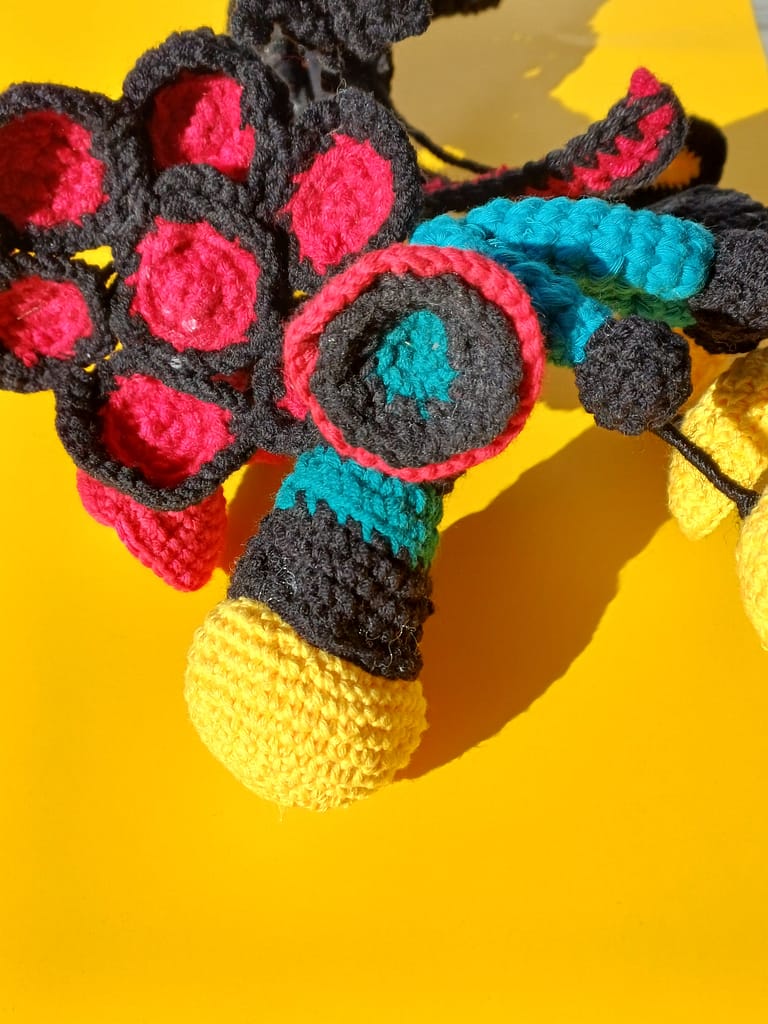

Manicure Magic

My top stuffing tool isn’t in the craft aisle.  It’s a dual-ended cuticle trimmer.
It slips perfectly into tiny amigurumi or flower parts, packs fiber evenly, and has been my secret weapon for 4+ years.

Hook Grip Upgrade
Metal hooks hurting your hands? Wrap a fabric bandage or two around the handle.
Instant comfort, better grip, and no fancy ergonomic tool needed.

Scrap the Marker
I skip the fiddly stitch markers and drop a contrasting yarn scrap in my first stitch instead.
It stays there till I’m done, marking my row starts. 
Bonus: if I have to frog, I still know where the start of each row is. 

Balcony Golden Hour
My best photos aren’t from a light box,  they’re on the balcony in the morning.
Even cloudy days give soft, perfect light.

The Vaseline Vibe
Dry fingers make stitches snag. I keep Vaseline at my desk for a quick smooth-up.
Works mid-project without messing up the yarn.

Yarn Memory Lane
When I start a new skein, I snap a pic of it with the label.
Months later, when I need more, I know exactly what to buy.

Paper Never Crashes
I print patterns I love. Websites vanish, PDFs get corrupted, but paper?
Still sitting happily in my craft binder.

Ends as I Go
I weave in ends the moment they appear.
No dreaded “20 ends in one sitting” nightmare at the end.

Fiber Faithful
I stick to cotton or cotton blends for flowers and amigurumi.
It holds shape, shows stitches beautifully, and lasts forever.

Eyes Without Tears
I stopped sewing or gluing safety eyes.
Now I needle felt them and they are faster, cuter, and always perfectly shaped.

Fold & Thread
Needle threading made easy: fold the yarn end in half, pinch, and push it through.
Works wonders with bulky strands that refuse to cooperate.

Stuff with the Past
Failed projects and scrap yarn get new life as stuffing.
Zero waste, zero guilt, maximum squish.

So there you have it. My not-so-secret, slightly unconventional crochet habits.
They may not be in the manual, but they keep me sane, save me time, and make my stitches a little happier.


Try one, try them all… or ignore them completely. But if you do skip them and find yourself wrestling with stitch markers, mangled yarn ends, or an unstuffable octopus, don’t say I didn’t warn you.

I have one more super useful trick for you: The Easy Trick for Crocheting Narrow Tubes Like a Pro

Until next time, may your yarn never run out 🧶
your parrot doesn’t turn it into confetti 🦜
and your hook never vanish! 💨
❤️
Kootsiko

My Personal Journey Into Crochet

easy crochet flower pattern gothic fantasy crochet bouquet amigurumi crochet pattern beginner crochet flower pattern PDF

My Personal Journey Into Crochet

It could have been a bright and pleasant afternoon if it weren’t that day of the month when my kids and I prepared the family’s order of random cheap trinkets from across the globe.

Among the endless scroll of my daughter’s list of favorites was a cute little dinosaur with a peculiar, almost funny word in the description: amigurumi.

It only took a few days and a handful of online searches before I was hooked forever (pun intended). This wonderfully creative Japanese crochet technique became my new obsession.

The unexpected joy of creating tiny worlds with yarn
I already knew a bit about crocheting from my younger years, but diving into amigurumi was the perfect way to rediscover my old love for crochet.

Yarn, needles, and a whole lot of love!
Back when I was a teen, there was no YouTube or TikTok. So, now I had to master the terminology for every stitch, learn to read patterns, uncover the secrets shared by crochet wizards, and explore the endless world of tools, accessories, needles (so many needles), and most importantly, yarn.

Understanding yarn became an adventure on its own. I needed to recognize its types, textures, origins, and the effect each one would create. I had to know its weight, thickness, and compatibility with different hook sizes. Everything had to match the vision for each project perfectly.

And then I discovered crochet flowers and bouquets. That was the moment I knew what I was always meant to do: stop killing plants and start making my own dream flora that doesn’t need water and live forever.

And so began a long period of practice, designing, obsessive yarn buying, collecting tools I rarely used, and developing a lovely, sexy shade of red in my tired eyes. Not to mention the neck strain, arm fatigue, and finger cramps I’m still trying to shake off.

Why? Because every time I start a project, the next moment I lift my head, five or six hours have mysteriously passed. That’s what they say about great passions. They make you lose all sense of time. And your back. And your legs, for that matter.

Now, my home is always full of handmade flowers. And so are my friends’ homes. No one asks me what I want for my birthday anymore. They already know it’s yarn. And everyone around me knows that my gifts will always be large, luxurious bouquets of dramatic, strange, and sometimes alien flora that doesn’t exist.

easy crochet flower pattern crochet bouquet pattern beginner crochet flower pattern PDF

Bouquets I spend more than two or three days making, bouquets that say loudly that I care.

And honestly, I’ve never felt happier.

So yes, crochet is my great passion now. It started with a cute little dinosaur and became a bed of roses (or better, medousas) stitched together one yarn flower at a time.

So, welcome to Kootsiko, my tiny rebellion made of yarn! This is my brand about creating art that feels personal & unapologetically different.

If you too, believe crochet is punk, flowers can be goth, and gifts made by hand hit harder, you are at the right place. I’m so glad you found your way here. 🖤

Until next bloom,
❤️
Kootsiko

Keep reading: Crochet mistakes I keep making