

A crochet bouquet can sit in an empty vase while you’re away for a week. When you get back, it might need a dusting. Here’s how to care for your flowers, from the first time you unpack them to the day someone knocks over the vase.
Quick answer
Keep crochet flowers in a dry vase out of prolonged direct sun. Dust them with a soft, dry brush and dab small marks with a barely damp cloth. Skip soaking and machine washing. If a stem or petal has wire inside, support it at the base and ease it gently back into shape.
Some Kootsiko flowers are made with cotton yarn and some with a cotton blend. Wire can be in the stems, leaves, or petals, and some flowers are unwired. A flower can have a bendable stem and completely soft petals, so check the part you’re working on before you reshape it.
Unpack and arrange your flowers
Lift each flower by its main stem, supporting the bloom with your other hand if it’s large. If two stems have caught on each other in the box, put them down and untangle the leaves before you lift them. A small leaf can get twisted at the join if you pull the stems apart.
Start with a clean, dry vase. If the opening is wide and the stems slide to one side, try a narrower vase or arrange them one at a time so the largest bloom has room. Turn the whole stem to find the angle you like before you bend anything. A magnolia can look quite different from the side, where you can actually see the curve of its petals. The White Magnolia Branch crochet pattern shows how much space an open bloom can take up in an arrangement.

Dust between the petals
Use a clean, soft makeup brush or a soft pastry brush. Support the bloom near its base and sweep out from the center with light strokes. Start at the top of the arrangement and work down. Check the backs of leaves and the little pockets where two petals meet. If a brush snags on a loose loop, lift it away gently before you continue.
For a sturdy arrangement, you can also try a hair dryer on its cool, lowest setting. Start about a foot (30 cm) away. If the flowers flap around, switch to the brush. Dust when you see a buildup. A bunch on an open shelf will usually need attention sooner than one behind glass.
A hanging bloom collects dust across the top of its curve, where it’s easy to miss. With a design like Witches’ Bells, support the stem near the bell and brush around the rim. For a potted display like Skull Poppy Pot, steady the pot while you brush the leaves, then sweep away any dust that’s settled on the surface around the stems. If the pot has a narrow opening, a small brush can reach around the stems without making you spread the leaves apart. If you’re making an arrangement with nodding blooms, my guide to making crochet flowers hang naturally shows how to leave space between the bells.
Spot-clean small marks
Keep finished crochet arrangements out of the washing machine. Soaking can wet the wire, soften paper wraps, or loosen glued pieces. An unwired flower can still have glued joins or petals that lose their shape when soaked. If you made an entirely yarn flower yourself and want to hand-wash it, check the yarn label and pattern first.
For a small surface mark, try a clean white cloth barely dampened with cool water. Test it on a hidden stitch first. If any yarn color comes off on the cloth, stop. Otherwise, dab the mark without rubbing and keep moisture away from wrapped stems and glued joins. If water alone leaves the mark behind, try a drop of mild soap diluted in water. Dab again with a fresh cloth barely dampened with plain water to pick up the soap. Let the flower air-dry completely before it goes back in the vase.
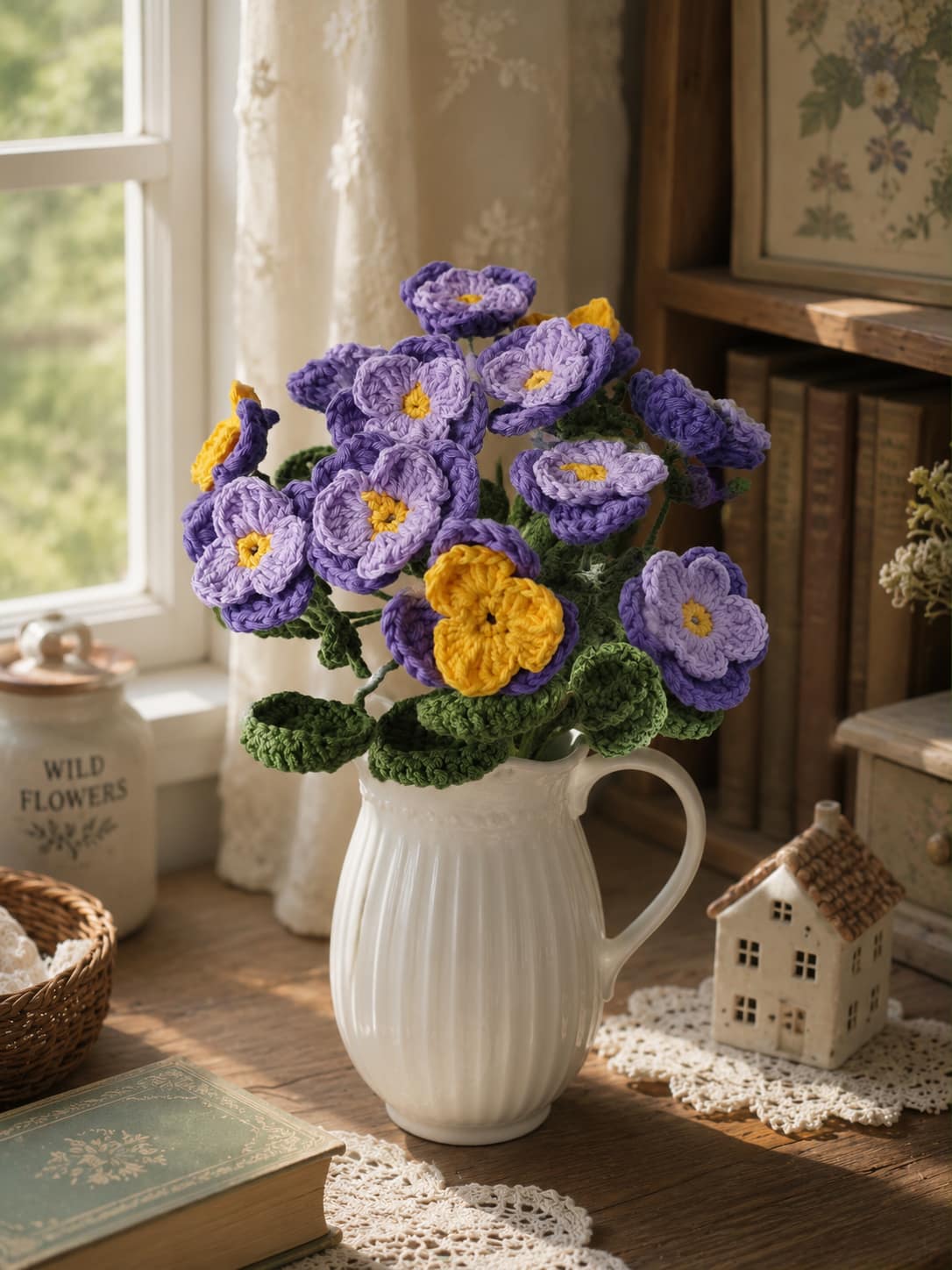
If the bouquet gets wet
Take the flowers out of the vase or away from the spill as soon as you notice. Blot the wet spots with a white towel and lay the stems on a clean, dry towel. If a damp bloom has started to collapse, tuck a little dry cloth underneath it so it can rest in its usual shape. Give the flowers room to air-dry and change the towel if it gets damp. Skip the radiator and hot hair dryer.
Check the stem ends and joins before putting everything back. Those spots can stay damp after the outer stitches feel dry. If part of the stem wrap has come loose or a wire end has poked through, leave that stem aside and contact the maker. Pulling at the wrap can loosen more of it.
Put a bent petal back in place
For a wired petal or leaf, support the base with one hand and use the other to ease it back into a curve. On a wired stem, spread the adjustment over a small section so you don’t make a sharp kink. Bending the same spot back and forth can weaken the wire. If you crochet your own flowers, my guide to wire for crochet flowers explains where different designs need support.
For an unwired petal, try smoothing it lightly with your fingers. Some petals naturally curl or hang down. If one looks squashed simply because it’s pressed against the next bloom, move the stems a little farther apart and let it settle.
Pick a good spot to display or store them
Choose a dry shelf or side table out of prolonged direct sun. A bright spot across the room is a better choice for keeping the colors than a windowsill that gets full afternoon sun. Keep the vase away from bathroom steam, and dry it inside if you’ve just taken out fresh flowers.
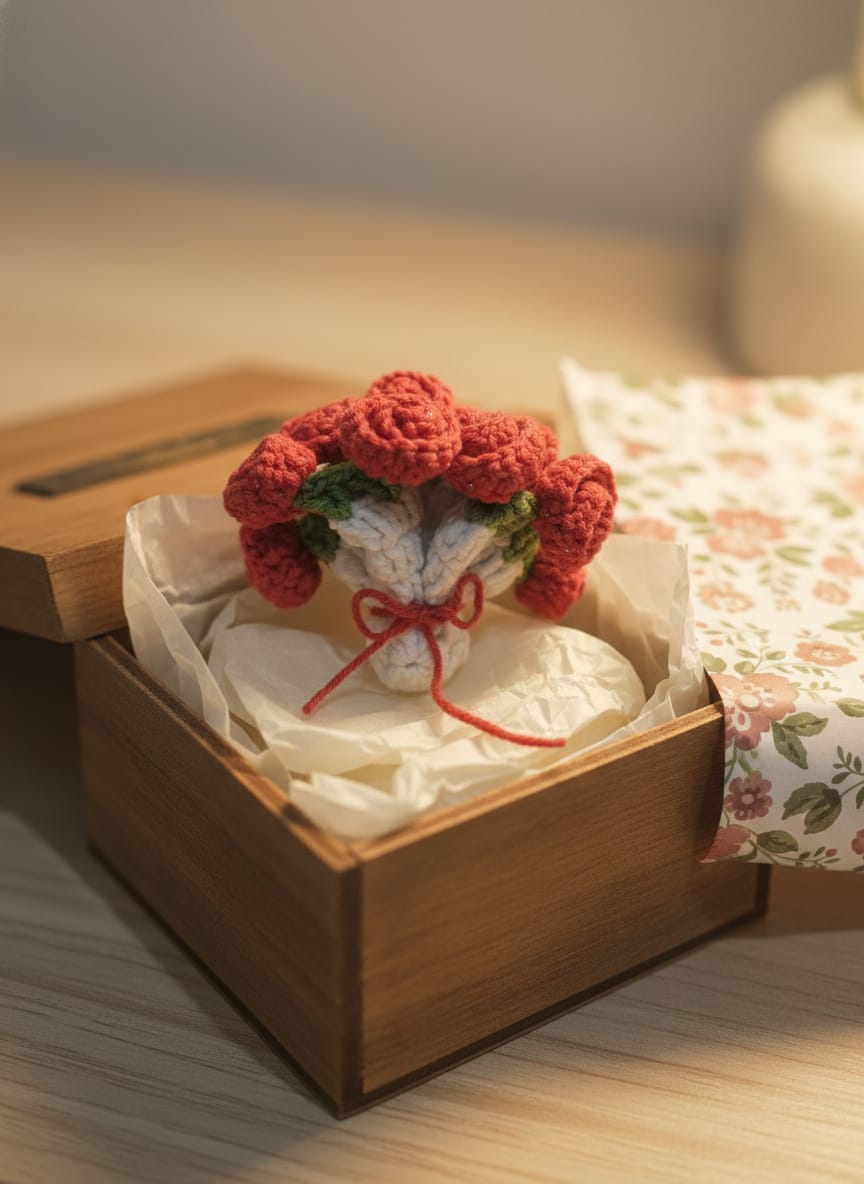
To store a bouquet, lay it in a roomy box and slip loose, plain tissue paper around the blooms. Give large flower heads enough room that the lid can close without pressing on them. Store the box somewhere dry and keep heavy things off the top. When you take the flowers out again, lift the stems one at a time and give the petals a once-over with a dry brush.
Choosing a bouquet for yourself or a gift? See the finished crochet flowers and prices or start your order. As for watering day, you can take it off the calendar.
If you’re making the bouquet yourself, start with a single stem. My guide on how to crochet a flower that never wilts takes you from a test petal to the finished flower.
Until next bloom,
🖤
Kootsiko
Join my newsletter to receive new patterns, tutorials, and the occasional free surprise.
Read more
Crochet Flowers as Gifts: A Thoughtful Choice for Allergies, Pregnancy and Pets
Explore crochet flowers as thoughtful gifts for people sensitive to pollen or floral scents, with pr…
How to Spot AI Crochet Patterns Before You Buy
AI crochet patterns are everywhere, but an AI-looking image doesn’t necessarily mean the pattern is …
Birth Month Flowers You Can Crochet: Meanings, Symbolism & Pattern Ideas for Every Month
Looking for the perfect birthday crochet gift? Discover every birth month flower, what each one symb…
How to Choose Flowers for a Crochet Bouquet That Looks Beautiful
A beautiful crochet bouquet isn't just about making pretty flowers. It's about choosing blooms that …
How to Make Realistic Crochet Flowers: 10 Secrets That Bring Yarn to Life
Learn how to make realistic crochet flowers with better yarn choices, petal shaping, wire techniques…
Zephyra – Free Crochet Flower Pattern
Create your own Zephyra crochet flower with this free crochet flower pattern. An easy pinwheel-inspi…
Crochet Flowers With Dark Meanings: 10 Blooms That Tell a Story
Discover crochet flowers with dark meanings and the symbolism behind each bloom. Create handmade bou…
10 Ways to Style Crochet Flowers in a Modern Gothic Home
Think gothic decor means skulls and cobwebs? Think again. Here are 10 stylish ways to decorate a mod…
From Cottagecore to Gothic: My Crochet Poppy Pattern Obsession
One crochet poppy pattern led to another. Discover cute mini bouquets, moody Midnight Poppies and go…
How to Read a Crochet Pattern: A Beginner’s Guide
Learning how to read a crochet pattern can feel like decoding a secret language. In this beginner's …